URBAN CONSUMERS AS AN IMPORTANT FORCE IN PROTECTING NATURE
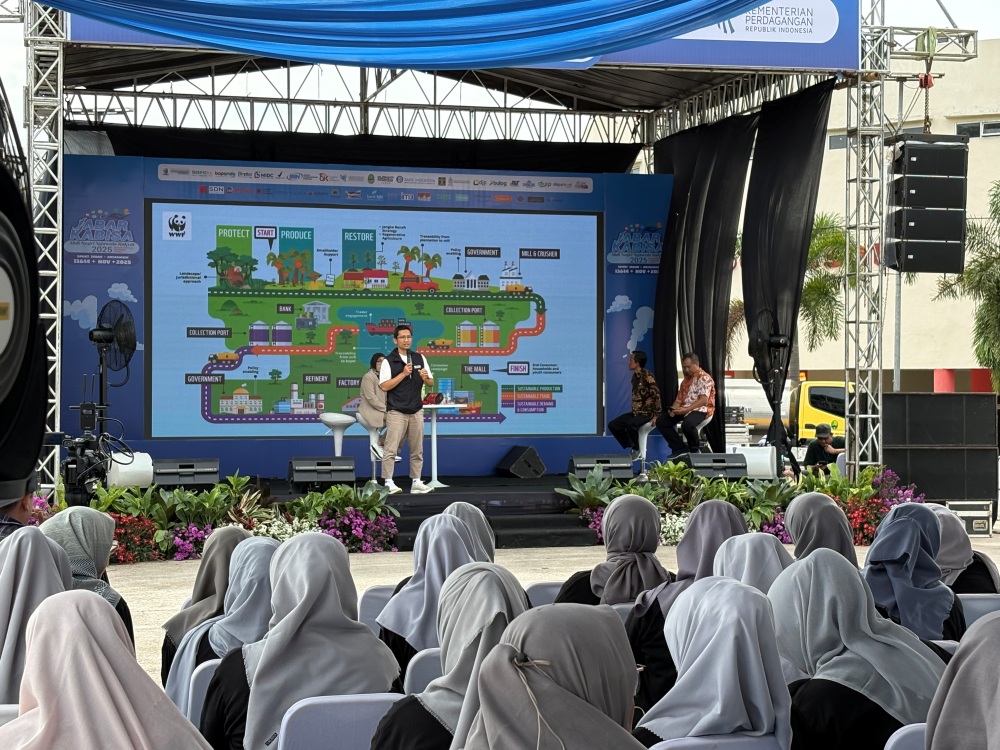
WWF-Indonesia participated in the Jabar Kabisa: Smart Consumer Festival (Koncer Fest) organized by the West Java Industry and Trade Agency (Disperindag) on November 13-14, 2025, at SPORT Jabar Arcamanik, Bandung. The event presented 51 booths from various industries and was visited by approximately 130 visitors. WWF-Indonesia, through its Sustainable Commodities program, was present to provide education and public awareness campaigns via interactive booths and as a speaker on the main stage.
Two Audience Groups, One Goal
On the first day, the festival was packed with student representatives from various high schools and vocational schools in Bandung. Coming with enthusiasm and curiosity, the students actively explored new knowledge. This moment presented an important opportunity to introduce the concept of sustainable commodities, as well as the role of urban consumers in protecting Indonesia's environment, forests, and biodiversity.
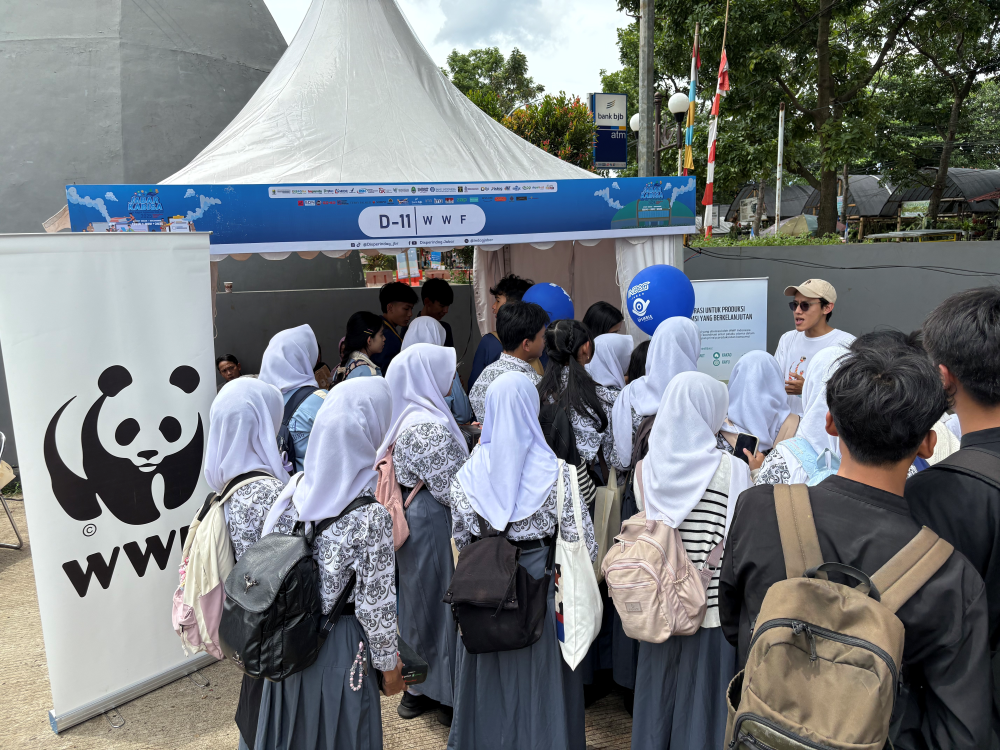
At WWF-Indonesia's booth, educational materials include an introduction to sustainable commodity products and their types of ecolabels, such as cocoa, palm oil, rubber, timber, non-timber forest products and seafood. Students are also encouraged to understand how these commodities are present in the products they consume on a daily basis, and to recognize the impact of the consumption choices they make.
Interactive activities such as a mini workshop on making keychain accessories were also presented as a way to make education more fun and meaningful, where students and other visitors could get creative while remembering the types of sustainable commodities and how they relate to their roles. In addition, educational card games were played to challenge participants to answer questions about sustainability, certification and ecolabeling. The hope is that this method not only conveys information, but also helps visitors remember the types of sustainable commodity products in a closer and more relevant way.
In the talk show on the main stage, Samuel Pablo Pereira, Business Engagement Specialist of WWF-Indonesia, shared insights on the different types of commodities that can be managed sustainably. He explained how consumers' everyday choices can affect supply chains and encourage more responsible production practices for plantation commodity producers in the upstream sector. The session was interactive, especially when the students competed to ask and answer questions in the discussion session. This spirit shows that the younger generation, especially generation Z and the alpha generation, have great potential to become more critical consumers who are aware of the environmental impact of their consumption activities.
On the second day, WWF-Indonesia's education and campaign targeted housewives, who we believe are one of the key consumer groups who have a big influence in determining the products used in their daily lives. When housewives understand the importance of choosing sustainable products, they can make wiser and more beneficial decisions, not only for themselves, but also for their families, and certainly for biodiversity and the preservation of nature.
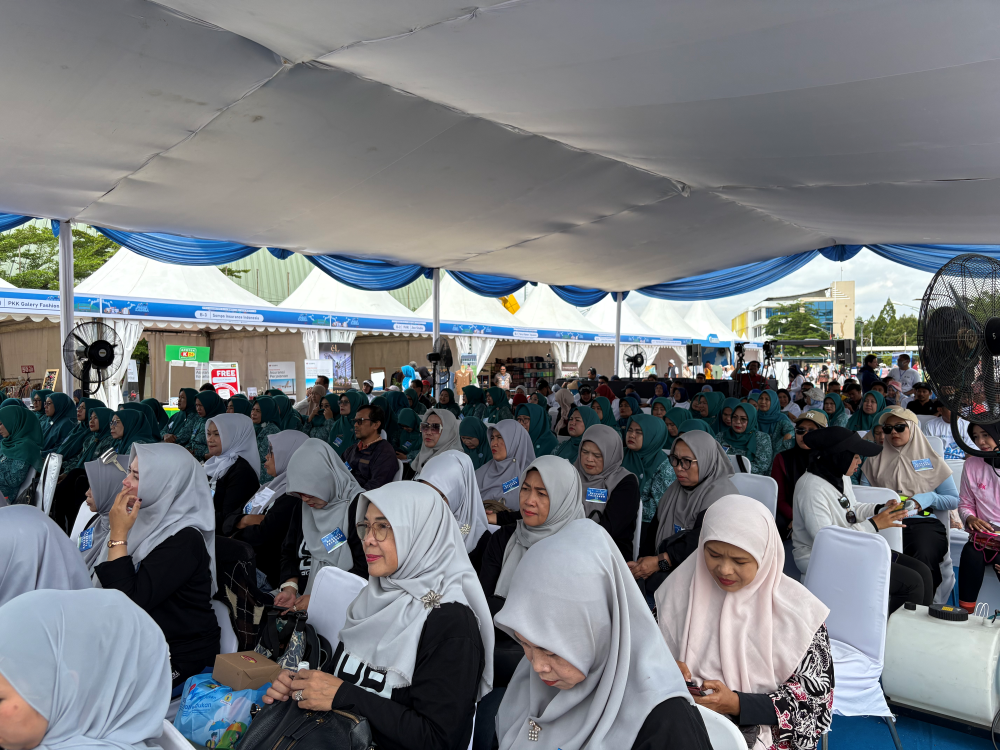
As with the previous day, education was conducted through interactive booths and a talk show session on the main stage. Angga Prathama, Team Lead WWF-Indonesia Sustainable Commodities shared his knowledge and raised the awareness of the mothers in the talk show session. The session also featured several other speakers who shared their experiences and practical tips to become wiser consumers in choosing products. Angga emphasized how mothers as consumers can take a real role in change not only by choosing the most personally beneficial products, but also those that have a positive impact on the environment. One example is the use of certified or ecolabeled cooking oil, a small but meaningful choice, especially for Indonesian mothers who are quite attached to the use of cooking oil in their daily lives.
Meanwhile, another visitor added how the educational session reminded him of his role as a young person in encouraging environmental action "I feel very educated about commodities accompanied by WWF-Indonesia, it turns out that there are still many tasks for us as a young generation to be able to educate others about this sustainability topic," he said.
With an informative, interactive, and relevant approach to everyday life, through educational booths and talk show sessions on the main stage, WWF-Indonesia believes that consumers play an important role in driving change. Every purchasing decision, no matter how small, can be a step towards a more sustainable future.