DRIVING GREEN BUSINESS TRANSFORMATION THROUGH SUSTAINABLE ACTION PLAN WORKSHOP
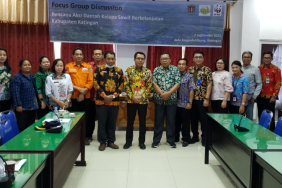
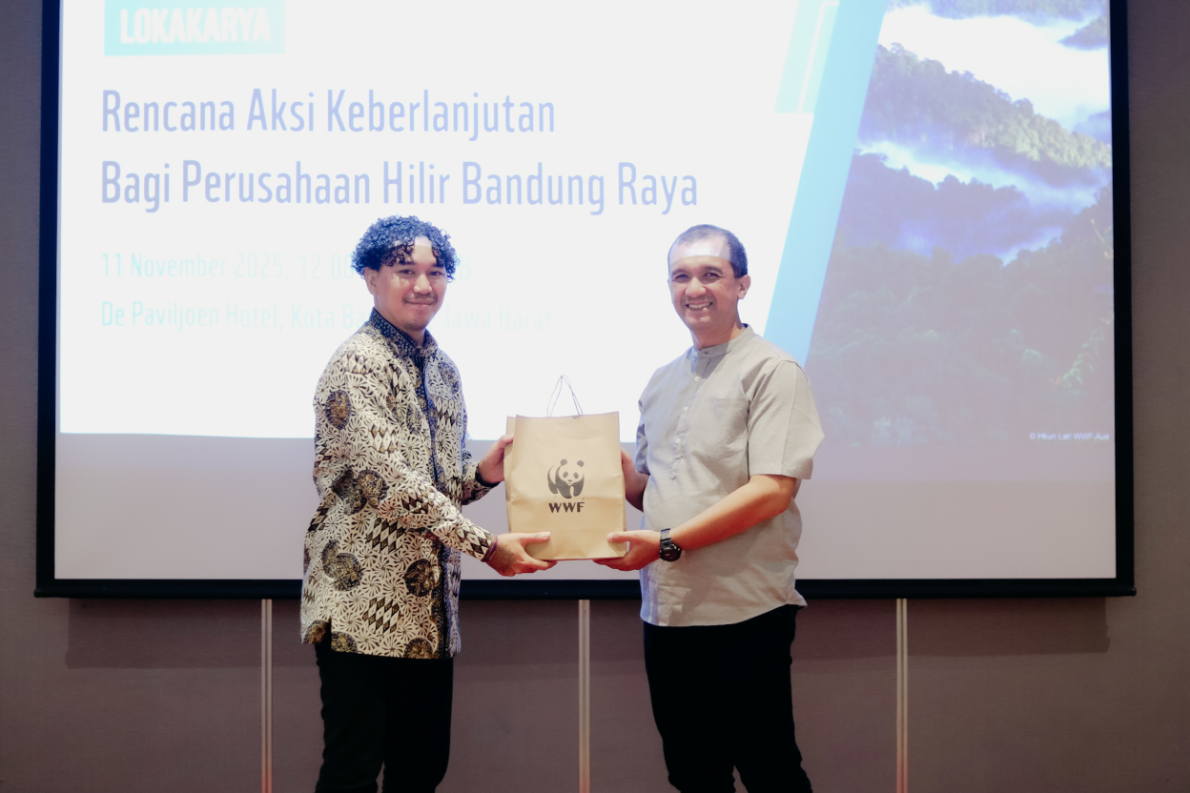
The need for more responsible business practices is increasingly pressing, both due to the climate crisis and pressure on environmental sustainability, as well as changing consumer behaviour and market demands. Seeing the importance of this, WWF-Indonesia, together with the West Java Industry and Trade Office (Disperindag), organised a Sustainability Action Plan workshop in Bandung on November 11, 2025.
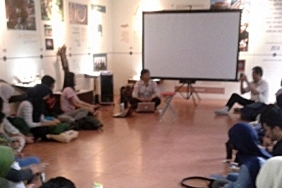
This workshop is one of WWF-Indonesia's regular activities through the Sustainable Commodities program in encouraging companies in Indonesia to actively implement sustainable business practices and promote environmental, social, and good governance values into their business strategies. The event was attended by 20 companies from various industry sectors, who came with different backgrounds and challenges.
The workshop began with Angga Prathama as WWF-Indonesia's Sustainable Commodities Team Lead, who invited participants to understand the global context and environmental challenges facing the world today, such as the climate crisis, land degradation, and biodiversity loss, both in Indonesia and in other parts of the world. This indicates how conventional business models that only prioritise cost efficiency and profit maximisation are no longer able to answer the challenges and needs of the times.
In the WWF-Indonesia team's presentation, the concept of People-Planet-Profit, which is now applied by many global companies to ensure they remain relevant, was also introduced as a framework for the business people present. Moreover, ESG (Environmental, Social, Governance) Frameworks and Standards are also increasingly influential on corporate investment and expansion, as investors, regulators and consumers pay great attention to corporate sustainability performance. Through this forum, WWF-Indonesia reemphasises that sustainability integration has now become one of the factors that determine the competitiveness and reputation of companies.
In addition to a basic introduction to sustainability issues in the business sector, the discussion also covered supply chain issues, an aspect that plays a vital role in the company's business journey. Rian Erisman from WWF-Indonesia's Sustainable Commodities team invited participants to understand how the origin of raw materials that are not clearly known can pose a major risk, especially for industries whose raw materials come from plantation commodities such as palm oil, cocoa, coffee, timber and non-timber forest products, and rubber.
In Indonesia alone, about 45 per cent of oil palm plantations are managed by independent smallholders, and many of them have not been officially recorded. This condition is one of the challenges of the legality verification process, including at the global level, because it makes it difficult to trace palm oil products to the plantation (upstream), making it difficult to guarantee whether the products come from oil palm plantations in forest areas or play an active role in deforestation.
To address these challenges, WWF-Indonesia presented various examples of technology and partnership-based solutions. One of the solutions presented by WWF-Indonesia is how to encourage the use of digital platforms to ensure traceability of plantation commodities from their sources. Such mapping and verification technologies provide opportunities for smallholders to enter into more transparent and sustainable supply chains, and ensure that their products are sold and absorbed by global FMCG (fast-moving consumer goods) companies whose verification standards are already high.
A similar implementation was also shown in the fisheries sector, where Siti Yasmina Enita from WWF-Indonesia's Marine and Fisheries Program encouraged workshop participants, as consumers and representatives of the retail industry present, to utilise information on the origin of fishery products as a basis for decision-making, especially in maintaining fish stocks and other marine biota to remain sustainable in nature. In other words, transparency and traceability of products are one of the main keys needed for both producers and consumers.
Simple Action Plans Start Bigger Transformations
In the second half of the event, the workshop also facilitated a discussion on how the industry can begin the transition towards more sustainable and environmentally friendly business practices. Meidy Mahardani, Head of Industrial Empowerment Facilities & Infrastructure Division, West Java Industry and Trade Department, explained how the government plays an important role in encouraging green industry through various policies and assistance programs, both at the national and provincial levels. Participants are expected to get an overview of how many companies have seen business opportunities from energy efficiency, waste reduction, the circular economy, as well as the use of certified raw materials. Although challenges such as high investment, start-up costs, limited human resources, and lack of infrastructure still exist, participants realised that sustainability can provide significant added value, ranging from reputation, efficiency, to broader market access.
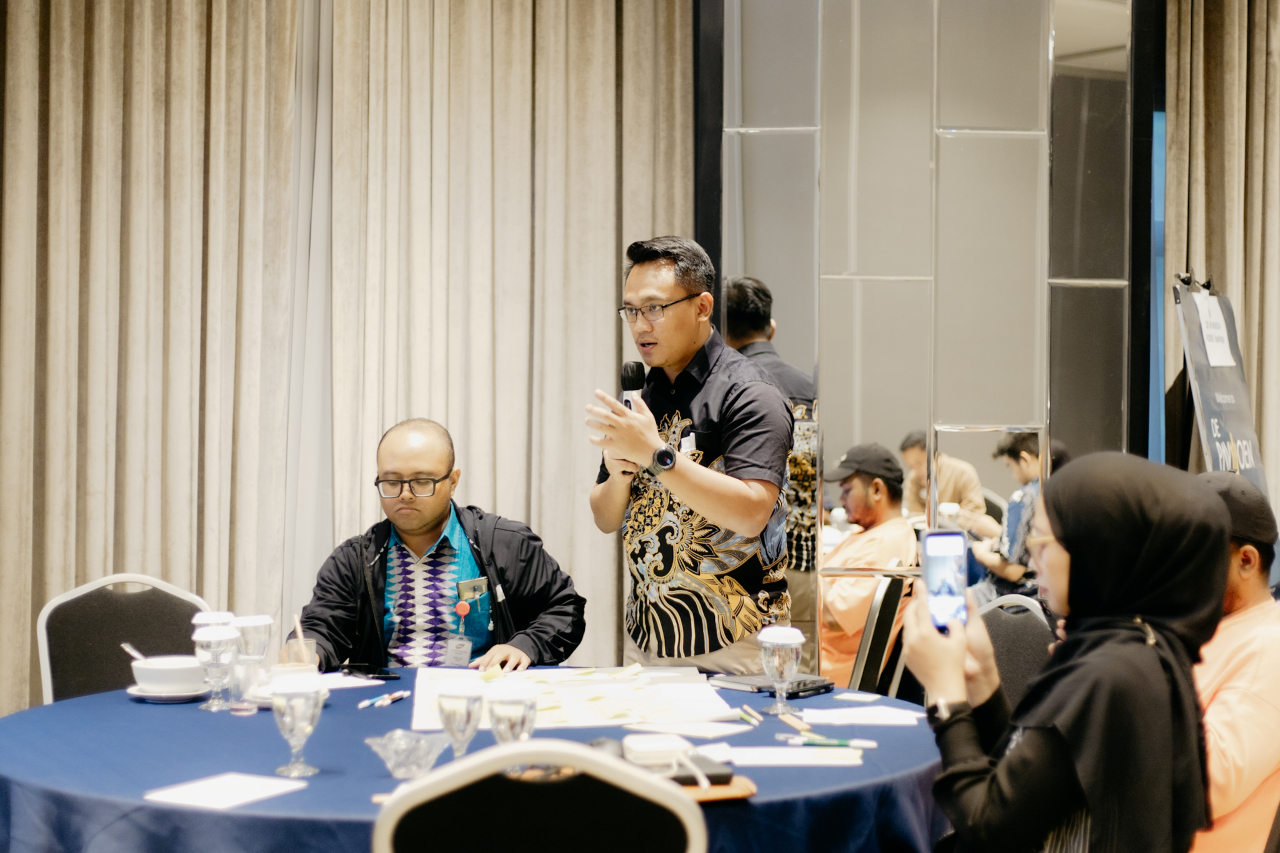
The workshop concluded with a sustainability action plan development session facilitated by Samuel Pablo Pareira, Rizka Nurul Annisa and Aidia Awaaaba from WWF-Indonesia's Sustainable Commodities team. This exercise helped each company representative understand realistic starting points and steps they could take in the short term, as well as measurable sustainability commitments in the long term.
With an open and interactive discussion atmosphere, this activity provided a more thorough understanding that sustainability is not just a demand, but a strategic opportunity for industries and businesses. After the workshop, many participants gained a new perspective that sustainable business transformation can start with small steps.
"It turns out that to be able to start sustainable in a company is not as complex as initially imagined, it does not have to be with large capital, it can also start from small things" - Beni Kurniawan, Log In Megastore
"It turns out that there are products that have an ecolabel. At first we were confused about what kind of example, and it turns out that one of them is palm oil that has RSPO standards. So there are indeed raw materials like that" - Muhammad Randy, Kofie Kawan
This experience is expected to be the start for management in every company to view sustainability transformation as realistic and easy to start implementing.