INDONESIA OFFERS A MODEL OF PARTNERSHIP FOR REDD READINESS
Press Release
Indonesia Side Event
REDD in Indonesia: Toward Joint National and International Actions
11th Dec 2009 – Liva Weel, Bella Center, Copenhagen
Indonesia sees REDD as an opportunity for forests to contribute to climate change mitigation and adaptation, as as for boosting its endeavours to reach sustainable management of forests. A REDD Readiness Strategy has therefore been advised to anticipate REDD implementation.
Given the condition of the country with over 16 thousands islands under 33 provinces and 300 districts, the strategy adopts a national approach with sub-national implementation approach. There are three layers of actions, i.e. national, provincial, and district levels.
The strategy includes five categories: (i) tackling drivers of deforestations and forest degradation, (ii) REDD regulation, (iii) methodology, (iv) institution, and (v) analytical works.
Indeed there has been high expectation that REDD can help the country tackle the drivers of deforestation and forest degradation. To respond to the call, the strategy is to improve the management of protected areas, of production forests, of peat lands, of allocation of land for oil palm, and of local people's capacity.
""The forest is central in the fight against climate change,"" said Wandojo Siswanto of the Ministry of forestry. ""Given the richness of our geography and forests, Indonesia welcomes supports from public and private partners, both domestic and international, to ensure our incredible forests contribute to global fight against climate change and to the prosperity of the people living within and nearby the forests.""
In response to Bali Action Plan, the strategy is being tested through a number of REDD demonstration activities. Among them are the activities focusing on Kalimantan, in cooperation with Australia, Germany, WWF-Indonesia, and The Nature Conservancy.
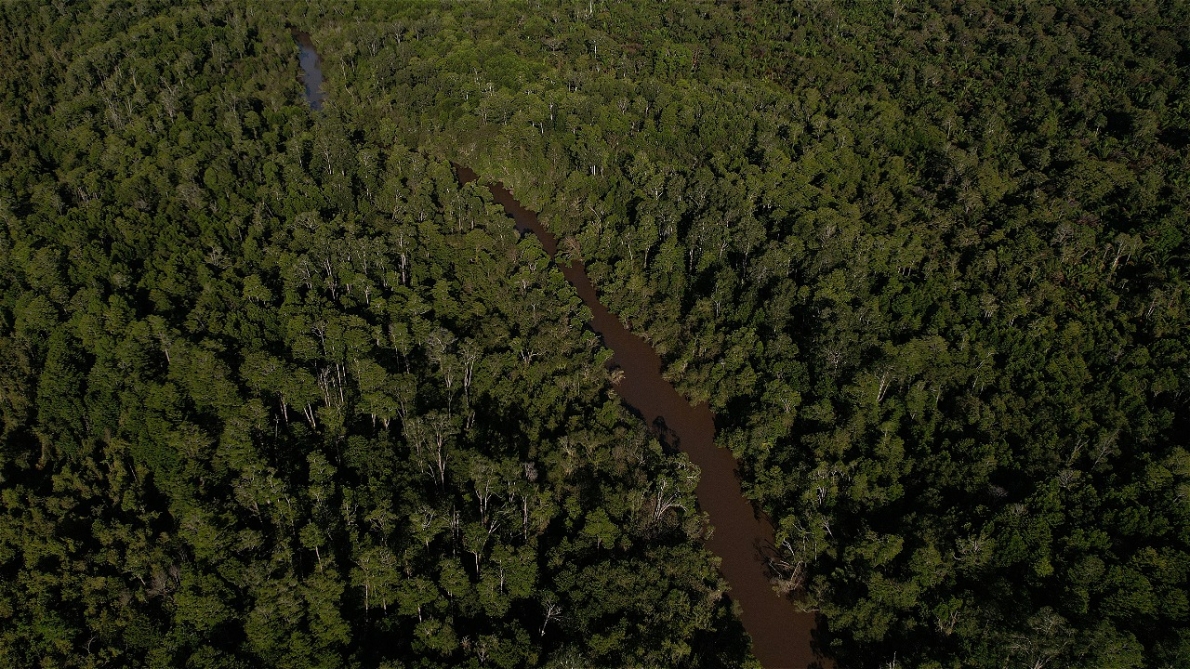
The Indonesia-Australia REDD project is one of the first large-scale REDD demonstration projects. The project focuses on peat forests, which have attracted so much attention due to their vast store of carbon. The activities include improved peat forest management, trial of local level payment distribution, and GHG measurement towards supporting Indonesia's National Carbon Accounting System.
With the Government of Germany, the demonstration activity include development of sound policy and strategy in forest management and climate change, and their implementation at the district level. This project also involve collaboration with the Heart of Borneo (HoB) Initiative, which is facilitated by WWF-Indonesia. The HoB project is running a demonstration activity in four districts, which cover methodology development, institutional arrangement, and community engagement.
Also running at the district level is the cooperation with The Nature Conservancy (TNC) is to demonstrate implementation of REDD Readiness Strategy at the District of Berau, covering exactly the five elements of (i) tackling the drivers of deforestation and forest degradation, (ii) regulation, (iii) methodology, (iv) institutional, and (v) analytical works.
In Indonesia the REDD demonstration activities is not confined to Kalimantan. similar activities are also undertaken on other islands, such as the cooperation activities with the Republic of Korea in Lombok, with the International Tropical Timber Organization (ITTO) in East Java, and the UN-REDD project in Sulawesi, as well as the Forest Carbon Partnership Facility (FCPF) of the World Bank, which recently formalized.
""Those numerous demonstration activities will soon contribute most valuable learnings for feasible REDD mechanism, not only for Indonesia but also globally,"" Wandojo Siswanto added with great optimism and confidence.