TOWARD A GREENER JAMBI THROUGH A LONG-TERM STRATEGY AS A "MIDDLE PATH" FOR ECONOMIC AND ECOLOGICAL RESTORATION
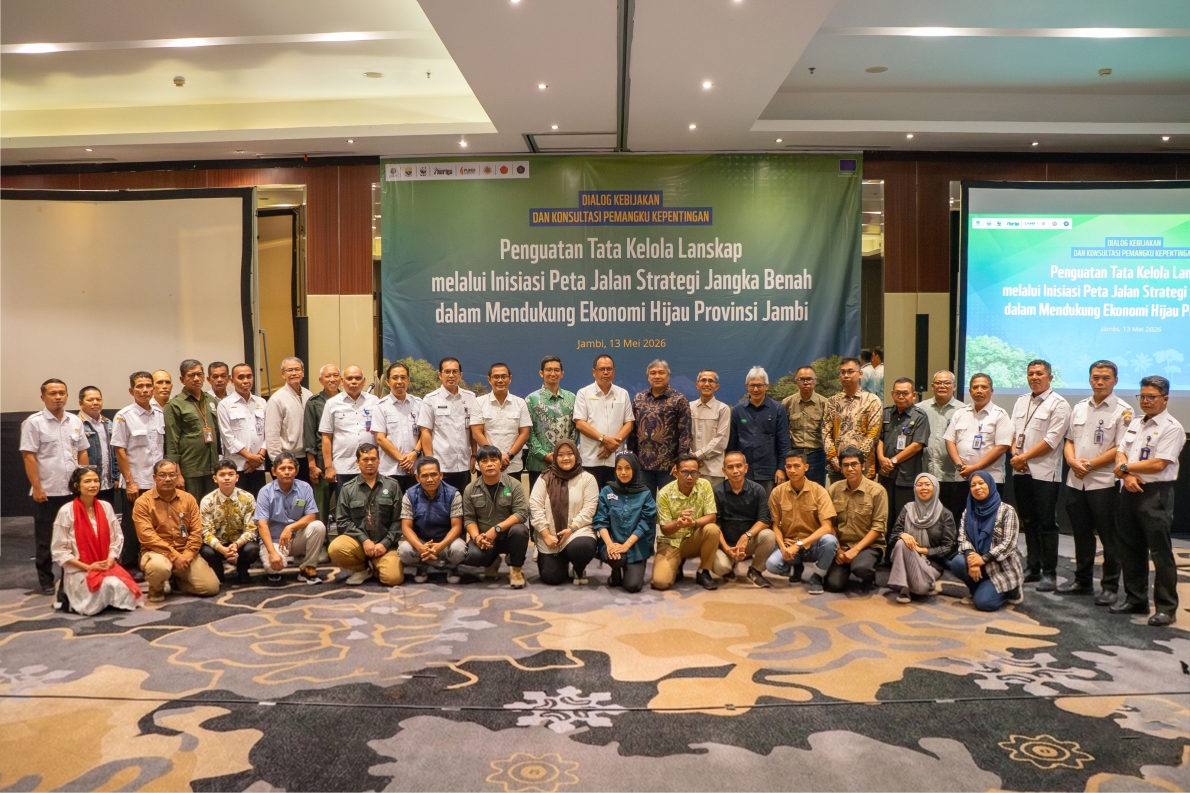
The meeting room at the Aston Jambi Hotel began to fill with participants early in the morning on May 13, 2026. Representatives from local government, forest area managers, academics, NGOs, and field facilitators gathered in a single forum to discuss the future of landscape governance in Jambi Province through Policy Dialogue and Stakeholder Consultation: Strengthening Landscape Governance through a Long-Term Strategic Roadmap (SJB) to Support Jambi Province’s Green Economy. This forum served as a shared discussion space to address the challenges of oil palm expansion in forest areas while seeking a more realistic approach to restoring the ecological functions of forests without neglecting communities’ economic dependence on oil palm through the implementation of the Long-Term Strategy (SJB).
The discussion revealed a crucial consensus that the issue of oil palm within forest areas cannot be resolved solely through enforcement or legal compliance measures. Palm oil plantations identified as being within forest areas in Jambi Province alone have reached approximately 95,309 hectares; on the other hand, these plantations have become the primary source of livelihood for many communities living in the areas surrounding the forest zones. It is this situation that has led the Long-Term Strategy (SJB) to be viewed as a “middle ground” that seeks to reconcile the interests of ecological restoration with the economic sustainability of local communities.
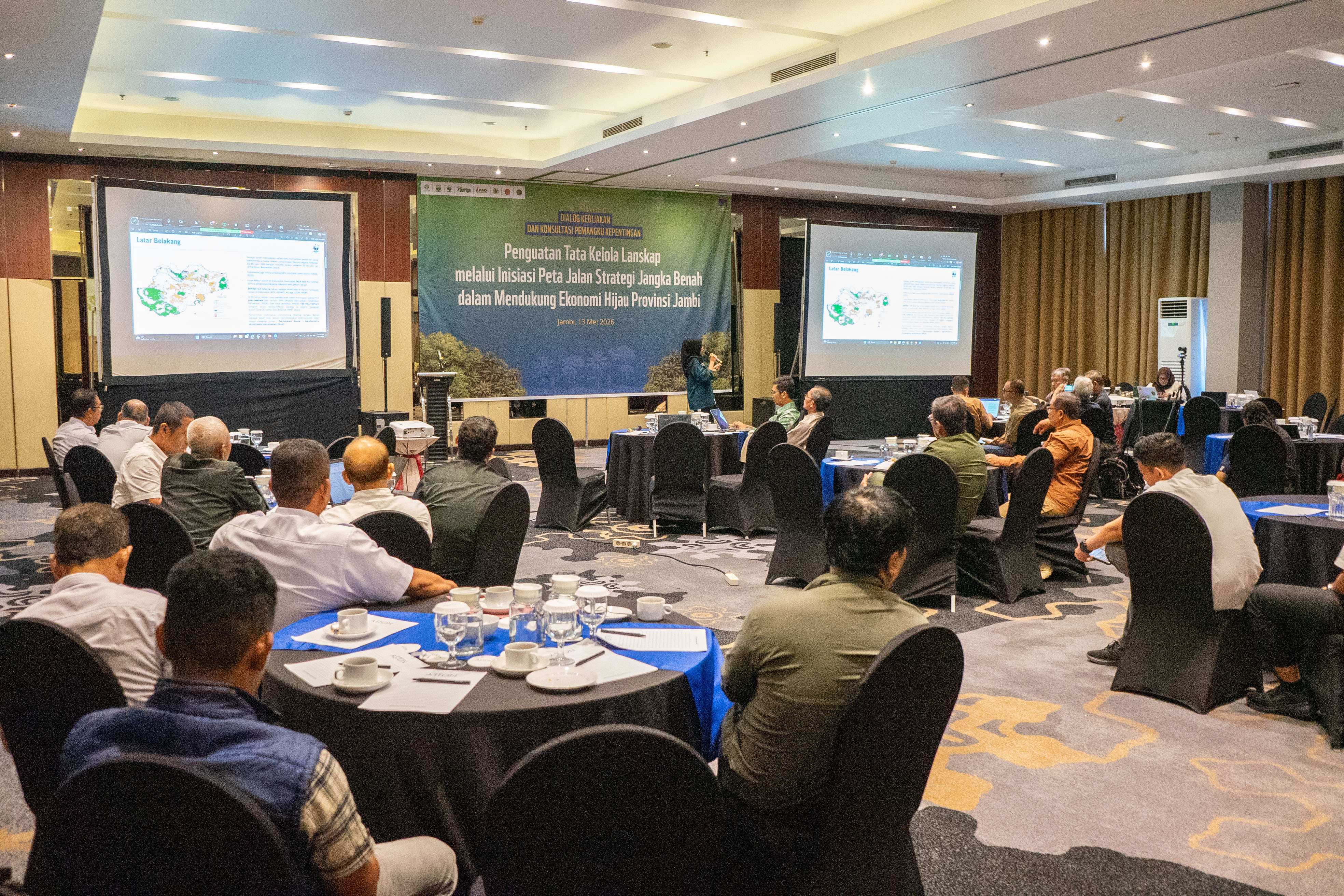
Efforts to promote the Long-Term Restoration Strategy (SJB) in Jambi Province did not start from scratch. Jambi Province already has a policy foundation through Regional Regulation No. 4 of 2023 on Green Economic Growth, which creates space for integrating the landscape restoration agenda with low-emission regional development. The next challenge is how to ensure the Long-Term Strategy (SJB) is incorporated into regional planning documents so that it does not remain merely a support program, but rather becomes part of the long-term development direction of Jambi Province.
This discussion revealed that strengthening the implementation of the Long-Term Strategy (SJB) requires meticulousness and data synchronization in the field. Based on satellite imagery analysis, the potential area of oil palm plantations within forest areas in one of the assisted regions is estimated to be close to 10,000 hectares; however, the area formally documented in official management and data collection schemes has only reached approximately 2,400 hectares.
This significant discrepancy in data certainly warrants serious attention, as it will influence the direction of administrative resolution, policy enforcement, and future implementation strategies for the Long-Term Strategy (SJB). In this context, the age of oil palm trees is also considered a key indicator for determining a more equitable and realistic resolution approach for the communities managing the area.
Dr. Forst. Bambang Irawan, SP., M.Sc., IPU, from the Faculty of Agriculture at the University of Jambi, explained that the Long-Term Restoration Strategy (SJB) is a phased restoration approach designed to improve the structure and function of forests that have been degraded due to oil palm expansion within forest areas. According to him, the idea that forests and oil palm can coexist is not merely a pipe dream. The practice of integrating oil palm with forestry crops has actually been carried out by communities in various forms—whether through interplanting or block patterns—for a long time, although it has not yet received adequate policy support or guidance.
Since 2012, various studies have shown that the implementation of oil palm agroforestry—by integrating trees such as meranti, jengkol, petai, and sungkai—can actually help restore ecosystem functions that were previously degraded. Interestingly, this approach has the potential to generate additional income for farmers of up to approximately Rp9 million per hectare per year through crop diversification and cost-efficient maintenance practices that gradually reduce reliance on chemical fertilizers (zero fertilizer).
“The Long-Term Strategy is no longer just about trees, but about how communities can maintain their livelihoods while the ecological functions of the area are gradually restored,” he explained.
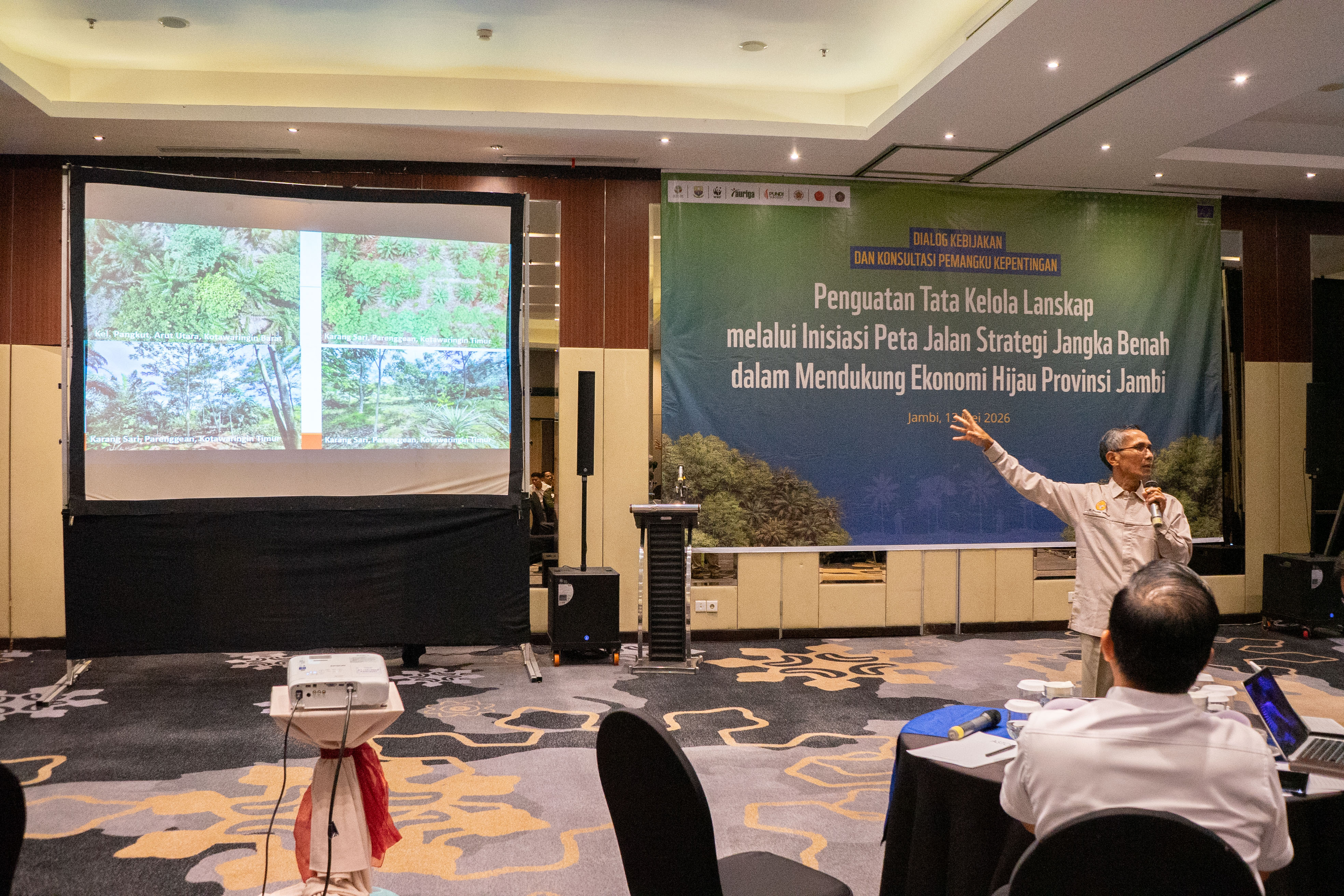
Dr. Bambang also highlighted that the challenges in implementing the SJB lie not only in technical aspects but also in regulatory issues and legal certainty. According to him, there remains uncertainty regarding the resolution of oil palm plantation status following the enactment of the Job Creation Law, including regarding the legality of communities who continue to harvest oil palm within forest areas. This situation is considered a major challenge that must be addressed collectively through strengthened policies and a clearer implementation roadmap.
This view is reinforced by Bestamir Arief, Project Lead of Pundi Sumatra, who explained that the success of the Long-Term Strategy (SJB) implementation heavily depends on three key components: policy support, the success of oil palm agroforestry practices in the field, and the strengthening of community institutions, where these three components cannot function independently.
In his presentation, it was noted that the implementation of the Long-Term Strategy (SJB) is being developed across two cooperatives covering a total area of approximately 50 hectares in Suo-Suo Village, Tebo Regency. Additionally, a research demonstration plot covering approximately 7.5 hectares is being developed in collaboration with academics to study soil nutrient conditions within the oil palm agroforestry system. Throughout the process, farmers will be directly involved in determining the types of crops to be cultivated based on land conditions and the community’s economic needs. These on-the-ground efforts are a crucial step toward demonstrating that the oil palm agroforestry approach can be effectively implemented while delivering both ecological and economic benefits to the community.
When the discussion session began, the forum’s atmosphere shifted to a more relaxed and reflective space. The discussion was no longer dominated by one-way presentations but was filled with diverse experiences and concerns from those who deal directly with the dynamics of forest area management in the field on a daily basis.
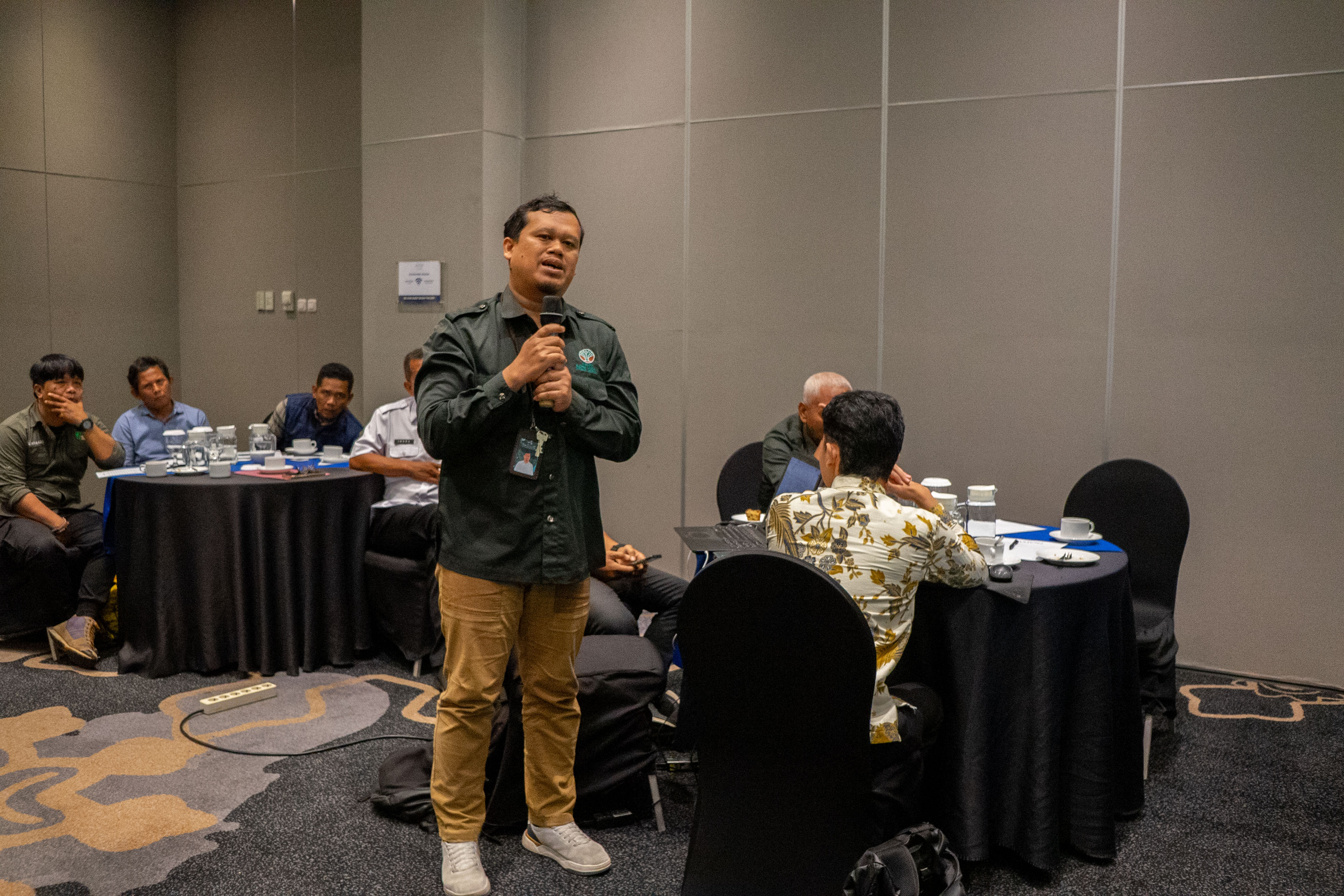
Mr. Arifin and Mr. Opik, as representatives of the Kampar Social Forestry Office (PS), were among the first to highlight the challenges of implementing the Medium-Term Strategy (SJB) from the perspectives of bureaucracy and community support. They revealed that, to date, there remains hesitation regarding the inclusion of oil palm areas in the official Social Forestry Work Plan (RKPS) documents. There is still concern that the formal documentation of oil palm plantations could potentially open the door to legal action against farmer groups or program facilitators in the future. Therefore, the Kampar Social Forestry Office (PS) urged the forum to consider the need for clearer mechanisms and legal protections, including in the context of collecting Non-Tax State Revenues (PNBP) from existing oil palm plantations to avoid creating new problems at the grassroots level.
Beyond regulatory aspects, they also highlighted the readiness of community institutions. Currently, the Kampar PS Office has a food and energy security program with significant potential to be integrated with the implementation of the Medium-Term Development Strategy (MTDS), with assistance funds totaling nearly Rp7.5 billion and disbursed directly to farmer groups. However, the absorption of this program still faces challenges because the institutional capacity of farmer groups at the grassroots level is considered insufficiently strong; these community groups still require more intensive support to effectively manage the assistance, strengthen their organizational structure, and sustainably implement the Long-Term Strategy (SJB) in the field.
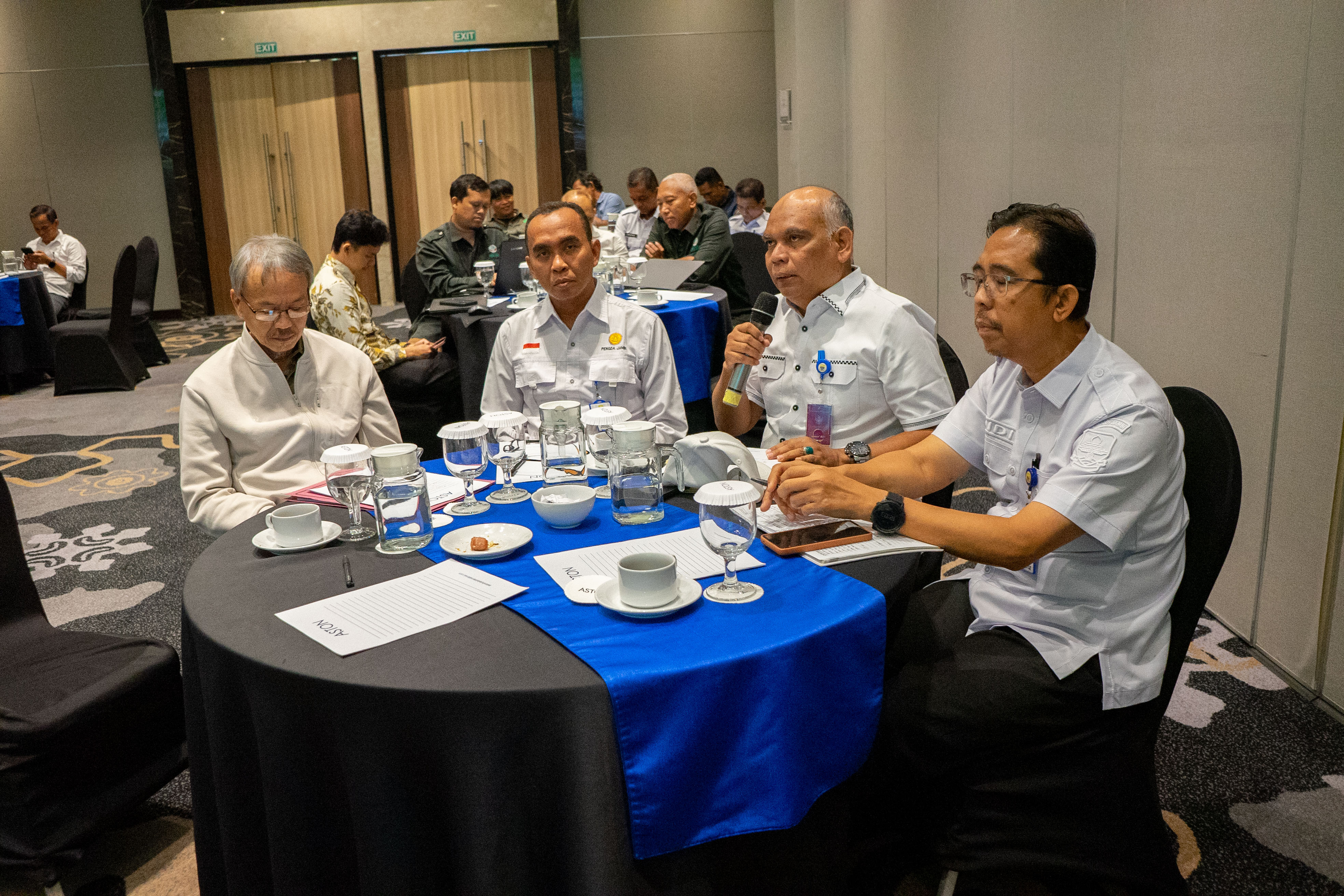
The Batanghari Forest Management Unit (KPH), represented by Mr. Afrizal, also expressed the concerns that have long been felt by communities managing forest areas. According to him, the legal uncertainty surrounding oil palm cultivation within forest areas often instills fear among farmers, as they feel they are in a vulnerable position despite having tried to follow the Social Forestry scheme. He noted that small-scale communities currently bear a far heavier burden than large corporations holding PBPH permits, as they must cope with daily economic pressures alongside regulatory uncertainty that has yet to fully provide a sense of security for Social Forestry managers. The Batanghari Forest Management Unit (KPH) emphasized the importance of policy support and legal certainty for communities that have made efforts to follow the legal mechanisms for forest area management. There is also a proposal that the implementation of the Medium-Term Strategy (SJB) be accompanied by a mechanism for collecting Non-Tax State Revenue (PNBP) from existing oil palm plantations as a means of strengthening accountability and as an instrument to clarify the legal standing of community forest managers.
Another representative from the Kampar Social Forestry Office (PS) highlighted the importance of considering site conditions and community capacity when determining crop types during the implementation of the Long-Term Strategy (SJB). He noted that the forum should not overly focus on “premium” commodities like high-quality durian if the community’s capital and maintenance capabilities at the field level remain limited. In his view, planting without adequate maintenance readiness will only increase the risk of failure in the future. There is a growing push to select plant species that are more adaptive and resilient to weather conditions, such as petai and jengkol. In addition to being better suited to the community’s management practices, these plants are also considered to have a more stable local market, making them a more realistic choice for the implementation of oil palm agroforestry at the site level.
However, the implementation of the Long-Term Strategy (SJB) in the field also demonstrates that the issue of area restoration does not stand alone. During the discussion, representatives from community associations and organizations noted that the selection of plant species within the oil palm agroforestry system must also account for landscape dynamics and wildlife conflicts. In some locations, planting species such as jengkol and petai has actually attracted elephants to community farm areas, creating new challenges regarding the mitigation of human-wildlife conflicts. The forum also raised criticism that the narrative of the Long-Term Strategy (SJB) has so far developed more within academic circles and supporting institutions rather than being genuinely understood by grassroots communities.
According to one participant, this situation has sparked social resentment at the village level, as some community members are busy securing Social Forestry permits and fulfilling various implementation obligations, while on the other hand, the expansion of monoculture oil palm plantations by illegal encroachers continues unchecked without clear oversight. It is this gap in information and approach that needs to be bridged immediately so that the implementation of the Long-Term Strategy (SJB) truly becomes a collective movement at the grassroots level.
From the downstream market perspective, supporting partners have highlighted the importance of establishing market incentives to support the sustainable implementation of the SJB. They observe that an agroforestry approach to oil palm will be more readily accepted by communities if it can be linked to sustainable certification schemes and markets such as RSPO or ISPO. With the certainty of market access and better economic value, farmers are expected to be more motivated to shift from monoculture practices toward more environmentally friendly agroforestry systems.
Despite facing various challenges, this forum demonstrated a shared understanding that the implementation of the Long-Term Strategy (SJB) cannot proceed in isolation. It requires policy strengthening, legal certainty, community support, institutional strengthening of farmer groups, and sustained multi-stakeholder collaboration so that forest area restoration can proceed in tandem with community economic sustainability.
Ultimately, it is hoped that the Long-Term Strategy (SJB) will no longer be viewed merely as an administrative mechanism for resolving oil palm areas within forests, but will instead be directed toward a long-term landscape restoration approach integrated with the green economy agenda of Jambi Province. A future that no longer forces a choice between the economy and ecology, but rather a landscape where forests are restored to their natural state, elephants roam freely without disturbance, and the smiles on the faces of the community remain bright.