MULTI-STAKEHOLDER SYNERGY IN PROMOTING A HEALTHY AND SUSTAINABLE FOOD SYSTEM
Food consumption patterns are an integral part of human life. As living beings who depend on nature, every food we consume is the result of a long process involving natural resources. Eating is not only related to the fulfillment of hunger, but also reflects how nature works to provide energy for the human body. Products from various sectors such as agriculture, livestock, and fisheries are the main support in meeting these needs. However, the current process of food provisioning is inseparable from increasingly worrying environmental challenges, such as its contribution to around 30% of global greenhouse gas emissions, the high use of freshwater resources, and its impact on deforestation and land degradation.
The body's energy needs are no longer in balance with nature's ability to provide it. The process of food provision has become one of the main drivers of the world's climate crisis. The entire food supply chain from production to consumption generates emissions and puts enormous pressure on ecosystems. Ironically, the biggest driver of this chain comes from human consumption patterns themselves, including in choosing and consuming food. This is reflected in the food consumption condition of the Indonesian people, which shows a Pola Pangan Harapan (PPH) score of 95.1, with energy fulfillment reaching 98.7% and protein even exceeding the needs by 110%. However, the consumption pattern is still dominated by grains at 53.2%, which shows that the diversity of food consumed by the community is not balanced.
This imbalance can also be seen from the changing consumption patterns of today's society. Our food consumption patterns today have shifted towards a faster and more practical direction. Ultra-processed foods with high sugar, salt and fat are often in demand, especially among young people. The current system makes it very easy for us to buy what we want, not what our bodies need.
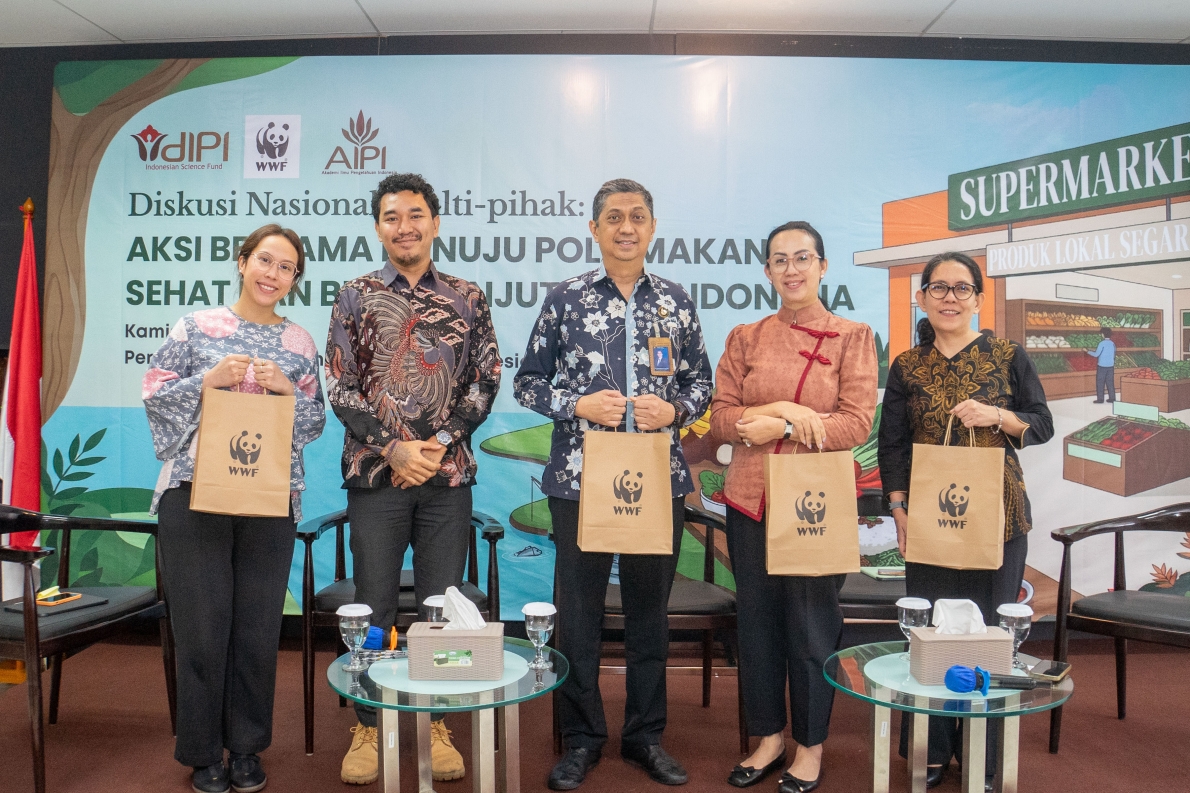
WWF recognizes that the responsibility for food does not rest on one party alone. A broader approach is needed so that the process of food provision and consumption patterns can shift back to a more sustainable direction. Therefore, this multi-stakeholder discussion activity was carried out. The discussion, which was held on Thursday, April 09, 2026 at the National Library of the Republic of Indonesia, brought together every actor who has a role in changing the diet. Starting from community actors, the private sector, to the government.
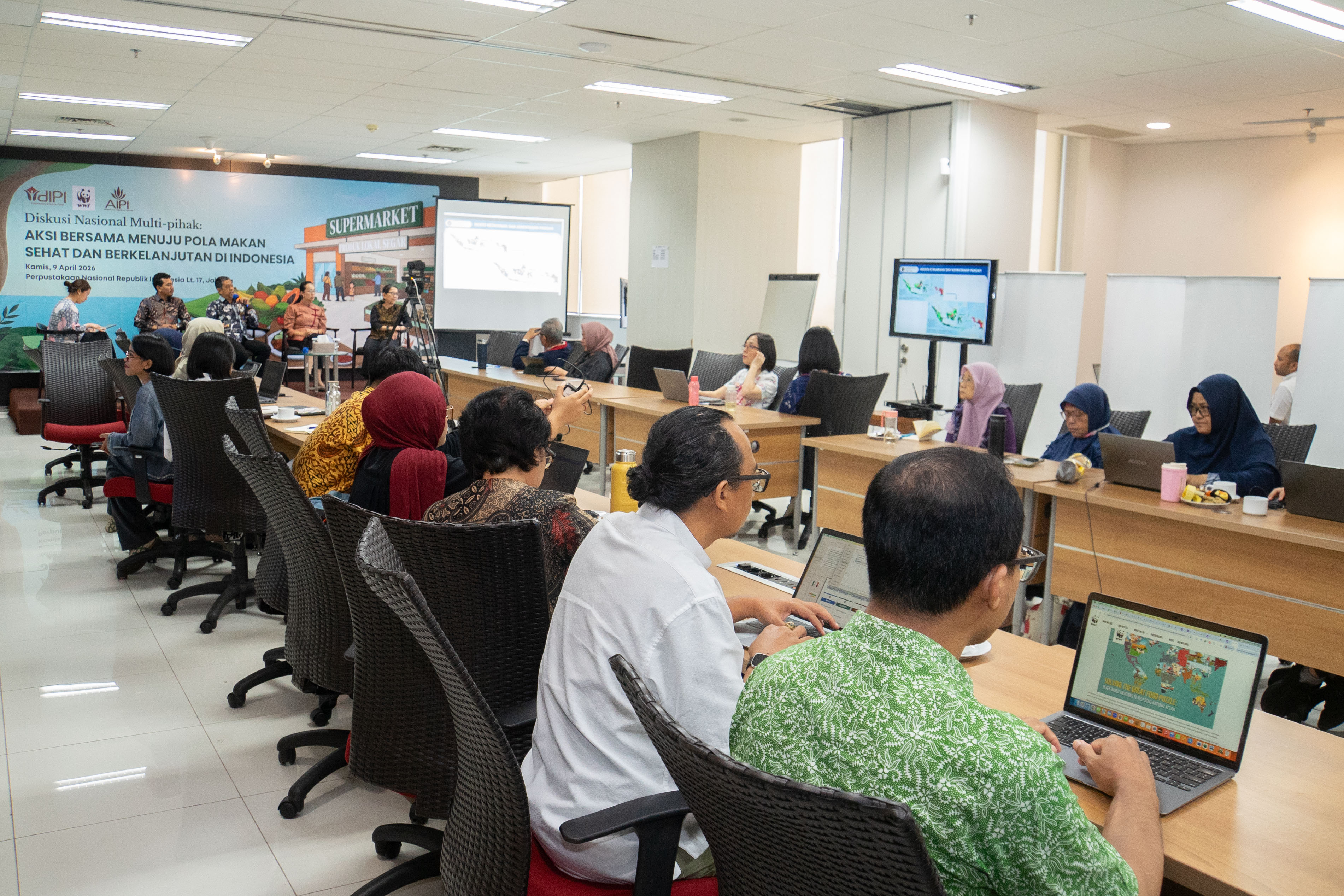
The initial activity to open this discussion was to listen to ideas from representatives of each actor. The activity was opened to see how the perspective of each actor. From the government, WWF, retailers and nutrition.
From a government perspective, Dr. Prayudi Syamsuri, SP, M.Si. looks at healthy eating from the three pillars of food security: (1) availability (2) affordability (3) utilization. However, these three pillars have obstacles, one of which is the inequality of food access between villages and cities. With the government's intervention through MBG, access to nutritious food can be expanded to villages, while encouraging the development of local food businesses.
This situation shows that this role is increasingly needed as nutrition issues become more complex. Agnez Mallipu, the fourth speaker, said that there are still many people who are not able to access healthy and nutritious food, both from the price factor and from the availability factor. People often choose food spontaneously and without much consideration (low involvement), so factors such as product appearance, labeling, and ease of access are also very decisive. The availability of healthy food options in the market is still limited, so more systematic efforts are needed to enable people to reach healthier and environmentally friendly options.
In addition to the presentation from the speakers, this activity was also followed by a Focus Group Discussion (FGD) session to dig deeper into the problems and opportunities in encouraging healthy and sustainable diets in Indonesia. The FGD groups were divided into three groups that discussed food access, sustainable policies and marketing that support healthy eating.
The results of the group discussions showed that food issues are a complex system that involves many sectors from upstream and downstream. The challenge lies not only in availability, but also affordability and equity, especially for vulnerable groups.
Although various regulations currently exist, their implementation is still not fully able to answer the complexities in the field. Therefore, there is a need to strengthen policies through incentive and disincentive schemes to support healthier and more sustainable food production and consumption.
.
In the end, the choices we make on the plate reflect the future direction we are heading. The shift towards healthy and sustainable diets is not the responsibility of one party alone, but requires the collaboration of various actors in the food system. This multi-stakeholder collaboration will not only have an impact on human health, but also on the future sustainability of the environment.