
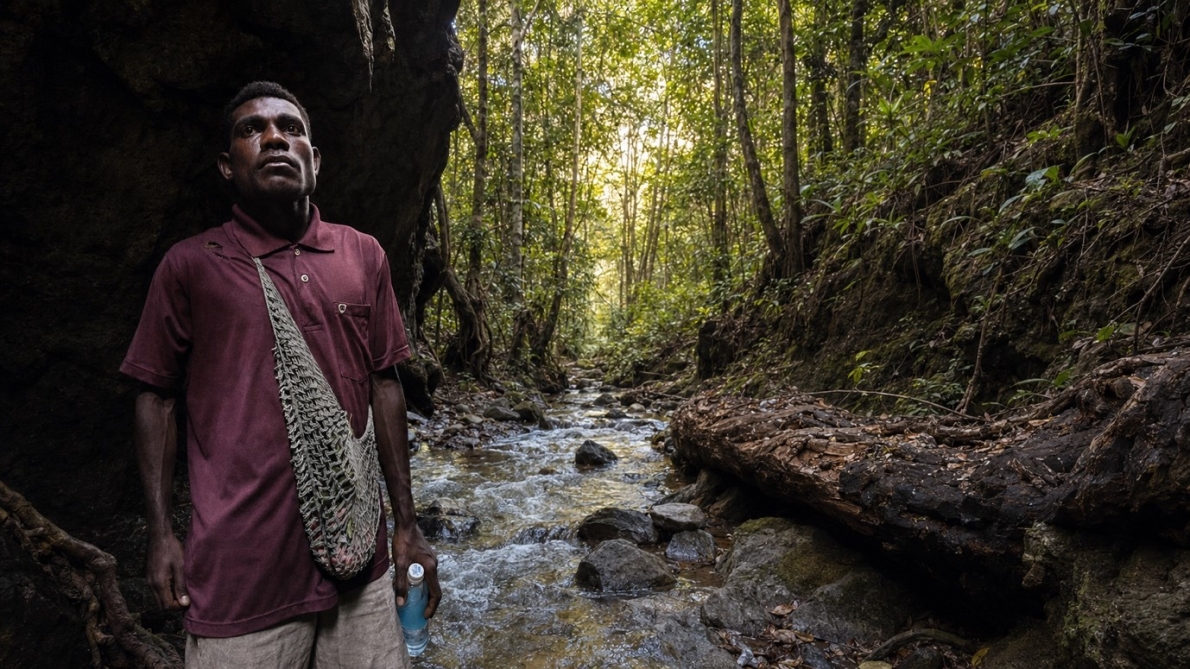
TITUS YEKWAM: FROM BIRD-OF-PARADISE HUNTER TO FOREST GUARD
Dawn had not yet fully broken when Titus Yekwam stepped into the forest surrounding Nanggouw Village. The damp ground muffled the sound of his footsteps. Amid the dense foliage, birdsong echoed back and forth, while the first light slowly seeped through the gaps in the canopy. Titus knew that trail like the back of his hand. He knew the trees where the birds of paradise usually perched, when they appeared, and even the small signs that often escaped the notice of others. In the past, that knowledge had led him into the forest with an air rifle. Now, he came equipped with binoculars, a camera, and a field notebook.
The change in the object in his hand signifies a far greater change in the life of this 25-year-old man. Titus, who once hunted birds of paradise, is now a local ecotourism guide in Nanggouw Village, Sausapor District, Tambrauw Regency, West Papua Province. The forest he once entered to take life, he now protects so it remains a home for Papua’s birds of paradise. In front of his house, which faces Mount Toweu, Titus recalls a time when birds of paradise were still considered commonplace. Behind that mountain lies a dense forest, where these birds live and dance among the trees.
“Back then, we didn’t understand a thing. Birds of paradise were considered nothing special. In fact, we regarded them as pests in our gardens,” he said. His gaze drifted into the distance, as if following the shadow of his younger self walking into the jungle with an air rifle. Back then, hunting was part of life for some residents and a quick way to earn a living. Bird-of-paradise feathers were sold at low prices to traveling merchants. The meat was eaten or shared during traditional ceremonies. Knowledge about wildlife conservation is still limited, the ban is not yet fully understood, and every shot fired is taken without the realization that, one by one, the sounds of the forest are disappearing.
There is one experience that remains etched in Titus’s memory to this day. In a single day, he once shot 20 birds of paradise—10 females and 10 males. The beauty of the birds’ feathers briefly filled the hunter with pride. But that feeling didn’t last long. “Their feathers were absolutely beautiful. But when I held those dead birds in my hands, I felt like something was missing from this forest. Their calls were no longer heard in the morning,” he said softly. Lying before him were the bodies of birds that, just moments earlier, had been alive and moving freely among the branches. It was then that Titus began to realize that the small pellets from his air rifle did more than just bring down a bird. Every shot also took away a dance, a sound, and a beauty that could not easily be replaced. This realization did not come as a long lecture, but rather as a sense of loss that grew slowly and continued to trouble his heart.
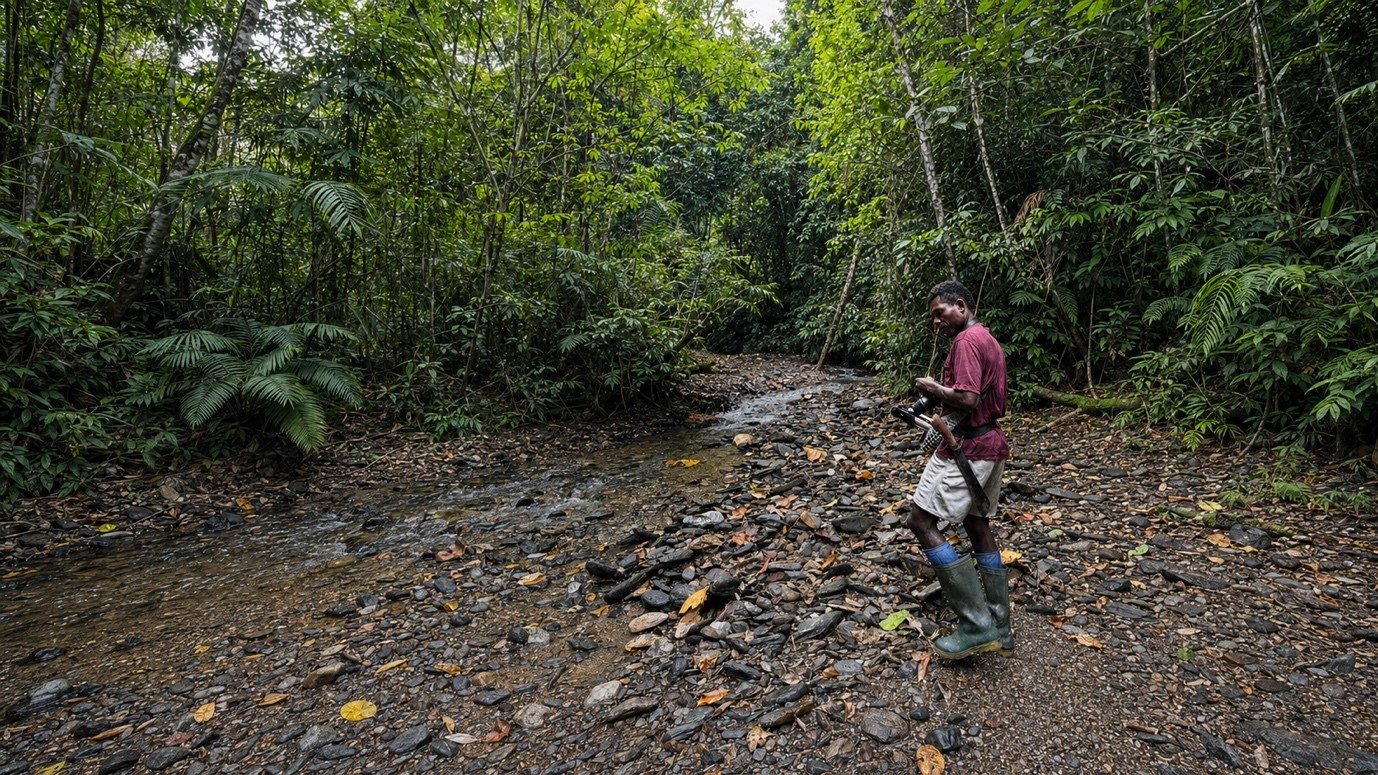
A new path opened up when a community-based ecotourism program was introduced in Nanggouw Village with support from WWF-Indonesia’s Papua Program and the local government. At first, Titus was skeptical. It was hard for him to imagine that birds that had long been hunted could provide economic benefits simply by being allowed to live in their natural habitat. His skepticism faded when he saw tourists coming from far away to watch and photograph birds of paradise dancing in the wild. Birds that were previously valued for their feathers turned out to be far more valuable when kept alive. Their presence attracts repeat visitors, while also generating income for guides, families, and the village community. “A single visit by a tourist can generate income equivalent to selling dozens of bird-of-paradise feathers. Most importantly, the bird will still be here tomorrow, and the day after tomorrow, and our children and grandchildren will still be able to see it,” said Titus.
Since joining the Nanggouw Ecotourism Group, Titus has put away his air rifle. He has learned to be an observer, no longer a hunter. His experience in reading the forest has not been discarded but redirected toward a different purpose. He has studied the courtship dances of each species of bird-of-paradise, the best times to observe them, and their behavior so that tourists can view them from a safe distance without disturbing their habitat. The knowledge he once used to track prey now guides him to the best observation spots. Titus recognizes the trees where the birds perch, their daily movement patterns, natural food sources, and hidden corners deep within the forest. In Titus’s hands, local knowledge serves as a bridge between tourism and conservation.
However, Titus’s greatest strength isn’t just his ability to read the forest. He speaks from the experience of a hunter who has known regret. That’s why, when he urges tourists and local youth to stop hunting, his message doesn’t sound like an outsider’s theory. That message stems from the wounds he himself once inflicted and his determination to make amends. “I’ve experienced both: the fleeting satisfaction of killing and the true happiness of seeing them live freely. I choose the latter,” he emphasized. Titus’s choice is gradually inspiring others. A number of former hunters in Nanggouw have begun to follow in his footsteps. Together with villagers, they conduct independent patrols in the mornings and at night to prevent poaching in the village’s forest area. Those who once knew the paths leading to the birds now stand as guardians of the forest’s gates. The air rifles that were once a source of pride now hang as reminders of the past. Outside the house, birds of paradise still dance atop the branches. For Titus, that sight brings a happiness he never found when he returned home carrying a dead bird in his hands.
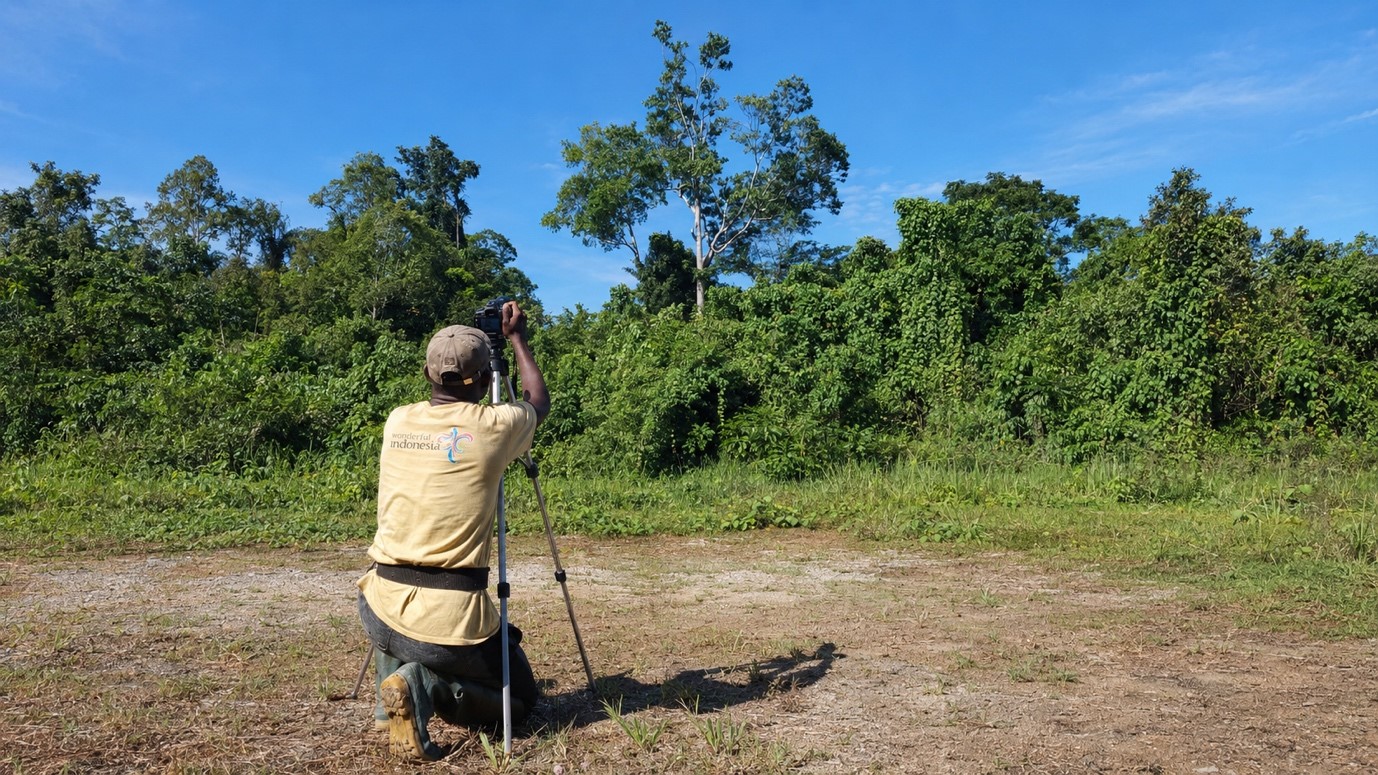
Titus’s story shows that change in conservation doesn’t always start with grand regulations or decision-making bodies. Change can emerge from a village, from someone brave enough to confront their mistakes and then choose a different path. In Nanggouw, ecotourism is not merely a new way to earn a living. It offers people the chance to make peace with the forest and transform their knowledge of hunting into knowledge of conservation. Now, every time Titus guides tourists through the forest, he isn’t just showing them where the birds of paradise dance. He is demonstrating that life left to thrive can provide longer-lasting benefits than fleeting beauty that is snatched away. As long as the call of the bird-of-paradise can still be heard in the morning and its wings still cut through the dense forests of Tambrauw, that hope remains—not only for Papua’s birds of paradise, but also for the generations who will one day inherit these forests.