MEDIA AND COMMUNITY GATHERING: COLLABORATIVE AWARENESS RAISING ON FOOD SHRINKAGE AND WASTE ISSUES
The problem of waste management is currently an important issue in various parts of Indonesia due to the increasing volume of waste that is not matched by an adequate management system. Various parties, both the government and the community, continue to strive to overcome the environmental damage caused by the accumulation and disposal of waste that is not managed properly. This condition not only occurs in large urban areas, but is also felt in eastern Indonesia, including Jayapura and Merauke Regencies, which are geographically located in the Land of Papua. These two regions are also experiencing environmental impacts, which require attention and a sustainable waste management strategy that is in accordance with local conditions. Speaking of this, the public's view focuses on inorganic waste such as plastic, cardboard, and so on. The existence of organic waste is slightly ignored, even though this type can produce methane gas if not managed properly. Methane gas is one of the greenhouse gases that can heat the Earth 28 times more than carbon dioxide gas (IPCC, 2014).
To address these issues, WWF-Indonesia Papua Program runs a program called Our Circular Food Future. This effort is made to reduce methane gas emission levels through reducing food shrinkage and waste. Food shrinkage is a decrease in the quantity of food that occurs in the process of producing, preparing, processing, making, preserving, packaging, repackaging, and/or changing the form of food. Food waste is food that is fit and safe for human consumption and is potentially wasted as food waste at the distribution and consumption stages.
Tackling the issue of food shrinkage and waste is certainly not an easy thing, especially the habit of consuming food excessively without finishing it. Not to mention the mindset that food waste is easily decomposed in nature, making it often discarded without being managed. Therefore, increasing understanding is something that should be given to the wider community. In realizing this, it cannot be done alone but requires collaboration between parties. Communities and media are WWF-Indonesia Papua Program partners who are able to contribute in increasing public awareness through their platforms.
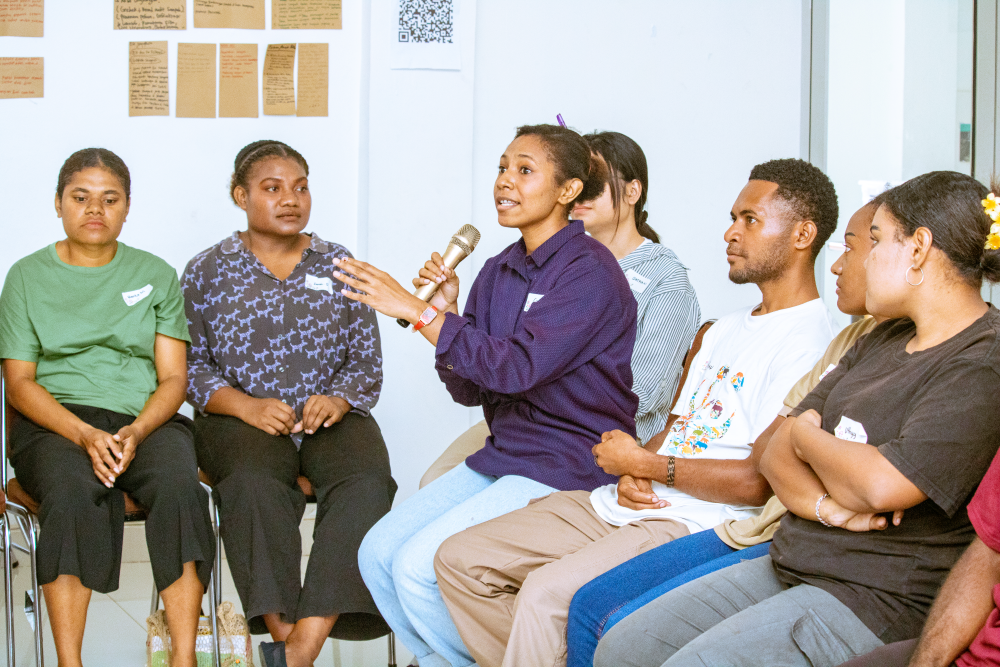
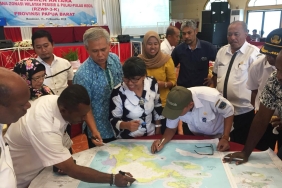
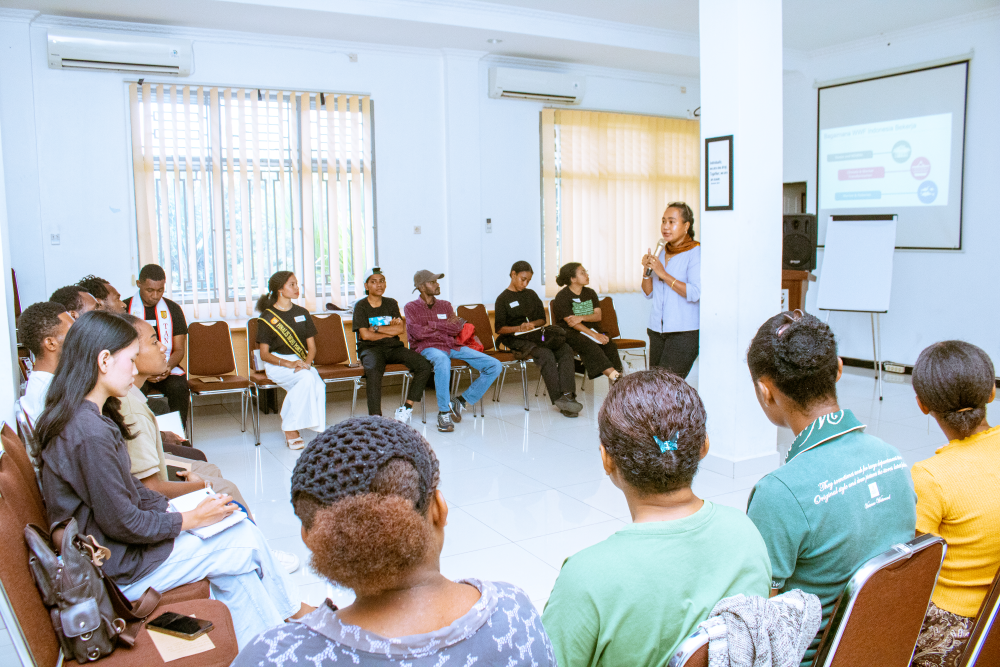
As with the community, the same information was also provided to 6 media outlets based in Jayapura City and Regency through a media gathering on February 13, 2025. This knowledge was new to them, as they had been covering more social, economic and political news. After the meeting, each media began to launch news through their platforms. Some educated about food waste by telling stories using interesting videos uploaded on social media. News writing about the implementation of activities, initiatives that are being carried out and appeals to the wider community. Not stopping there, information dissemination is also carried out through YouTube channels by providing information about food waste management.
Not only in Jayapura, in Merauke Regency there was also a community and media gathering which this time was held simultaneously on April 22, 2025 at the Faculty of Agriculture Building, Musamus University. A total of 37 people were involved from 11 media and 14 communities. The process was not much different from the implementation in Jayapura, the results obtained feedback from filling out questionnaires which became the basis for creating an engagement strategy. In addition, there were some initial news reports about food shrinkage and waste in Merauke Regency if you look back that there is more news about inorganic waste scattered on social media and other information channels. Reflecting on the three activities above, it shows that collaboration is an important part of achieving big goals. Through this collaboration, it is hoped that it can increase awareness for people in Jayapura and Merauke Regencies about waste management issues, especially in this case food shrinkage and waste.