LIVING GREEN AND SPEAKING ENGLISH: A VIBRANT COLLABORATION BETWEEN LIVING ENGLISH AND WWF-INDONESIA
An Eternal Mantra
Reduce, Reuse, Recycle. These three words form the eternal mantra for environmental stewardship. While most of us are familiar with the "3Rs," the challenge lies in how we pass on this wisdom to the next generation. How do we go beyond theoretical lessons for children who prefer to take action?
The answer is simple: Set an example.
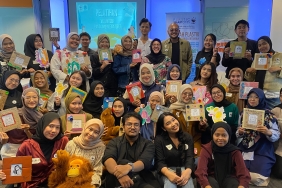
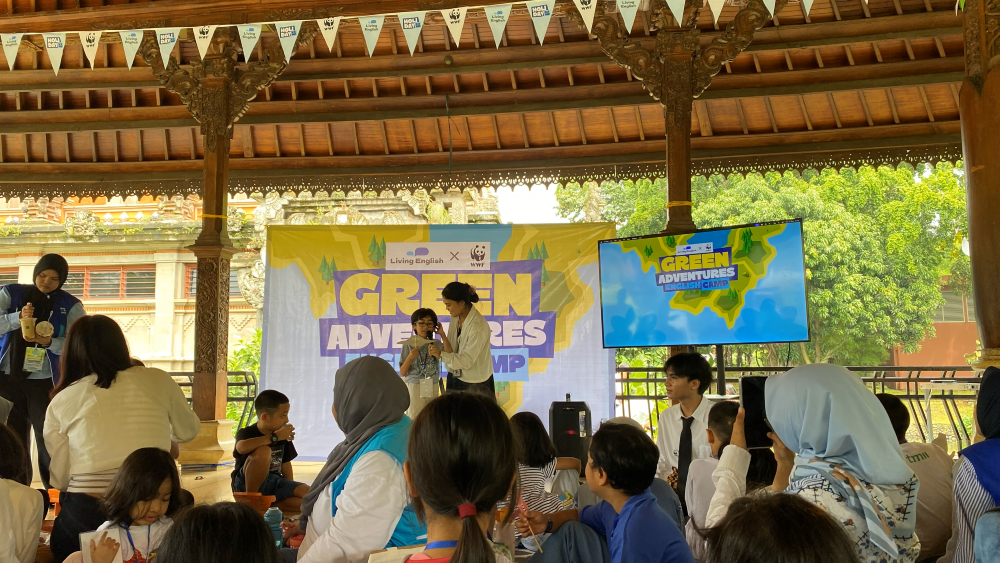
This is the motivation behind "The Green Adventures English Camp," a holiday program organized by Living English tutoring group in collaboration with WWF-Indonesia. Held on December 20-21, 2025, the camp aims to instill eco-friendly habits in children through immersive and practical activities, demonstrating that protecting the planet can be enjoyable.
As the morning progressed, 80 students from elementary to junior high school levels gathered for the day's activities. Participants were divided into three tiers with a total of nine groups:
- Red Group: Lower elementary school students (Kindergarten - Grade 3).
- Blue Group: Upper primary school students (Grades 4-6).
- Green Group: Junior and senior high school students.
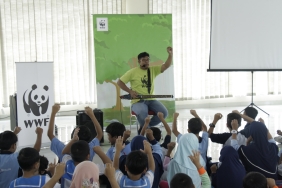
The day begins with a "vocabulary of the day" session, bridging the gap between English language skills and environmental literacy. After a brief introduction to WWF-Indonesia's global mission, volunteers proceed to the heart of the workshop: a customized upcycling project tailored to each group.
Upcycling in Action: A Creative Approach to Conservation
Under the guidance of WWF-Indonesia facilitators, the workshop room buzzed with activity for over an hour:
- Group Red brings scrap paper and cardboard back to life by making stick puppets (wayang).
- The Blue group weaved pieces of scrap fabric into colorful key chains.
- The Green group turned an old T-shirt into a functional tote bag with no seams.
While the students focused on their work, the WWF-Indonesia facilitator team interjected an important environmental lesson. They explained that upcycling is not just a hobby; it is a direct way to reduce the demand for raw materials like wood and cotton. By giving old things a second life, these young people are learning how to reduce their environmental footprint tangibly.
The session concluded with a moving sharing session. Representatives from each group took to the stage to explain the stories behind their work. The sense of pride was palpable; many participants expressed a desire to give their handmade items to family members, while others committed to replacing single-use plastics with their new recycled supplies.
Sunday's session was a huge success for Living English and WWF-Indonesia. By combining language education with practical conservation, the program proved that sustainability messages are most powerful when felt and experienced.
When these 80 young participants return home, they take with them more than just a craft. They brought with them a new commitment to the Earth, a commitment that we hope will stay with them for life.