GLOBAL TIGER DAY 2026: CONNECTING HABITATS, SAVING LIVES THROUGH COLLABORATION FOR THE SUMATRAN TIGER
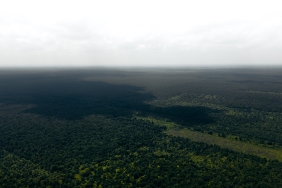
Padang, July 26, 2026 — The Sumatran tiger is the only tiger subspecies still surviving in Indonesia. As an apex predator, the tiger plays a vital role in maintaining the balance of the ecosystem. Their population continues to face various threats, ranging from habitat loss due to forest conversion, human-wildlife conflict, to poaching and illegal trade. As apex predators, tigers help control prey populations, thereby maintaining the balance of the food chain. If the tiger population declines, the balance of the ecosystem can be disrupted, affecting the overall health of the forest. Furthermore, the presence of tigers is closely linked to the lives of local communities. Forests, which serve as tiger habitats, provide various ecosystem services such as clean water sources, flood control, carbon sequestration, and livelihoods for communities living near forest areas. In other words, protecting tigers means helping to safeguard the quality of human life.
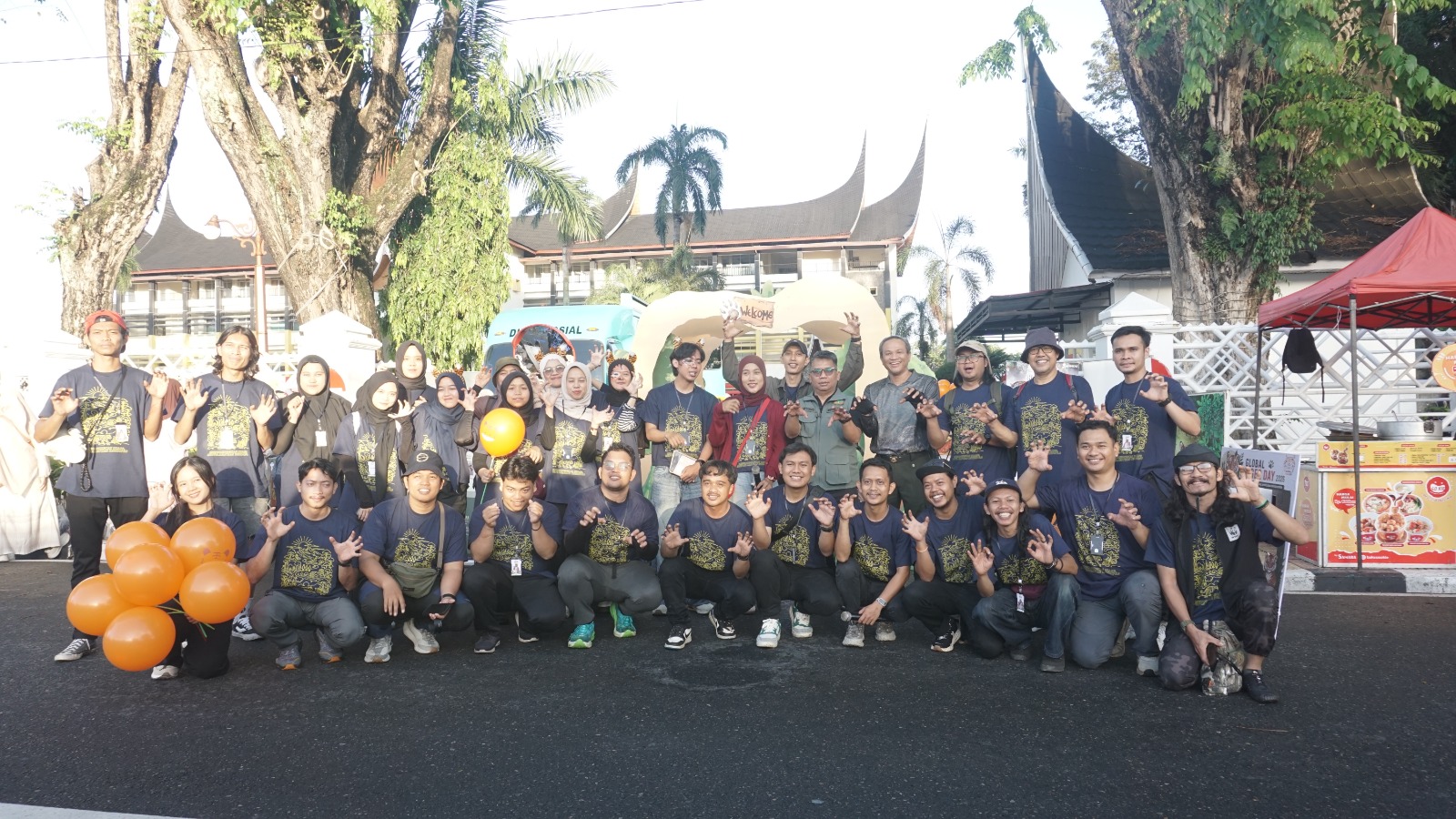
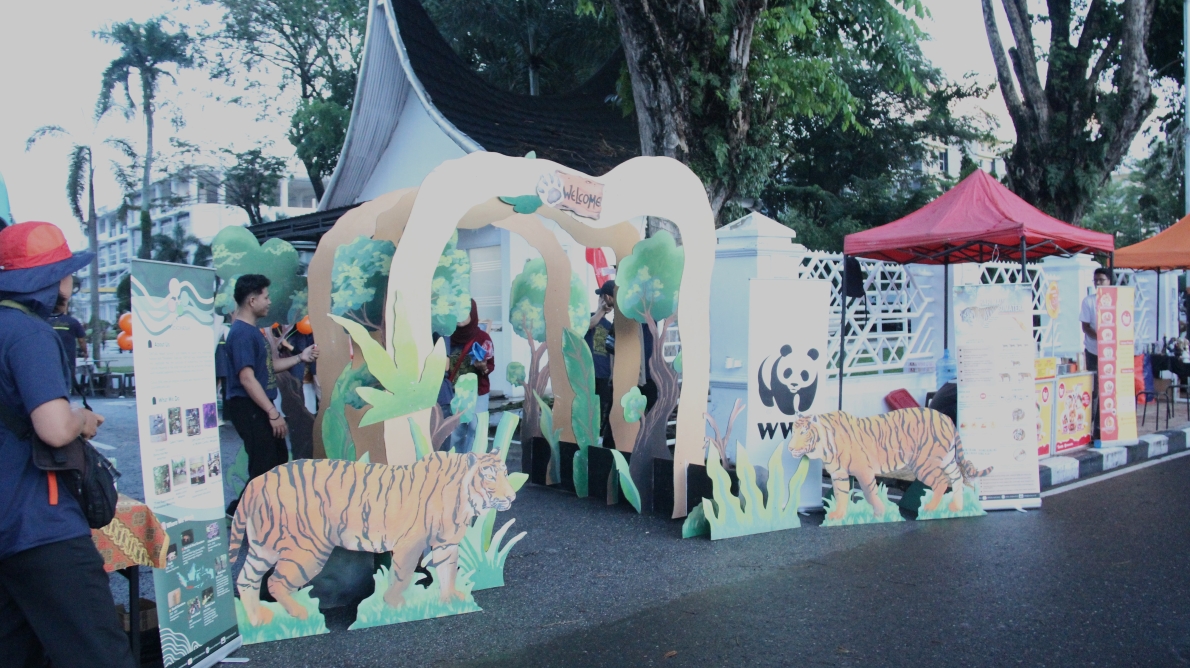
This spirit served as the central message of the Global Tiger Day 2026 commemoration, held through a public campaign at the Car Free Day (CFD) area in Padang on Sunday (July 26). Under the theme “Connecting Spaces, Saving Lives,” this event successfully brought together various conservation organizations, academics, government officials, and the public to raise awareness about the importance of Sumatran tiger conservation.
This initiative was spearheaded by SINTAS Indonesia in collaboration with the West Sumatra Natural Resources Conservation Agency (BKSDA), WWF Indonesia, Center for Orangutan Protection (COP), Forum Harimau Kita, Tiger Heart, and Sumatran Biodiversity (KHS) at the Department of Biology, Padang State University (UNP). This cross-institutional collaboration demonstrates that wildlife conservation efforts cannot be carried out by a single party alone but require cooperation among the government, conservation organizations, academics, communities, and the public.
The Car Free Day (CFD) area was filled with people from all walks of life who were enthusiastic about visiting the conservation education booths. Based on the survey results, the majority of visitors were women, accounting for 76%, while male visitors made up 24%. The age group with the highest participation was those aged >41–50 years, with the majority being homemakers.
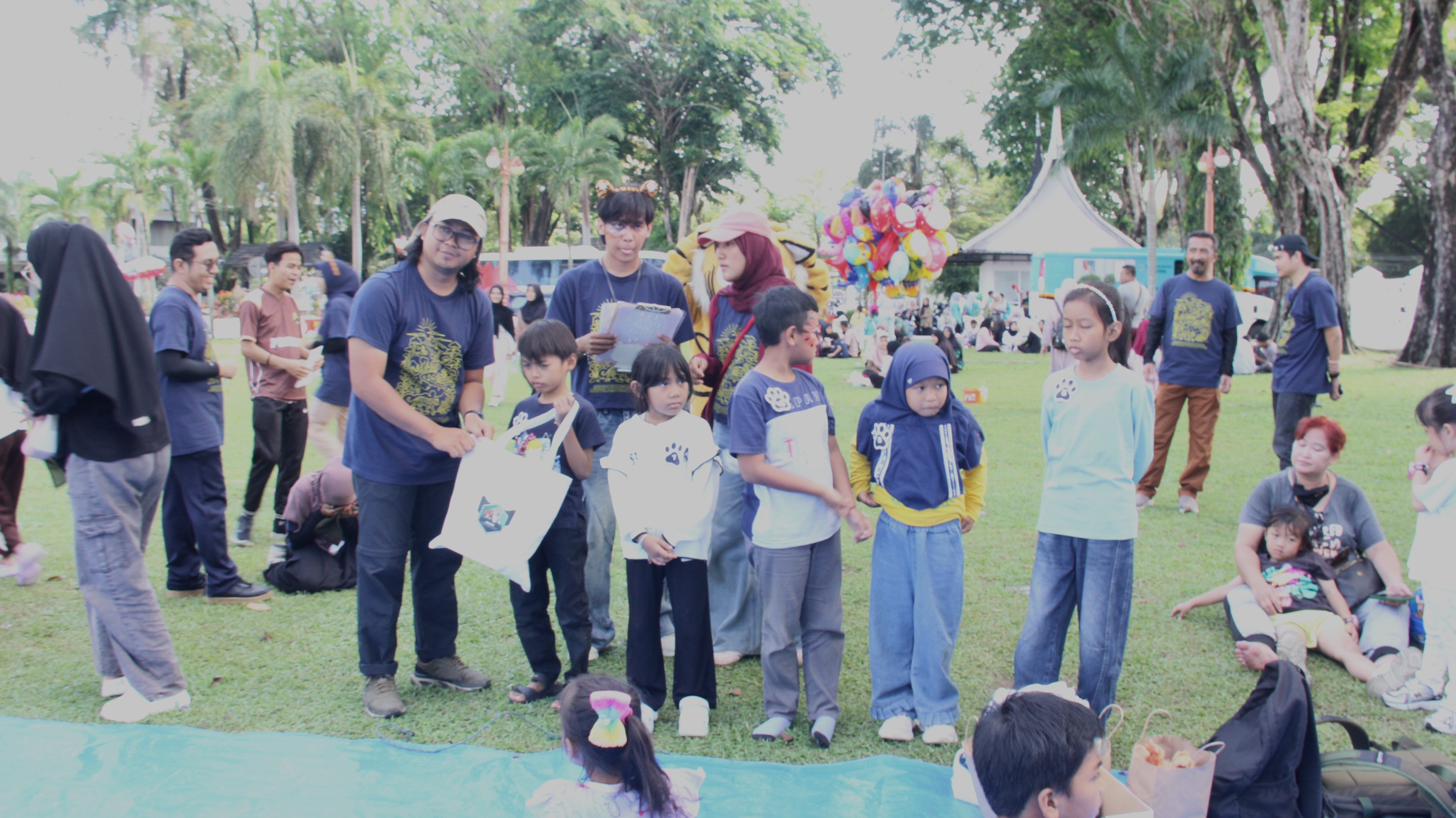
The event began with a talk show and a public address highlighting the importance of preserving wildlife habitats and raising awareness that the success of conservation depends on the involvement of all segments of society. This was followed by various activities such as a coloring contest, face painting, a snakes-and-ladders game, and an interactive quiz hosted by WWF with a variety of attractive prizes. As a gesture of commitment to environmental conservation, the West Sumatra Natural Resources Conservation Agency (BKSDA) also distributed plant seedlings to the community.
Hartono, Head of the West Sumatra Natural Resources Conservation Agency (BKSDA), said the public’s enthusiasm for participating in the event demonstrates a high level of concern for conservation efforts in West Sumatra.
"This certainly shows that the community’s support for conservation efforts—whether for nature conservation or tiger conservation—is truly extraordinary. Therefore, we hope that this event will further enhance the knowledge of the local community in the surrounding area regarding conservation efforts,” he said.
In addition to raising awareness about the importance of protecting tiger habitats, the BKSDA also encourages the public to actively report any potential negative interactions between humans and Sumatran tigers so they can be addressed immediately.
Hartono emphasized that conflict mitigation efforts cannot be carried out by the government alone but require collaboration with conservation organizations and communities, particularly those living near forest areas.
""If the public discovers or encounters any instances of negative interactions, let’s work together—please report any such activities taking place in the field to us at the West Sumatra Natural Resources Conservation Agency," he said.
According to Beno Fariza Syahri, Rimbang Baling Batanghari Project Leader & Wildlife Biologist, Global Tiger Day is expected to be more than just an annual observance; it should serve as a catalyst for all stakeholders to contribute according to their respective roles in conserving the Sumatran tiger. He also hopes that West Sumatra will remain a safe haven for the Sumatran tiger while preserving the Minangkabau cultural values that promote harmony with nature. Furthermore, the protection of well-preserved and interconnected habitats is key to supporting the tigers’ natural movements and reducing the risk of negative interactions between tigers and humans in the future.
In line with what Beno stated, SINTAS stated, “The theme ‘Connecting Habitats, Saving Lives’ reminds us that the future of the Sumatran tiger depends heavily on our ability to maintain the connectivity of its habitats.
This hope is also reflected in the high level of public awareness among those participating in this activity. The survey results show that 61.2% of respondents strongly agreed and 32.7% agreed that protecting the Sumatran tiger means helping to preserve Minangkabau traditions. These findings indicate that the community no longer views tigers merely as wild animals, but also as part of a cultural identity that has coexisted with the Minangkabau people for many years. In Minangkabau philosophy, the relationship between humans and nature is embodied in the principle of “alam takambang jadi guru” (nature is our teacher), which teaches the importance of maintaining the balance of nature as a source of life and learning. The Sumatran tiger is viewed as a symbol of courage and authority, as well as a guardian of the forest. Therefore, conserving the Sumatran tiger means not only protecting biodiversity but also preserving cultural values, local wisdom, and the harmonious relationship between humans and nature—all of which are integral parts of the Minangkabau people’s heritage.