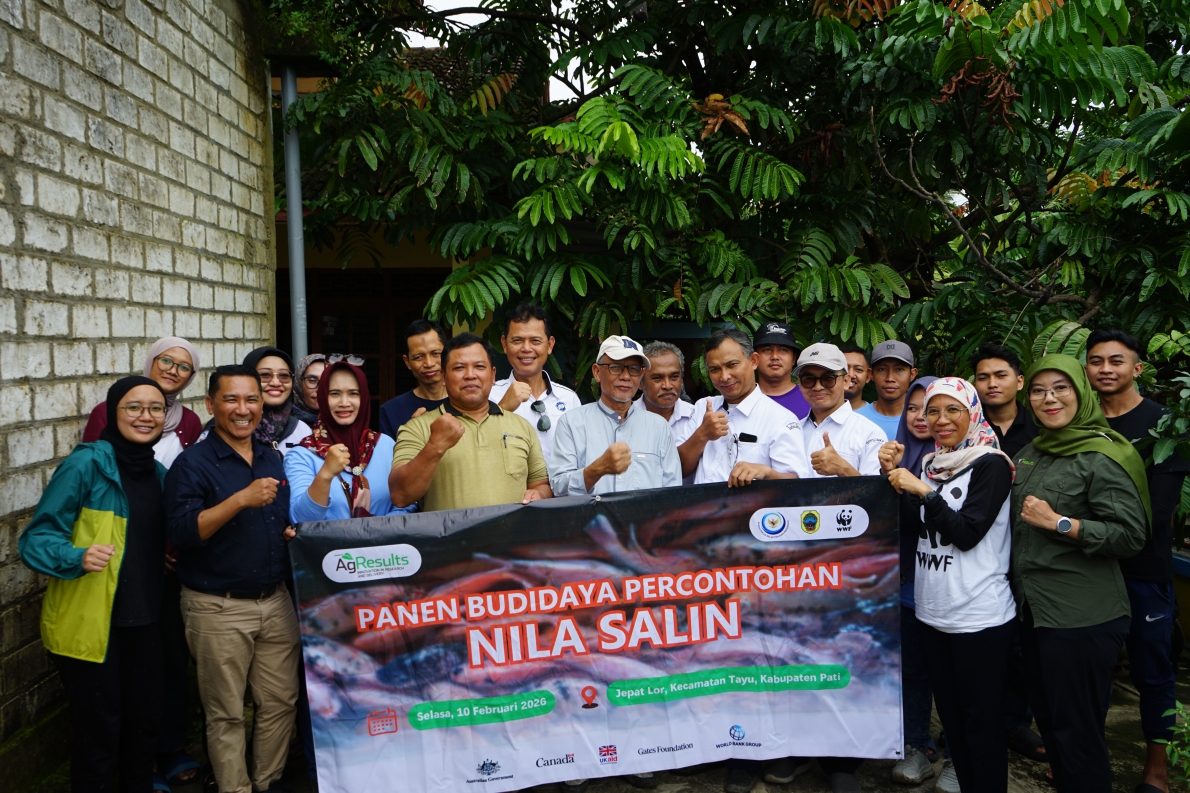
AGRESULTS INDONESIA COLLABORATION WITH THE GOVERNMENT: ENCOURAGING TECHNOLOGY DISSEMINATION THROUGH A SALINE TILAPIA PILOT PROJECT IN STARCH
As the fifth and final year of the AgResults Indonesia Aquaculture Challenge Project draws to a close, WWF-Indonesia is implementing a pilot project on saline tilapia aquaculture in Jepat Lot, Tayu Subdistrict, Pati Regency together with the Pati Regency Marine and Fisheries Agency (DKP), the Center for Brackish Water Aquaculture (BBPBAP) Jepara, Pokdakan Mina Barokah, and five AgResults competitors.
This initiative supports the broader objective of AgResults, a Pay-for-Results prize competition, as a space to directly prove the performance of competitors' tools, by involving the government to see the impact of technology on aquaculture productivity. Through this approach, the government is expected to play an active role in disseminating the success of these pilot projects, so that the use of the technology continues to grow for small-scale farmers and competitors can continue to contribute even after the competition ends.
Saline tilapia (Tilapia sp.) is a type of tilapia cultivated in brackish water. It has been one of the flagship programs of DKP Pati that has been developed since 2014 with production reaching around 7.5 thousand tons in 2023 (BPS Central Java, 2025). The development of saline tilapia in Pati began with the decline in pond productivity due to water quality problems and disease attacks in the shrimp-bandeng polyculture system. In this situation, saline tilapia emerged as a promising alternative due to its good adaptability and relatively shorter growth period compared to milkfish.
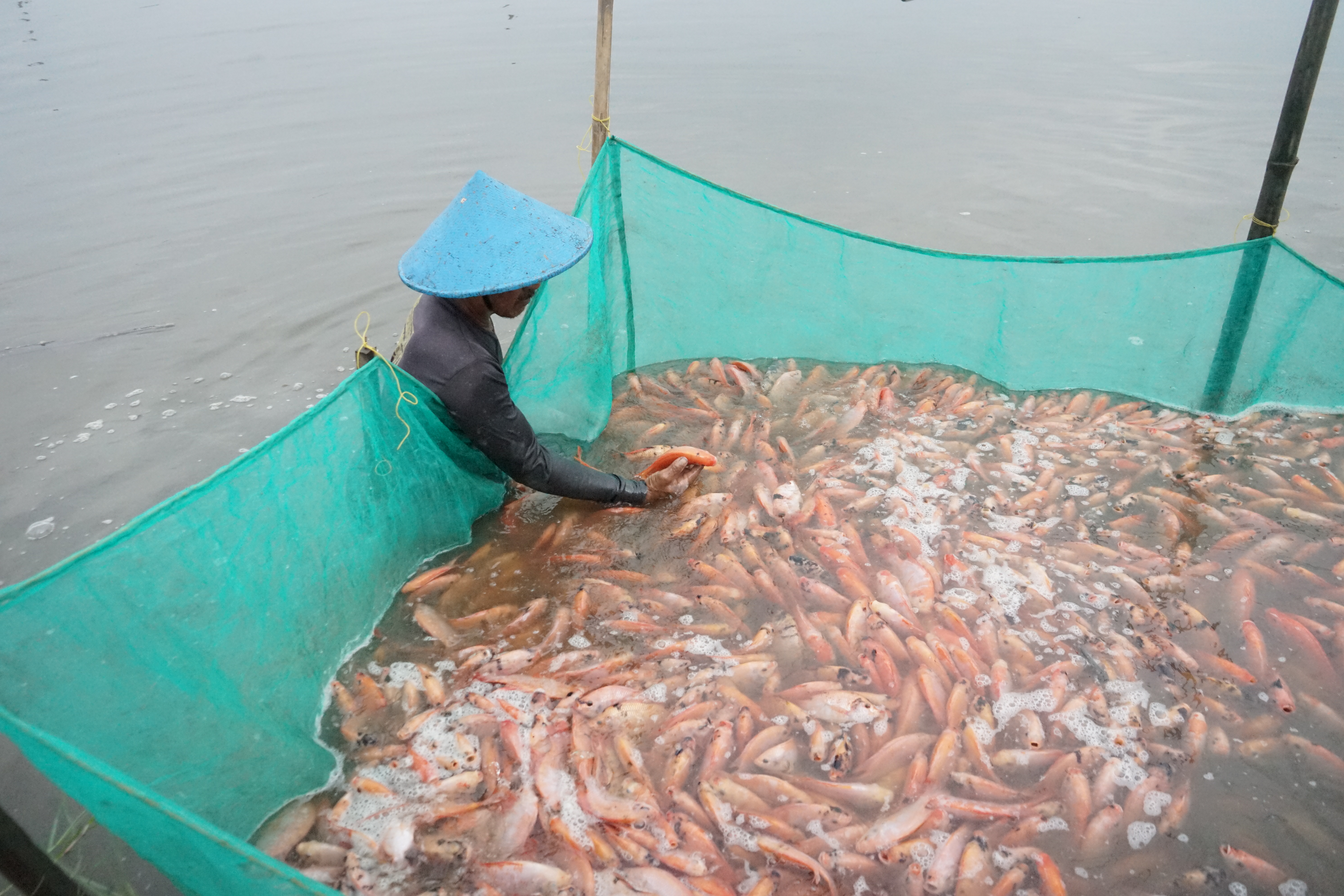
Currently, about 1,800 hectares of pond land in Tayu, Margoyoso, and Dukuhseti sub-districts have been utilized for saline tilapia cultivation. Jepat Lot village in Tayu sub-district was chosen as a strategic location for the pilot project because it was noted to have adequate infrastructure and institutions.
The pilot project started in October 2025 and lasted for 3-4 months in one pond of 2,500 m2 with a semi-intensive polyculture system of saline tilapia and vannamei shrimp. The stocking density applied was 50,000 saline tilapia seeds and 30,000 vannamei shrimp seeds. BBPBAP Jepara contributed by providing superior saline tilapia seeds. In addition, technological support in the form of aerators was provided by CV Asia Cahaya Teknik Prima, PT Bumi Wirastaraya Sejahtera, and PT Banoo Inovasi Indonesia, while CV Republik Vannamei and PT Venambak Kail Dipantara also provided aerators and autofeeders.
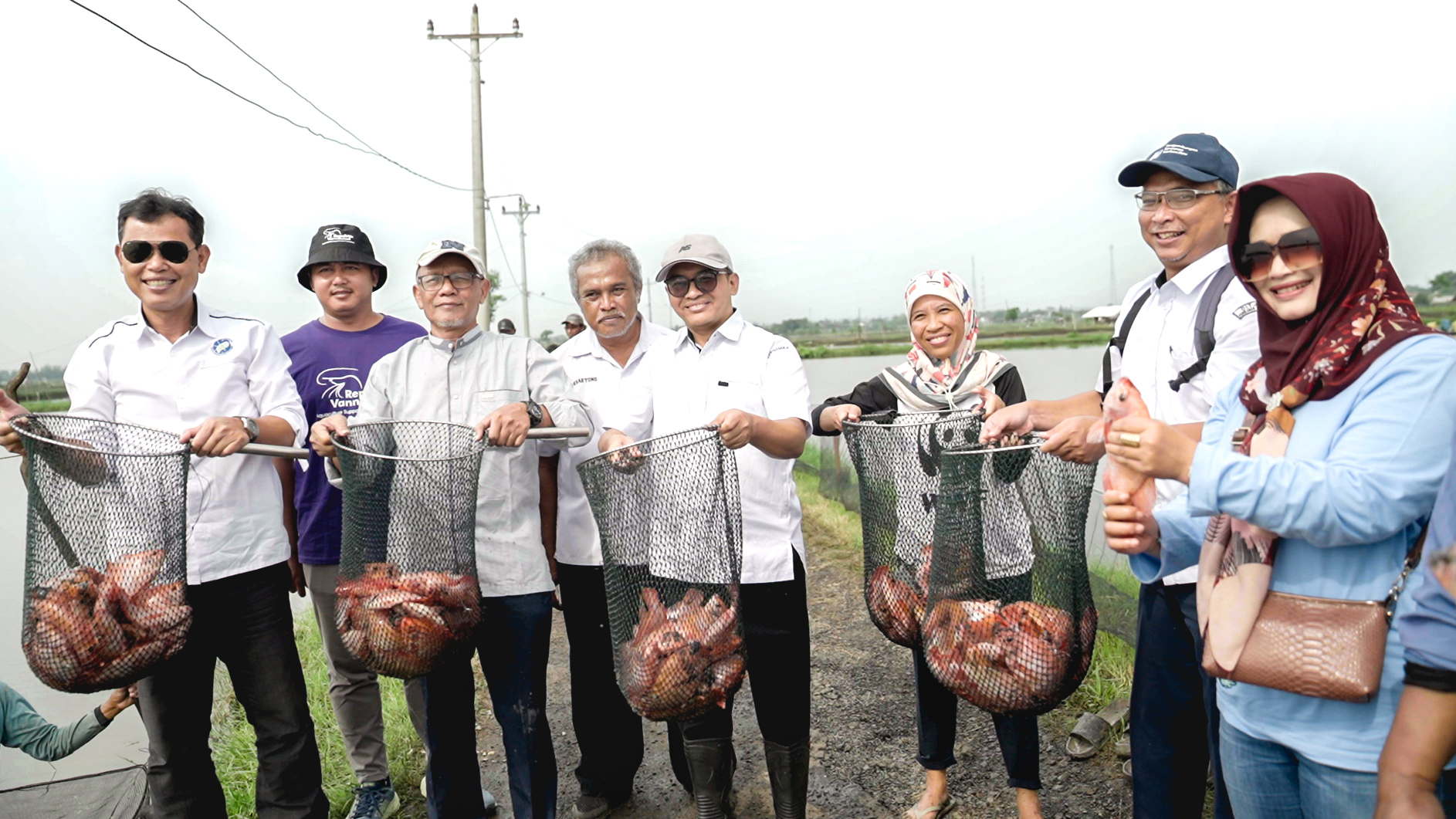
Harvesting activities as the culmination of the pilot project activities were held on February 10, 2026. Despite the flooding on January 9-23, the project was able to produce 3 tons of saline tilapia at 4-6 fish per kilogram. The survival rate of saline tilapia was recorded at 47 percent.
"Despite being affected by flooding, the growth of saline tilapia in this cycle is more optimal thanks to the support of technology assistance, superior seeds, and mentoring from DKP Pati. Feed use is also more efficient. With the same stocking time and amount, the fish size in the pilot site reached 4-6 fish per kilogram, greater than the surrounding ponds which are still in the range of 10-12 fish per kilogram. The harvest cycle is also shorter, from the usual 3.5-4 months to 3 months and 10 days." Said Nugroho, Chairman of Pokdakan Mina Barokah.
This pilot project also strengthens the government's involvement through the extension function. "People need proof and extension assistance is important, especially when technology is applied," said Ifan Ridlo, a representative of the Marine and Fisheries Extension Center. With the increasing adoption of technology, the need for assistance in the field is also increasing, so the role of fisheries extension workers is increasingly needed.
Overall, the use of AgResults competition technologies in this pilot project successfully demonstrated the potential for increased production of saline tilapia aquaculture through accelerated growth resulting in faster harvest cycles and higher survival. In addition, the project also successfully encouraged government involvement in dissemination and mentoring efforts.
Based on these achievements, the pati district government through the Department of Fisheries and Marine Affairs is committed to socializing the results of this pilot to other assisted groups. "Considering the great potential of saline tilapia development in this district, I hope the results of this project can be used as a study material that we will later socialize to other villages in Pati," said Sriwati, Head of the Pati District Fisheries Cultivation Division. This dissemination support will not only increase the capacity of farmers to increase production, but also open new market opportunities for AgResults' competitors after the project is completed.
 ,>
,>