LEARNING SUSTAINABLE CONSUMPTION THROUGH DISCUSSION AND BREAKING FAST TOGETHER
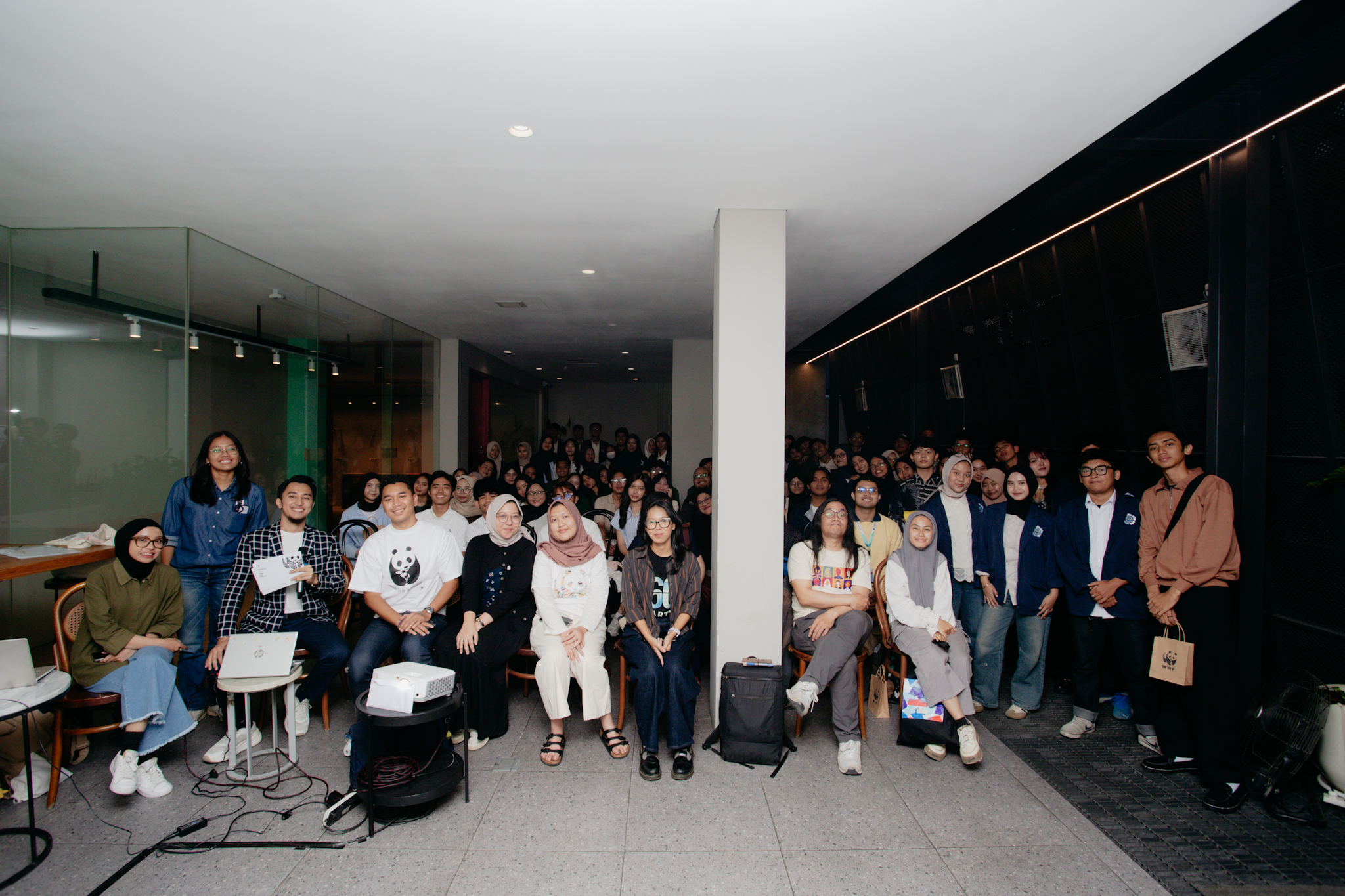
At three o'clock in the afternoon, the talkshow held at Hummingbird began to prepare. Participants began to arrive from all walks of life, from students to journalists to community representatives.
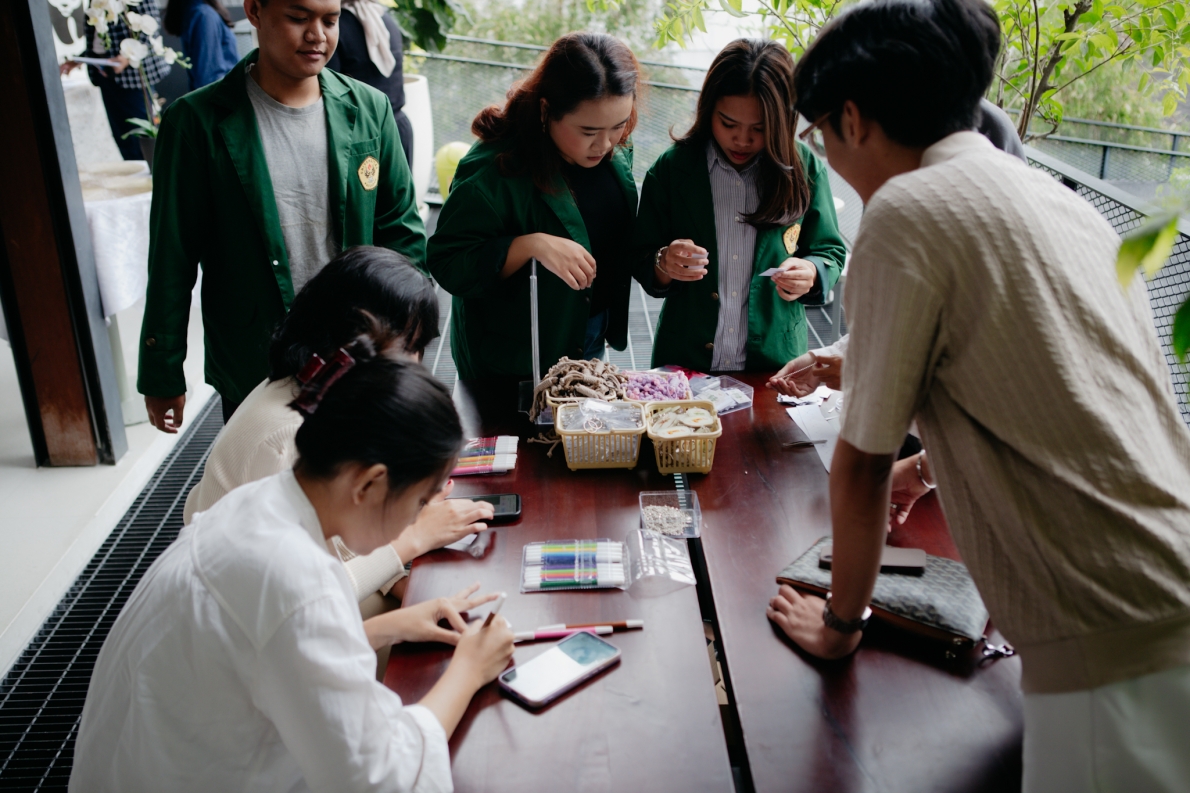
While waiting for the event to start, they were invited to make keychains with sketches that were colored using markers, until the desired image was formed. In addition to sketches, there were also images representing various commodity illustrations such as cocoa, rattan, rubber and palm oil. This activity was not only a time filler, but also an introduction to the theme of the event related to sustainable commodities.
Not long after, participants were directed to the main room to follow the presentation of material from three speakers. The topics discussed were related to commodities, local food, and small habits that can shape conscious consumption. Before the presentation began, participants took an interactive quiz to gauge the extent of their understanding of the issues.
The first presentation was delivered by Samuel Pablo Pareira representing WWF-Indonesia. He explained how the market can determine the direction of industry and retail. Based on the data presented, many people actually want to consume more sustainable products, but are still constrained by access. If market demand arises, industries will be encouraged to adjust their products in a more environmentally friendly direction.
Although eco-friendly products are relatively higher. However, this has an impact on commodity players who depend on the sector. When they earn a more decent wage, their welfare can also improve. With individual awareness, participants not only contribute to environmental protection, but also to the survival of people in the commodity sector. Small actions can still influence the market system.
In addition, participants were also introduced to how to recognize sustainable products, both by tracing the origin of the product and through certification labels such as RSPO, PEFC, and ASC/MSC.
The next topic discussed about sustainable diets delivered by Aidia Awwaaba who is also from WWF-Indonesia. This material revisits the planet-based diet that was once the basis of community consumption before rice became the staple food. In her presentation, it was explained that what we consume does not only have an impact on our bodies, but also on the environment.
The discussion then continued on the concept of "My Plate", which not only emphasizes balanced nutrition but also considers its impact on the environment. Aidia Awwaaba explained that animal food consumption goes through a longer process as it requires more resources, such as land, water and animal feed. This is in contrast to plant-based food, which can be processed or consumed more directly. This more complex process makes the environmental footprint of animal food tend to be larger. Therefore, a balance in consuming animal and plant-based foods is needed as part of a more sustainable diet.
In addition, WWF is working with supermarket retailers to look at people's consumption patterns while facilitating access to more sustainable food choices. These efforts are geared towards strengthening local food, improving nutrition literacy, and encouraging more balanced eating habits.
Widiyani, a representative from Earth Hour Bandung, closed the dialog that day by inviting participants to imagine what could be done if the lights were turned off for one hour. The movement started in Sydney and has now spread to more than 180 countries. If done massively, this movement not only saves electricity, but also becomes a form of contribution to the environment. While it may seem like a small act, it is still a meaningful one in terms of reducing energy use.
Widiyani also emphasized that in order to influence others, one does not have to have many followers. The invitation can start from the closest circle, such as chats in hangouts or through posts on social media. Young people have an important role in shaping trends. When young people become aware of good causes, trends will follow. In this context, the FOMO phenomenon can be utilized to encourage participation in more positive habits.
Interestingly, there were participants who made various items from used materials, such as key chains and cake molds. She was inspired by her friend in Belgium who used to collect used items and repurpose them into something useful. This example shows that small habits can have a real impact in everyday life. After the whole program was over, the event was closed with iftar.
From the three speakers, it can be understood that the material presented is interconnected, ranging from the importance of wisely choosing products, maintaining nutritional balance in the contents of the plate, to small habits that can affect the environment. The participants were enthusiastic about the session. They not only listened, but also actively discussed and exchanged views, thus gaining new insights that they can develop in lectures.
After the session was over, participants began to take the food that had been provided for breaking the fast together. The atmosphere became more relaxed. Some were still chatting, some returned to the workshop area to draw, and some chose to immediately enjoy the dishes that had been prepared.