WWF ADDS 30 VIDEO CAMERAS TO TRACK THE RAREST RHINO
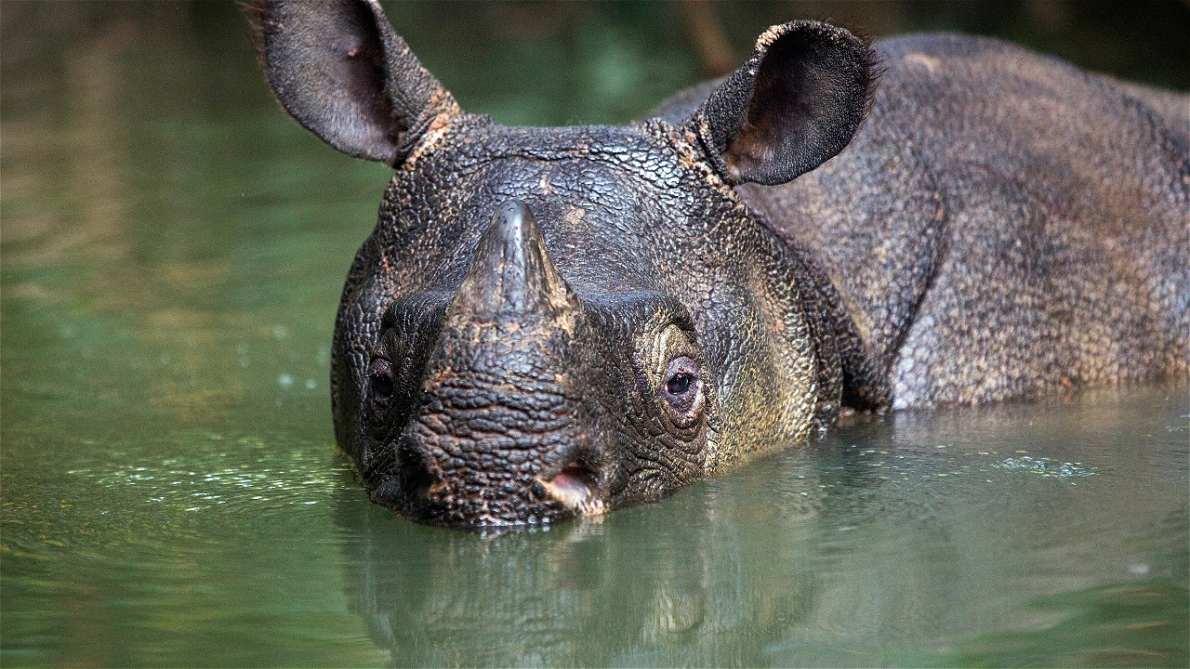
Ujung Kulon National Park—WWF-Indonesia and Ujung Kulon National Park officials have recently installed another 30 video camera traps in order to record the distribution and behavior of Javan rhinoceros (Rhinoceros sondaicus) that live in deep in the the jungles of the national park. These new cameras bring the total number of video cameras to 34, which covers all of the rhino’s habitat in Ujung Kulon National Park. Thanks to WWF-AREAS Programme, International Rhino Foundation and ARCP (Asian Rhino Conservation Program) who donated the new cameras.
“Close observation of Javan rhinos is very important as it helps us learn about their feeding and wallowing behavior, as well as their reproductive behaviors such as mating, rearing, and mother-calf separation,” said Adhi Hariyadi, who leads WWF-Indonesia’s project in Ujung Kulon.
The new cameras were installed during the last week of December and footage will be checked every month. “We hope to find the result of these new cameras by next month,” said Adhi.
Javan rhinos are the rarest of the world’s five rhino species and are critically endangered. They are found only in two locations in the world. Ujung Kulon National Park in Java, Indonesia is estimated to have only about 60 rhinos -- more than 90 percent of the global population.
Scientists from WWF and its partner organizations have been studying the one-horned rhinos using camera traps to help protect them from extinction. Using a motion-triggered infrared beam, video traps are a useful way to observe rarely seen animals in a more detailed way. It provides evidence of individual animals, their size, age distribution, sex and health.
In May 2008, WWF and Ujung Kulon National Park officials released the first video of a Javan rhino from a video camera trap, which recorded remarkable images of a Javan rhino accompanied by a calf.
Efforts to protect Rhino’s feeding ground
Today, competition for food and space is an enormous challenge facing the Javan rhino. The animals have to share the Ujung Kulon National Park with wild cattle - locally known as banteng - and their habitat is under threat from an invasive palm species called Arenga obtusifolia.
Almost a year ago, WWF started a habitat intervention in order to eliminate Arenga palm from Javan rhino’s feeding ground. This effort has paid off. In December 2008, one rhino visited this plot and feasted on some of the newly growing native plants. These plant species were not previously available due to the invasion of Arenga plant. The rhino’s feeding behavior was recorded by a survey team consisting of Ujung Kulon National Park rangers and WWF field personnel. Signs of rhino feeding were indicated by footprints, and also browse marks on several species of food plant.
Habitat intervention was supported by funding from WWF Germany, and done by eliminating some of the Arenga palm that rhinos will not eat; thus increasing the growth of native plant species that rhinos will eat. Palm elimination was done by manual cutting, due to the lack of permit to use tested herbicidal agents. This data shows that, despite the small area cleared of the invasive palm, the growth of food plants did attract a rhino to the area. The finding provides conformation that habitat improvement can increase rhino’s accessibility, but in order to significantly improve food plant availability more areas need to be effectively managed.
Recent rhino census led by Ujung Kulon National Park Officials in December 2008 provided indication of at least one very young (newborn) rhino calf with footprint size 17-18cm is accompanying its mother. The presence of this newborn rhino is consistent with the pattern of rhino’s birth for every 2-3 years in Ujung Kulon National Park.
More:
World’s Rarest Rhino Make Video Trap First Appearance – and then Toss Camera
Baby Boom for World’s Rarest Rhino
Camera Trap : How it works See the Results
How You Can Help? Click to www.rhinocare.info