
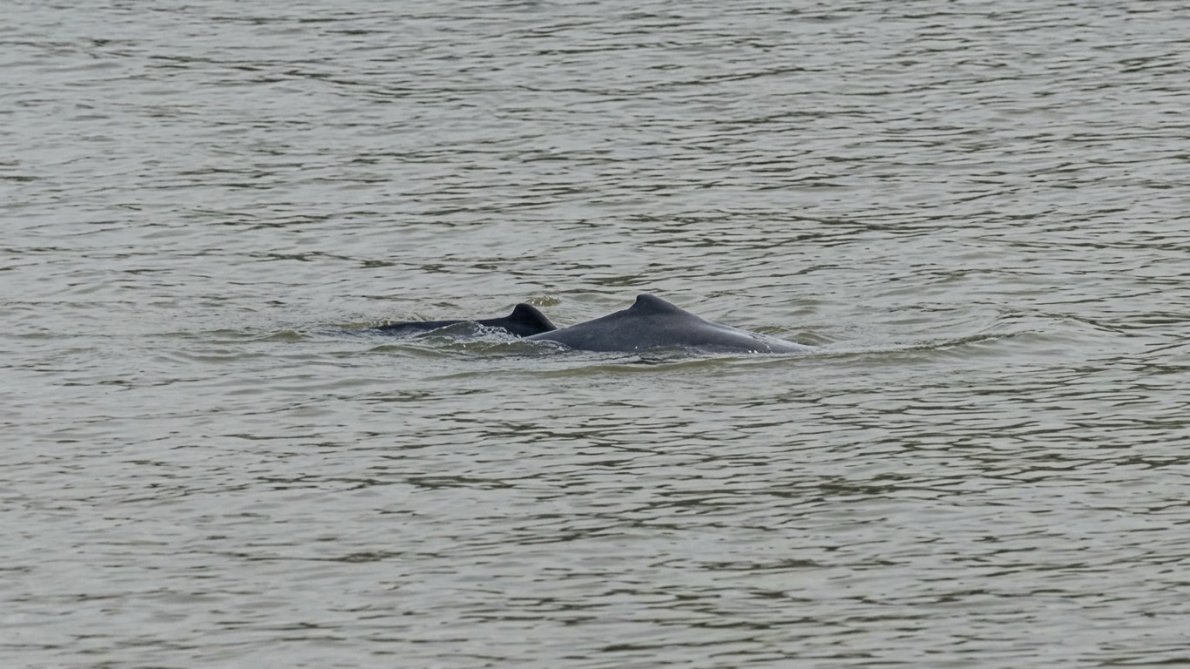
STRENGTHENING THE BOND: STAKEHOLDERS TRAINED FOR RESCUING STRANDED MAHAKAM RIVER DOLPHIN
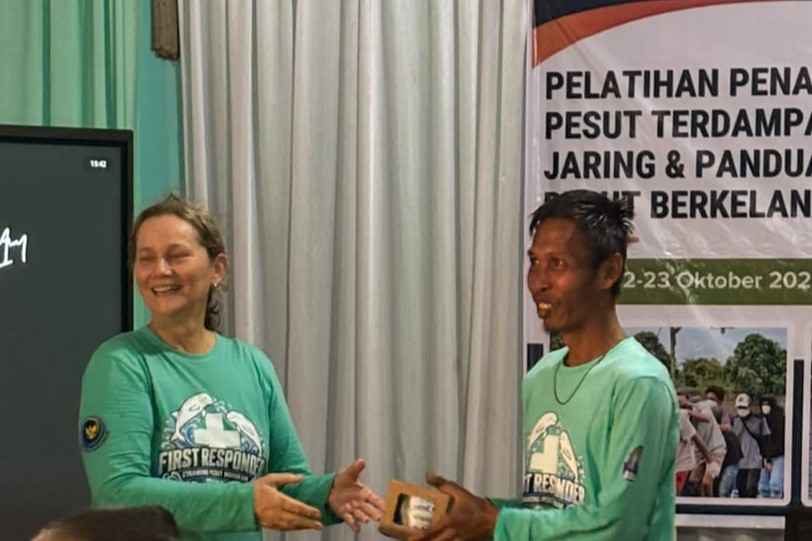
Pela Village, Kutai Kartanegara, East Kalimantan — October 23rd, 2026. As many as 33 participants from different walks of life attended “Training on Stranded and Net Entanglement River Dolphin Rescue, and Sustainable Tourism Guideline” on 22nd and 23rd of October 2026.
This training was organised by the Rare Aquatic Species of Indonesia (RASI) Conservation Foundation and aimed to strengthen the emergency response network and build participants' capacity as first responders if they encountered river dolphins in distress.
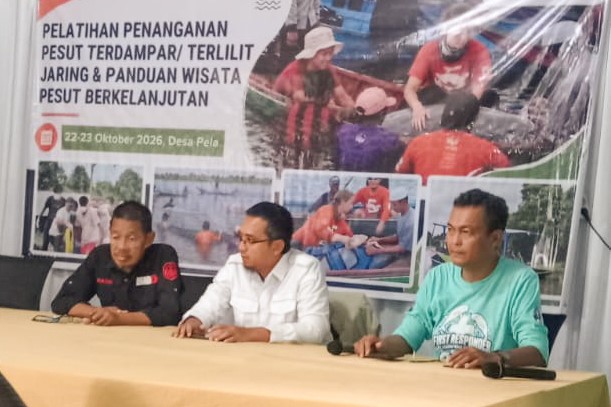
The training’s participants consisted of the RASI Monitoring Team, Pela Tourism Group, Kota Bangun Sector Police Station, Kota Bangun Military Rayon Command, Kota Bangun Public Order Agency, Kutai Kartanegara Regency’s extension officers, the Ministry of Marine and Fisheries’ Pontianak Marine and Coastal Resources Management Office, and the team from Minta Village’s Kahoi Lestari Community-managed Conservation Area.
The training covered procedures for handling stranded or entangled but alive river dolphins, handling dead river dolphins, documentation and body-measurement techniques, and an introduction to necropsy to support information gathering, especially on the cause of death.
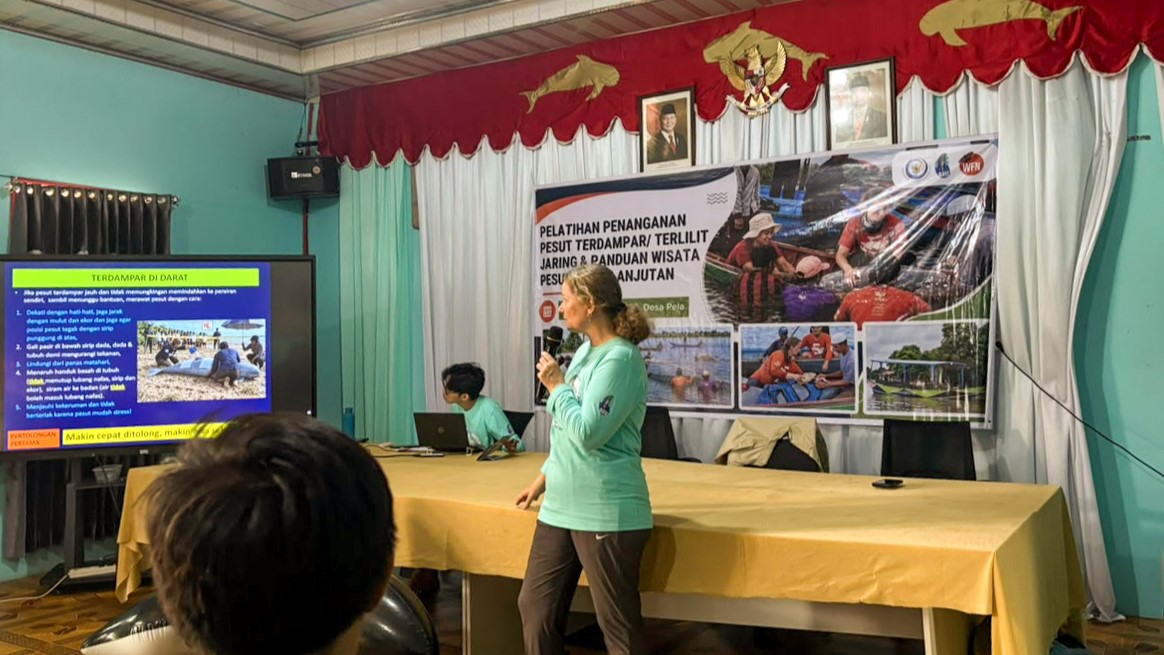
Increasing the Skills on Field Emergency Response
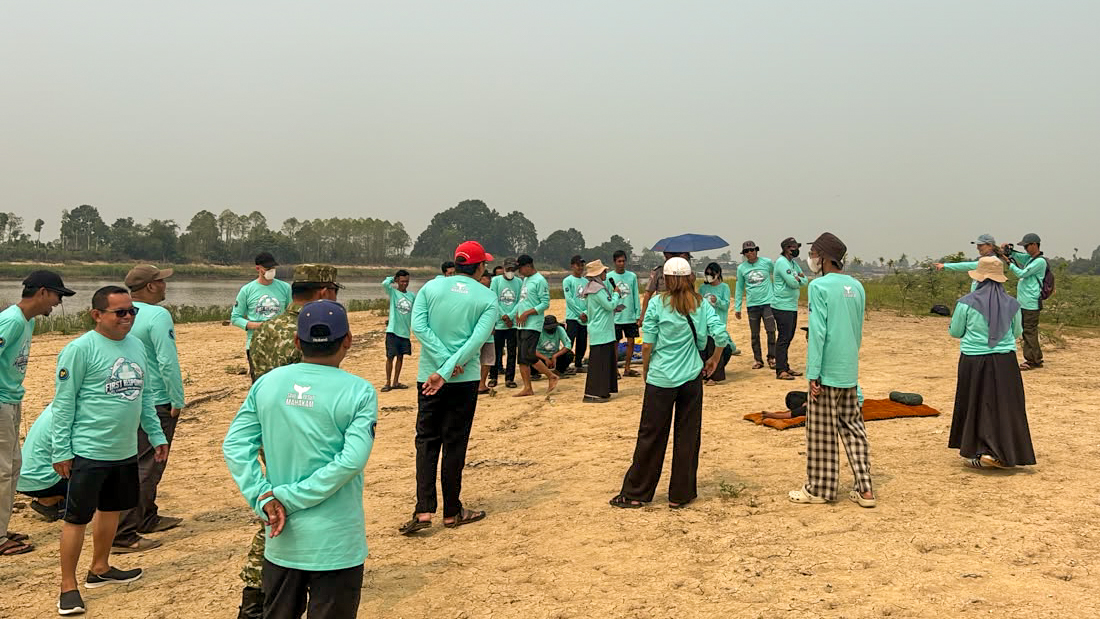
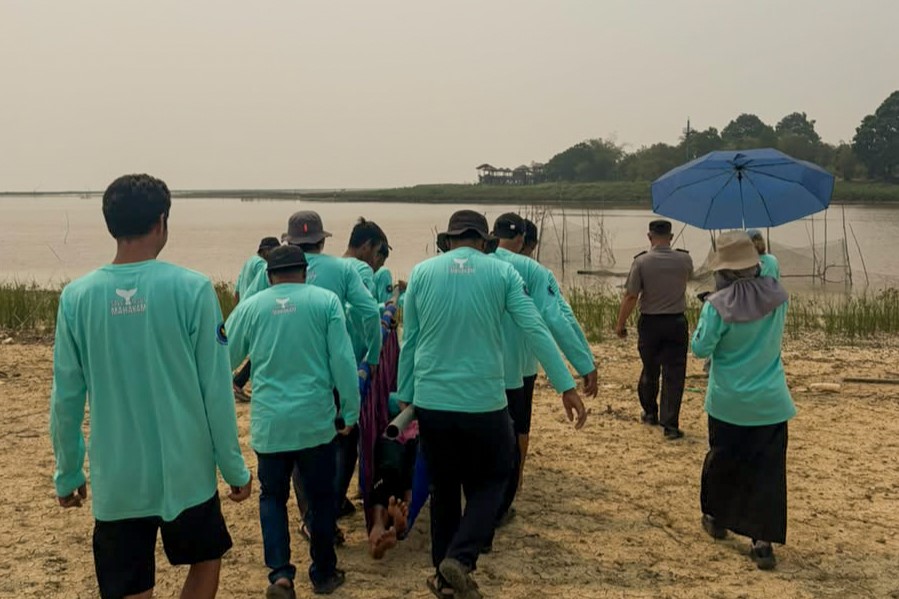
During the two-day training, participants learned various technical skills through presentations and emergency situation simulations. During one simulation, when a river dolphin was entangled in a rengge or gill net, participants learned the importance of caution to reduce the risk of injury to the river dolphin’s body and fins, and how to prevent unnecessary actions that may cause stress.
The training also introduced first aid principles for stranded river dolphins, including maintaining skin moisture by applying a wet cloth, ensuring the blowhole is clear of water and mud, and supporting the body properly to avoid harmful pressure. All procedures must follow a competent expert’s directives.
Beyond the technical aspects, this training emphasised the importance of cross-sectoral coordination and communication among villages along the Mahakam River. The coordinated response network is expected to help community members efficiently report related incidents and ensure proper measures are taken by personnel with adequate knowledge and skills.
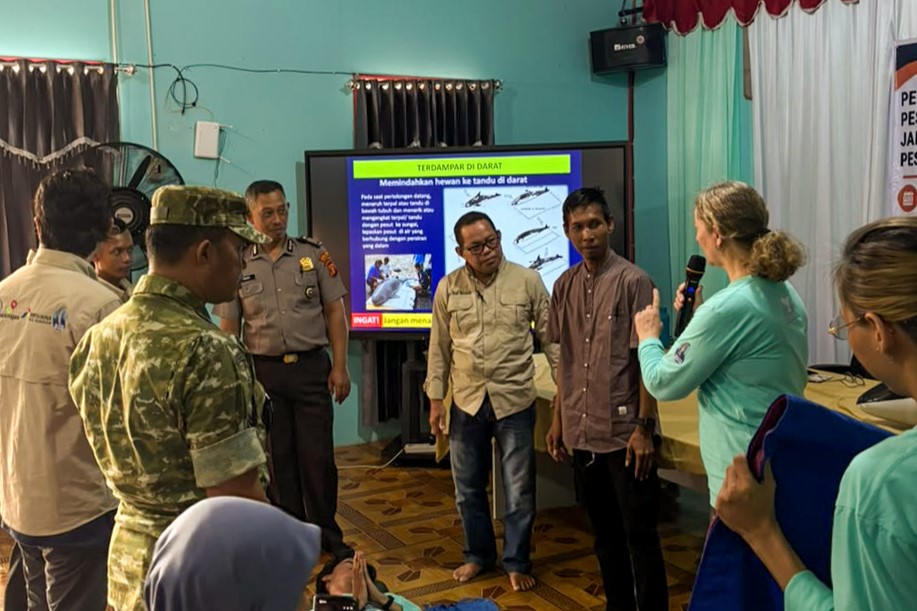
Community Awareness is a Strength in Conservation
One of the participants, Roni Irfan of the Minta Village’s Kahoi Lestari Community-managed Conservation Area, conveyed that he genuinely cares for Mahakam river dolphins’ (Orcaella brevirostris) survival, and it became his motivation to participate in this training, “Both my love and concern for the Mahakam river dolphins is what push me to learn. I realised that rengge, which is a fishermen’s main fishing tool, may unintentionally become a dangerous device for this rare water species.”
He thinks practical knowledge is essential to help communities clear up confusion when they encounter stranded or entangled river dolphin incidents. He also assesses that the simulation from this training has helped them understand which actions to take, as well as what to avoid during an emergency.
The training reflected on the significance of community involvement in conservation efforts because they are basically ‘neighbours’ to Mahakam river dolphins. Fishermen, volunteers, youths, community organisations, and local authorities could play an important role in the reporting network and as first responders, with regard to both human and fauna well-being.
Mahakam River Dolphin Conservation Starts from a Healthy River
In addition to practical knowledge, this training also strengthens the understanding that Mahakam river dolphin protection does not depend solely on emergency action, but also requires preventive measures and sustainable habitat management.
“River dolphin population and habitat conservation in the Mahakam River require firm collaboration that is capable of sustaining various efforts, from advocating and enforcing science-based policies, collaborative management of the core areas spanning from Kutai Kartanegara to its buffer areas in Kutai Barat, encouraging sustainable fisheries practices, to restoring riparian forests as well as peatland forests,” emphasised WWF-Indonesia’s Mahakam-Kayan Project Leader, Sri Jimmy Kustini.
Communities, with support from RASI Conservation Foundation and WWF-Indonesia, have been developing Other Effective Area-based Conservation Measures OECM, which basically refers to areas beyond aquatic conservation areas that are managed for conservation objectives.
Across the Mahakam River, OECMs were being developed near Muara Pahu and Penyinggahan Districts in Kutai Barat Regency. These OECMs, along with the Ministry of Marine and Fisheries’ Mahakam Wilayah Hulu Aquatic Conservation Area (designated through Ministry of Marine and Fisheries Decree 49/2022), are expected to expand conservation areas and strengthen the effectiveness of protecting the habitat and population of Mahakam river dolphins.
Al-Hadid, a participant from Minta Village who is also mentored by WWF-Indonesia, reflected on conservation efforts for the Mahakam river dolphin through waste management, as he also emphasised the relation between the river’s health and the dolphins’ well-being. Through waste sorting and waste education, communities are encouraged to keep the Mahakam River spick and span.
Waste floating in the river will pollute river dolphins’ habitat and increase risks for other aquatic fauna. Microplastics have also become a major concern in efforts to maintain aquatic ecosystem quality, though specific impacts on Mahakam River dolphins would need further scientific assessment.
”All these times, I am worried whenever I hear river dolphins get entangled in rengge. I wanted to help, but I was not sure about how to do it correctly. After this simulation, I obtained new knowledge on the importance of proper handling, and which actions should be avoided,” he explained.
Al-Hadid added that this training was one of his most impressive experiences because it further strengthened his fondness for the mammal dwellers of the Mahakam River.
Advocating Responsible River Dolphin Tourism
Through a session on sustainable river dolphin tourism guidelines, the training also emphasised the importance of tourism practices that prioritise fauna safety and well-being and respect their natural habits. Tourists, guides, boat operators, and community members should maintain a safe distance, avoid pursuing or disrupting river dolphins, and not disturb mothers and their calves.
This responsible approach is expected to support local communities’ alternative livelihoods while maintaining the river dolphin population and habitat quality in the Mahakam River.
RASI Foundation hopes this training will be a firm step toward strengthening collective preparedness, reinforcing multiparty coordination, and developing communities’ roles as partners in protecting Mahakam River biodiversity, says Danielle Kreb, co-founder and Scientific Program Leader.
Perlindungan pesut Mahakam membutuhkan keterlibatan semua pihak. Respons yang tepat saat terjadi keadaan darurat, praktik perikanan yang lebih aman, wisata yang bertanggung jawab, dan kebiasaan tidak membuang sampah ke sungai merupakan bagian dari upaya bersama untuk menjaga warisan keanekaragaman hayati Kalimantan Timur.
Protecting river dolphins requires involvement from all stakeholders. A proper emergency response, safer fishing practices, responsible tourism, and a clean Mahakam River are all integral to safeguarding the legacy of East Kalimantan’s biodiversity.