HOW CAN THE MATURITY LEVEL OF FISH GONADS HELP FISHERIES STOCKS IN THE FUTURE?
Not only is it important to know where fish are caught, but understanding when they have reached “maturity” is also key to maintaining the sustainability of fish stocks in the ocean. Imagine if fishermen continued to catch fish before they reached their reproductive phase—or, in biological terms, before their gonads had matured. Gonads are the reproductive organs of fish; they are where eggs in female fish and sperm in male fish are produced and develop. Naturally, these fish haven’t yet had the chance to reproduce and produce a new generation. If this situation continues, the number of fish capable of reproducing will continue to decline. Ultimately, the ability of fish stocks to naturally replenish their populations will also diminish.
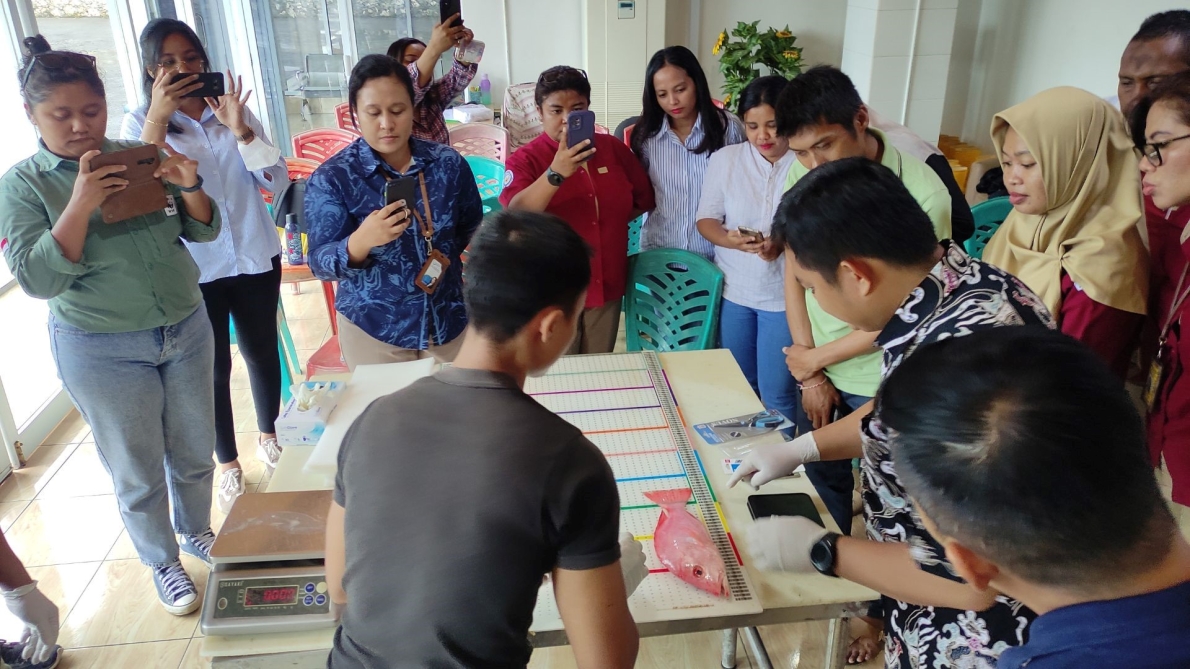
So, how can we tell if a fish is ready to reproduce? One method used is morphological observation. Each fish sample is measured for length and weight, then dissected to examine the condition of its gonads. These gonadal characteristics are compared against gonadal maturity guidelines specifically developed for each fish species. From hundreds to thousands of samples, researchers then analyze the relationship between fish body size and gonadal maturity levels to estimate the size at which most fish begin to be ready to spawn.
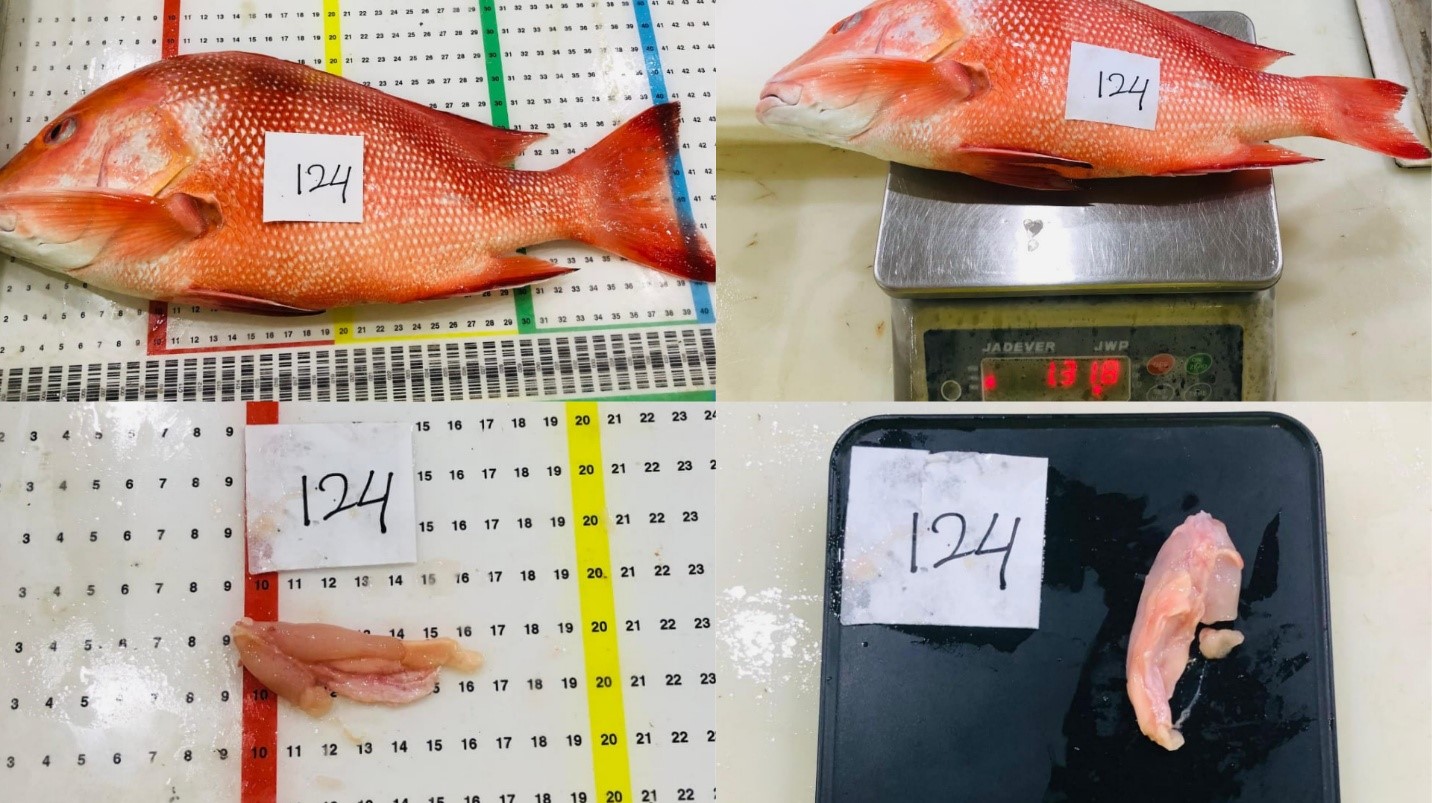
It is this information that makes gonadal maturity level (GML) data one of the most important biological parameters in fisheries management. This data is used to determine the size of fish at first gonadal maturity (Length at first maturity or Lm). This information then serves as one of the key parameters for calculating Spawning Potential Ratio (SPR), particularly through the Length-Based SPR method. Simply put, SPR helps researchers estimate the capacity of the remaining wild fish population to produce the next generation. The more adult fish that are still capable of reproducing, the greater the chance that the fish population will continue to grow and remain sustainable.This approach has been implemented by WWF-Indonesia in collaboration with PT Matsyaraja Arnawa Stambhapura (PT MAS), a capture fisheries company based in Kupang that supplies seafood products such as snapper and grouper to both domestic and international markets. Since joining Seafood Savers in 2019, PT MAS has been implementing the Fisheries Improvement Program (FIP) to promote sustainable fishing practices in accordance with the Marine Stewardship Council (MSC) ecolabel standards.
As a follow-up to recommendations for fisheries improvements, WWF-Indonesia and PT MAS collected Gonadal Maturity Stage (GMS) data from May through October 2024 to strengthen stock assessments and support the implementation of the Fisheries Management Plan (FMP) for snapper and grouper in the Timor Sea. This GMM data collection focused on three target demersal fish species: red snapper (Lutjanus malabaricus), humphead snapper (Lutjanus sebae), and the anggoli snapper (Pristipomoides multidens). Nationally, these species rank fifth in Indonesia’s capture fishery production, with a total of 385,199 metric tons in 2024 (kkp.go.id).
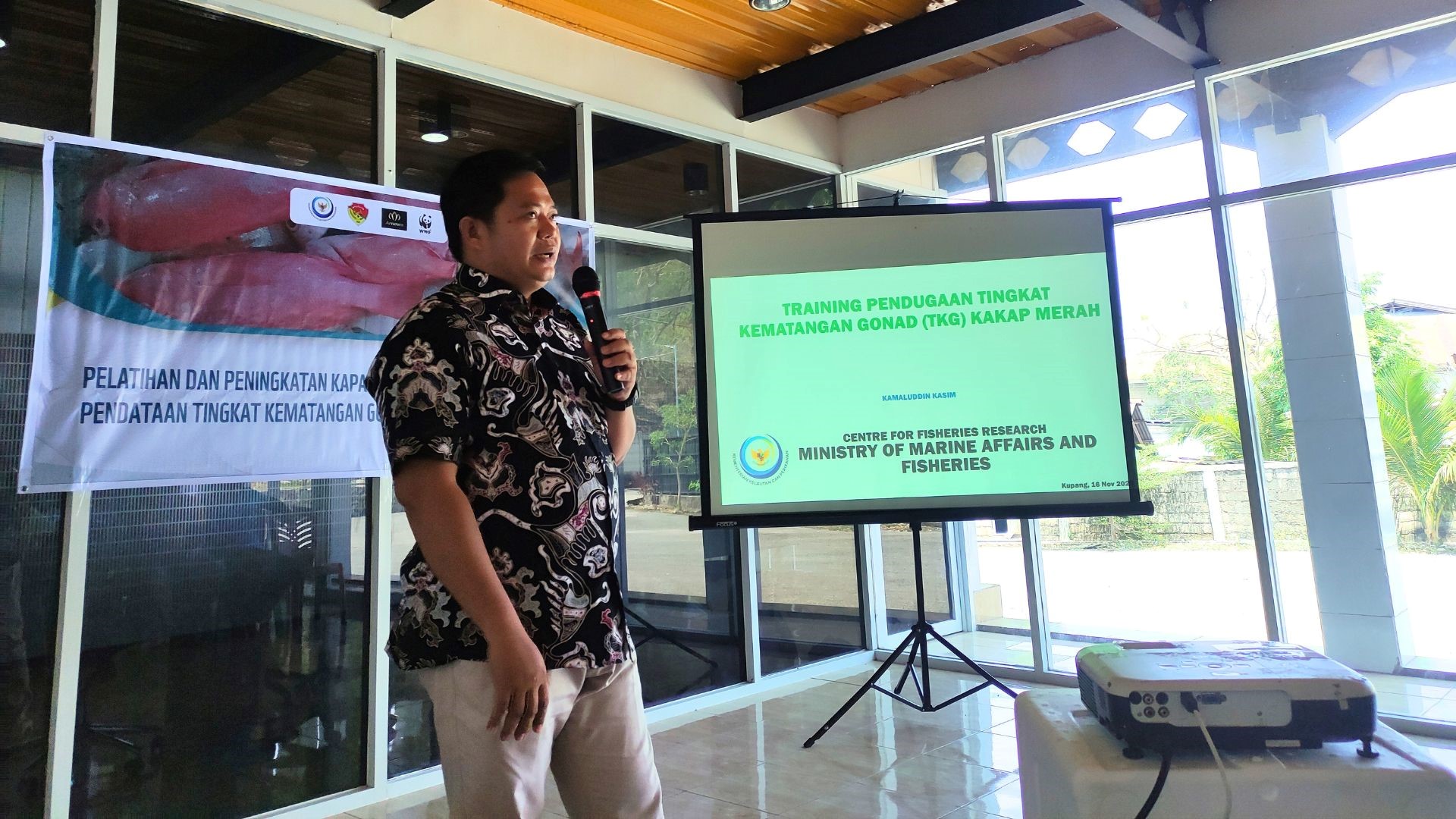
in November 2023, featuring Kamaludin Kasim from KKP as one of the speakers
Throughout the mentoring process, WWF-Indonesia supported fishermen in Kupang by providing training on data collection and the identification of gonadal maturity levels (TKG) and assisted with data collection in the field. The data collected over six months was then analyzed using the Length-Based Spawning Potential Ratio (LB-SPR) method. The results were subsequently shared with the East Nusa Tenggara Provincial Department of Marine Affairs and Fisheries in June 2025 and the Ministry of Marine Affairs and Fisheries in September 2025.
An analysis of a total of 4,198 fish samples showed that the first gonadal maturity size (Lm) for red snapper, humphead snapper, and anggoli in the Timor Sea were 44.5 cm, 46.8 cm, and 46.7 cm, respectively. For all three species, more than 60% of the fish caught by PT MAS were larger than the Lm value. However, the Spawning Potential Ratio (SPR) for all three species remained below the sustainable management target (40%), standing at 23% for red snapper, 15% for humphead snapper, and only 6% for anggoli. These findings indicate high fishing pressure and the need for stock recovery efforts, particularly for the anggoli, which has experienced severe overfishing.
“We hope this information will encourage stakeholders to formulate data-driven conservation and fisheries management measures, such as setting minimum catch sizes,” said Irvan Ahmad Fikri, Capture Fisheries Program Manager.
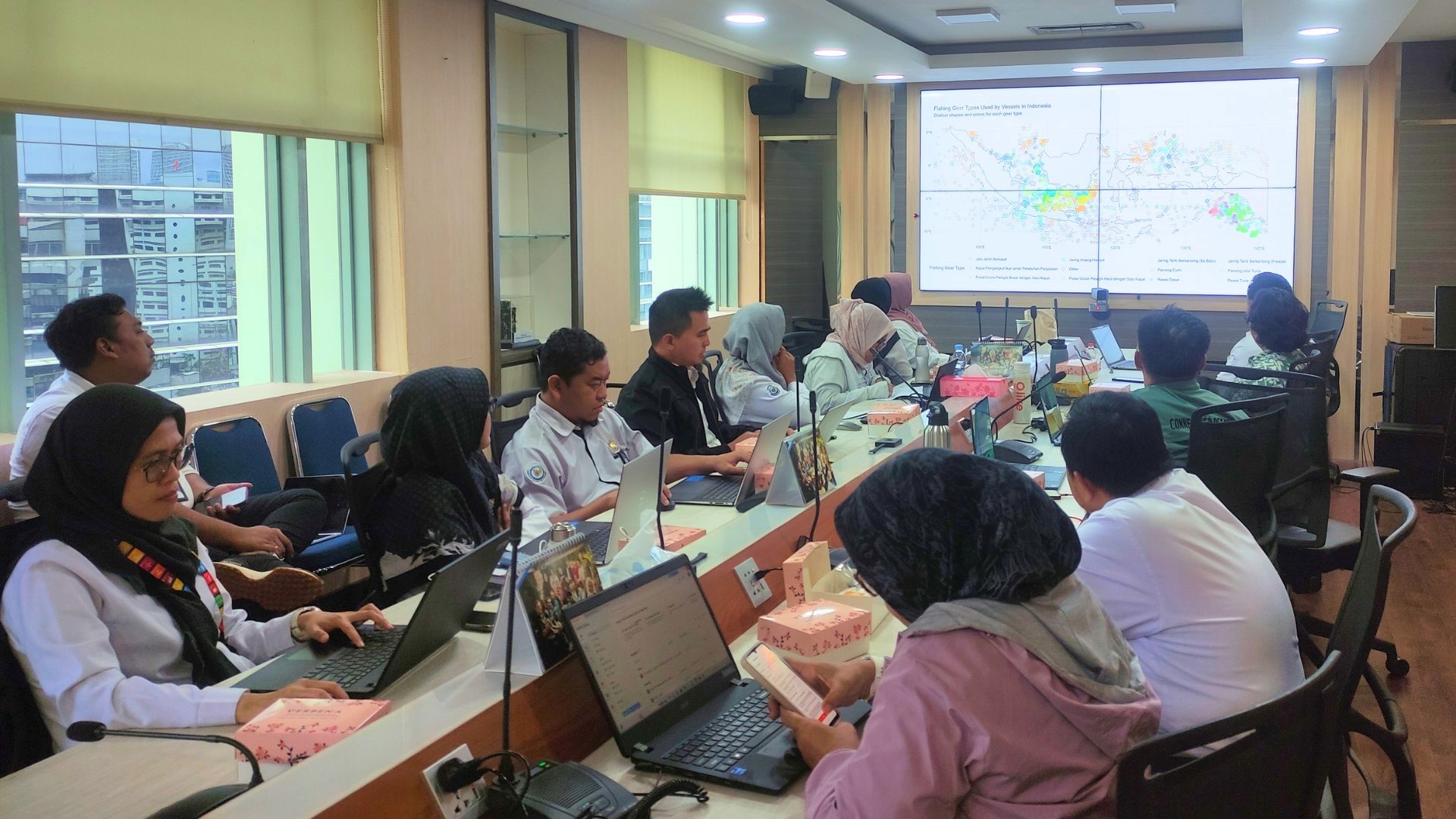
The TKG data collected through this collaboration is not only used to support fisheries management in the Timor Sea but also contributes to scientific advancement through the publication of a Q1-rated scientific article titled “Oceanic Environmental Variability and Fishing Effort Reallocation in Data-Constrained Small-Scale Fisheries”. This article was prepared by WWF-Indonesia in collaboration with the Ministry of Marine Affairs and Fisheries (KKP), the National Research and Innovation Agency (BRIN), the Bandung Institute of Technology (ITB), and PT MAS.
“This is a source of pride for us,” said Breva Rizqi, General Manager of PT MAS. “We hope this publication will not only be an academic achievement but will also contribute to strengthening fisheries management, particularly in the Timor Sea.”
Ultimately, TKG data will help researchers determine fish spawning times. This information serves as a crucial foundation for formulating fisheries policies, such as setting minimum catch sizes, protecting spawning areas and seasons, and controlling fishing effort and mortality. Consequently, more fish will have the opportunity to reproduce before being caught, ensuring that fish stocks remain sustainable in the future.