
CONCERNS GROW OVER UN FOREST SCHEME
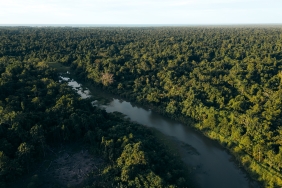
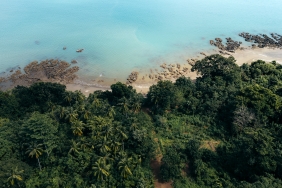
Copenhagen. A world away from the official climate talks are the forests of the world’s developing nations. Agreements may be made (and unmade) in carpeted conference halls by world leaders, but it is local forest communities who will now be on the frontline of the fight against deforestation — and the many ways governments and companies may be able to make a quick buck in the process.
The small beacon of hope for a legally binding text at the climate talks was the Reduced Emissions from Deforestation and Degradation plan. REDD is a UN-backed scheme that seeks to put a price on the environmental damage caused by forest degradation and allow developing nations to sell “credits” in exchange for not chopping their trees down.
The great hope is that the income generated by these credits will be sufficient to replace the cash earned by the loggers, plantation companies and slash-and-burn farmers who are destroying the archipelago’s pristine jungle.
Discussions over REDD during the climate talks have been stalled by disagreements over whether such a scheme should be managed by national governments or by smaller provinces in “subnational” agreements, Wandojo Siswanto, Indonesia’s lead negotiator for REDD, said on Friday.
With its decentralized government, Indonesia supports giving a limited degree of autonomy to local governments to handle some aspects of REDD projects, Wandojo said.
“Biodiversity is not evenly distributed,” he said, referring to the fact that the heavily forested areas are to be found in Papua, Kalimantan and Aceh.
Indonesian delegates noted this week that Papua alone had more than five million hectares that could be demarcated as forested lands under REDD — comprising about 50 percent of the forests to be preserved in Indonesia.
Stibniati Atmadja, a research fellow at the Center for International Forestry Research in Bogor, ttended the Copenhagen talks. She will be observing the implementation of REDD in forest communities in Indonesia as part of a Cifor’s comparative, three-year study across Asia, Africa and Latin America.
“A lot of people and local governments at the district level don’t really understand the logic of REDD, how it fits into climate change and how it fits into their daily lives,” she said. “There hasn’t been a concerted effort in Indonesia to communicate across different levels.”
Despite the government’s acknowledgement that local communities should benefit from any REDD scheme, Stibniati says there is wide potential for misuse of funds, potential conflicts about land ownership and disagreements on how carbon emissions should actually be measured.
“I have not seen the kind of political will in Indonesia that is necessary to ensure that the REDD projects actually benefit communities rather than cause them more harm,” she said.
American investigative journalist Mark Schapiro has reported on such conflict in Brazil between indigenous communities whose families had lived in forests for generations and those enforcing carbon restrictions.
“Suddenly they were getting arrested for hunting or cutting down one tree,” he said. “If not properly handled, a lot of people are concerned that their long-term ability to survive in the forest will be threatened.”
Schapiro is also concerned about the complexities of so-called carbon accounting — everything from measuring the variable rates of carbon in different tree species to ensuring that book-keeping doesn’t become too creative.
“If you talk to law enforcement people who are looking forward, they are seeing potential for criminality emerging in the way that forests are being monetized,” Schapiro said.
Yet Brazil considers itself to be the most sophisticated of developing countries in its approach to the implementation of REDD.
“Brazil distinguishes itself from Indonesia because it sees itself as having better controls to protect trees,” he said.
Wandojo, who said Brazil was more advanced in implementing REDD, said Indonesia would maintain a central database of projects to ensure they were properly managed.
Advocacy organizations Human Rights Watch and Greenpeace both released reports this month raising alarm bells about the country’s ability to retain control of such a process, given the illegal deforestation they claim is taking place right under the central government’s nose.
HRW claimed half of all Indonesian timber from 2003-06 was logged illegally, with rampant tax evasion taking place. Greenpeace accused the largest palm oil producer Sinar Mas of flouting environmental standards while falsely presenting itself as a sustainable company. Environment Minister Gusti Muhammad Hatta denied Greenpeace’s claims during the climate summit