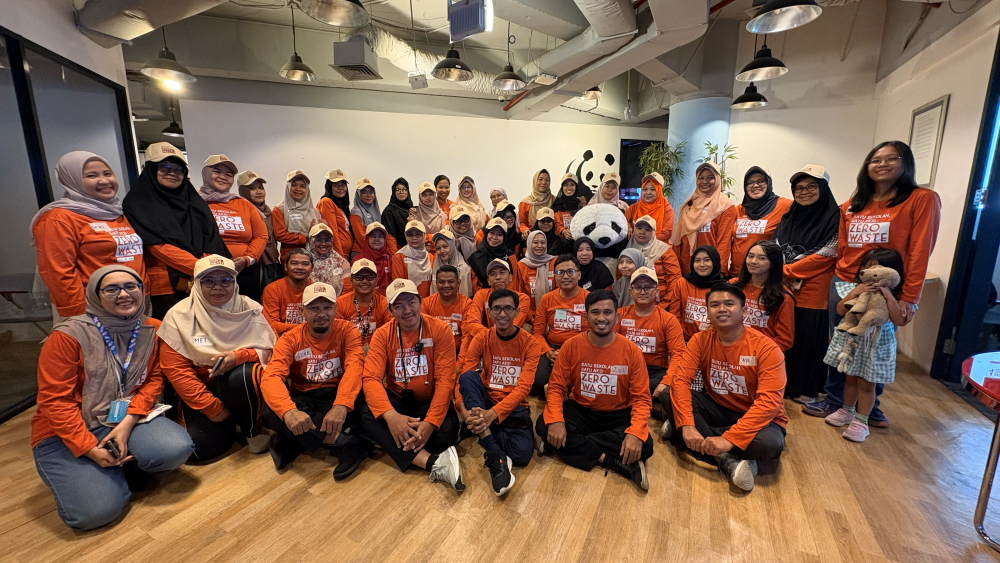
LEARNING FROM TEACHERS, MOVING FOR THE CITY: STUDY EXCHANGE ZERO WASTE SCHOOL 2025
That morning, the WWF-Indonesia office felt different. Since seven o'clock, teachers from Bogor, Depok, and Jakarta began to arrive. Some greeted each other warmly, some laughed while enjoying a simple breakfast, some were meeting for the first time but immediately felt on the same frequency. They came with one common concern: the problem of waste in schools-and one common hope-finding a way to make change happen.
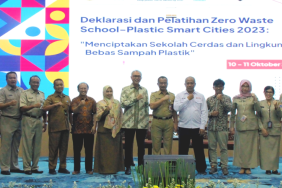
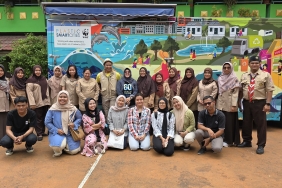
This Zero Waste School 2025 Teacher Exchange Study is not just a practice-sharing agenda. The activity, which was attended by 35 teachers and school leaders across levels, was designed as a shared learning space, a place of reflection, inspiration, and strengthening networks between schools assisted by WWF-Indonesia's Zero Waste School (ZWS) Program and Yayasan Guru Belajar. This activity is also part of the commemoration of National Teacher's Day, a moment to celebrate the role of teachers as drivers of change, not only in the classroom, but also in the neighborhoods and cities where they live.
Three Stories, Three Faces of Zero Waste School
The series of activities began at the WWF-Indonesia office. After the opening, the Jejak Sekolah Zero Waste inspiration session presented three stories from different but complementary school contexts.
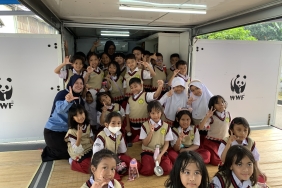
From Sekolah Alam Al Fazza, Depok, Kak Zubair shares the practice of the Green Market and the healthy canteen. In this school, the canteen is no longer just a place to buy food, but a space to learn about responsibility. Students are accustomed to bringing their own containers, renting tumblers or lunch boxes, sorting food waste, and understanding where their waste ends up. Leftover food is processed into compost and maggot feed, while packaging is minimized through a system designed with school community and parents. Zero waste becomes a daily culture-not an additional project.
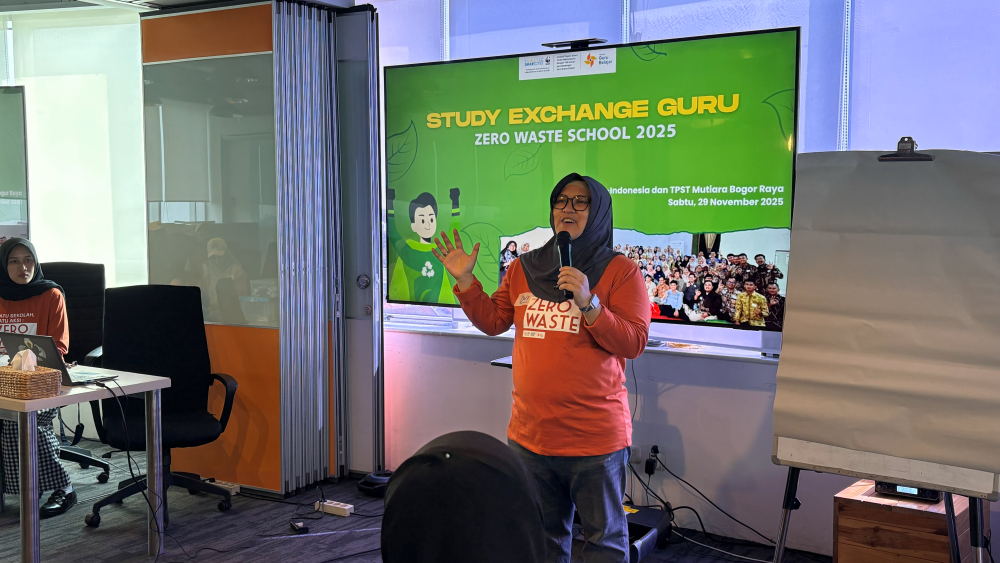
The next story came from Bu Euis Novitasari (Bu Sari), a teacher at SD Insan Kamil Bogor. She chose to tell an honest story about the ups and downs of the process towards Zero Waste School. The waste problem, according to her, is very complex because what needs to be changed is not only the system, but the character and habits. Each school has a different "dose" of change. The key is to strategize, do the most possible thing, focus on one habit, and integrate it with classroom learning. "Keep going," he said, "to make waste-free schools a reality."
The third story comes from SDN Rawa Badak Utara 05, a Jakarta public school located in a small alley, in the middle of a dense residential area. Ms. Esti Robnanci Gultom describes the typical challenges of urban schools: disposable packaging, trash hidden in drawers and corners of classrooms, and shelters that are often full. But the limited space does not stop change. From the habit of bringing tumblers and food containers, waste bank management and ecobricking, to Friday clean-up programs and zero-waste education by teachers, change is slowly growing. The school environment is cleaner, the weight of waste is reduced, and collaboration with parents and the community is strengthened. "Change starts with one small step," she says, "and collaboration makes it last."
These three stories show that Zero Waste School does not take a single form. It can grow in a nature school, a private school, or a public school in a small city alley-as long as there is commitment, strategy, and collaboration.
From Reflection to Change Leadership
After the inspiration session, the participants were invited to go further-from hearing stories, to formulating their own roles-through a workshop titled "Leading Change Towards Zero Waste School. For 90 minutes, teachers were not directly invited to discuss waste management technology or systems. Instead, they were invited to look inward-reflecting on their respective journeys as ZWS drivers.
Many teachers shared stories of fatigue, resistance, and the feeling of moving alone. The change towards a zero-waste school, as we all realize, is not just a technical change, but a cultural change. Through the framework of the 5M Strategy - Humanizing Relationships, Understanding Concepts, Choosing Challenges, Empowering Contexts, and Building Sustainability - participants were invited to develop small steps that are most feasible in their own schools.
At the end of the session, each participant wrote down one simple commitment: one small step they would take after the event. This is where the collective energy started to kick in-that change doesn't have to be big, but it does have to be nurtured.
After reflection and inspiration at the WWF-Indonesia office, the journey continued to the Mutiara Bogor Raya Integrated Waste Processing Site (TPST MBR). This is where the teachers saw firsthand how waste from home and school is managed in a city ecosystem.
ST MBR operates an Integrated Zero Waste Management approach-from house-to-house waste collection, sorting with the support of trained human resources, to processing and community empowerment. Through the Takesi Waste Savings program, residents can save their segregated plastic waste and directly benefit from the economic benefits. By 2025, 900 families will be actively involved with the total tonnage of waste managed reaching some 1.7 tons per day.
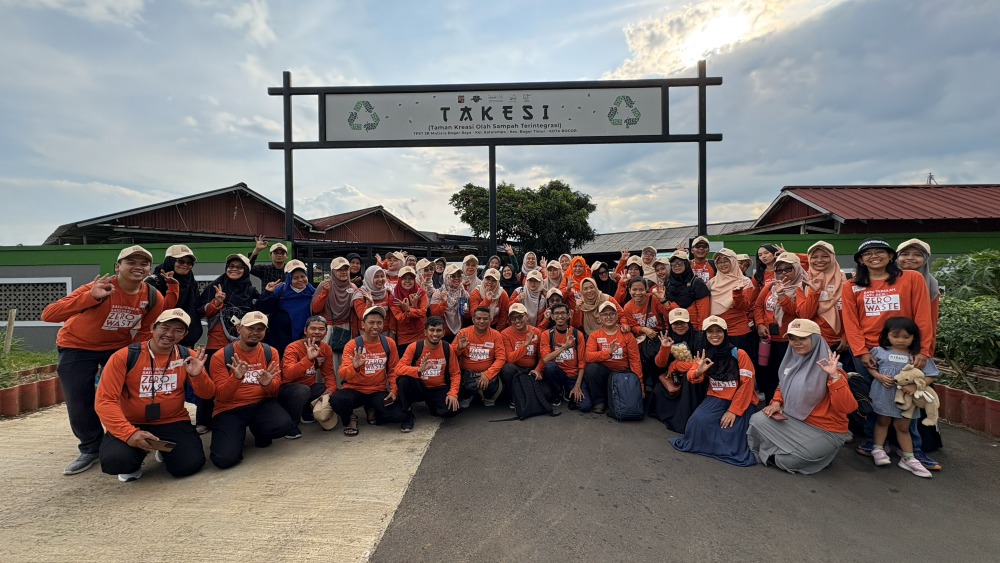
Education is the main foundation. TPST MBR regularly conducts socialization at schools, complemented by the placement of organic and inorganic waste dropboxes. Even residual plastic that is difficult to manage is sought to be reprocessed through upcycling innovation into environmentally friendly building materials. For the teachers, the visit served as an important reminder: behavioral changes in schools will have a wider impact when connected to the waste management system at the city level.
Celebrating Teachers, Nurturing Change
The Zero Waste School 2025 Teacher Exchange Study emphasizes one important point: teachers are strategic actors in the effort to reduce plastic leakage and build a more sustainable city. On the momentum of National Teacher's Day, this activity becomes a space to celebrate the role of teachers not as perfect figures, but as learners who continue to try, get up and down, and step together.
From the classroom to the school cafeteria, to the city landfill, change is interconnected. When schools, communities, and city systems move in the same direction, small efforts can create big impacts. And from Bogor, to Depok, to Jakarta, the teachers went home with one new belief: that small steps nurtured together can be the start of a green revolution in our cities.