
ASSESSING THE DOMESTIC MARKET AS A DRIVER OF INDONESIA’S SUSTAINABLE COMMODITIES
Until now, Indonesia’s sustainable commodities have been synonymous with the export market. Certifications such as ISPO, RSPO, and FSC were established to meet the demands of overseas buyers. Yet Indonesia itself is one of the world’s largest consumers of palm oil, and the majority of the country’s timber products are also consumed domestically. The question is: Can the domestic market also serve as a driver for sustainable products, rather than merely serving as a market for surplus products that cannot be absorbed by exports?
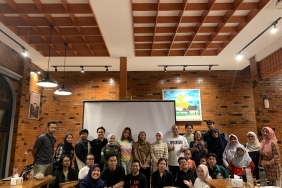
This question was at the heart of the discussion at the Sustainable Business Forum titled “Synergy for Mainstreaming Sustainable Commodity Products in the Domestic Market,” hosted by WWF-Indonesia in Jakarta on August 4, 2026. The forum brought together government officials, business leaders, associations, certification bodies, the financial sector, retailers, and civil society organizations.
A 2025 survey conducted by WWF-Indonesia in collaboration with Populix across six cities found that 77.6 percent of respondents were willing to pay more for products from sustainable sources. While this figure sounds promising, the forum also emphasized that a willingness to pay more alone is not enough to build a market.
For most people, sustainability is just one of many considerations when shopping. Price, package size, quality, and daily needs remain the primary determinants.
“Data on willingness to pay more needs to be analyzed more deeply, based on age, income level, and region, including differences between urban and rural consumers,” said Prof. Dr. Ir. Bayu Krisnamurthi, M.S., a Board Member of PISAgro. In a discussion with forum participants, it emerged that consumers prioritize price and product size over sustainability labels.
This means the real challenge isn’t merely educating consumers that a product is more sustainable, but rather making that choice easy to understand, easy to find on the shelves, and still affordable.
Rio Priambodo from the Indonesian Consumer Foundation (YLKI) added that the issue of sustainable consumption needs to be aligned with issues that directly affect the public, such as health and well-being. YLKI itself focuses on consumer education, monitoring product labeling, and ensuring the well-being of farmers and workers throughout the supply chain. In other words, sustainability needs to be perceived as an added value for consumers, not just a label on the packaging.
The Coordinating Ministry for Food Security outlined five policy priorities to boost the domestic market: increasing productivity through good agricultural practices (Good Agricultural Practices), accelerating downstream processing and value addition, strengthening governance and supply chain traceability, strengthening certification systems, and developing a domestic market that values sustainable products.
Commodities in the spotlight include palm oil, cocoa, coffee, coconut, rubber, and various horticultural products. The government is also developing national certifications such as ISPO, Indonesian Sustainable Coffee, and Indonesian Sustainable Cocoa, which are designed to align with international standards. The hope is that Indonesian products can meet market demand while simultaneously strengthening the domestic sustainability system.
However, policies and standards alone are not enough if certified products lack a path to consumers. This is where the role of retail becomes crucial.
One example of how the domestic market can create opportunities for sustainable products comes from the retail sector. At the forum, Yuvlinda Susanta from Super Indo shared the company’s experience in developing eco-friendly products through its own private brand 365. Super Indo began introducing eco-labeled products around 2018–2019, starting with cooking oil certified by the RSPO. This initiative later expanded to include several other products, such as coffee and FSC-certified wooden kitchenware.
One of the products that is part of this effort is 365 Palm Cooking Oil. This product was launched in 2021 with Indonesian Sustainable Palm Oil (ISPO) and Roundtable on Sustainable Palm Oil (RSPO) certifications and is available at all Super Indo stores. Its launch is part of a three-year collaboration between Super Indo and WWF-Indonesia to expand Indonesian consumers’ access to palm oil products sourced more responsibly.
For Super Indo, the development of sustainable products is not only seen as part of the company’s responsibility but also as a way to respond to changes in consumer behavior. During the forum, Yuvlinda highlighted opportunities presented by consumer groups such as Gen Z, millennials, new jobbers, and newlyweds. These groups are beginning to have purchasing power and their own shopping habits, while also showing interest in products that offer added value and value for money.
However, expanding sustainable products is not without challenges. Super Indo still faces price sensitivity, particularly among middle-class consumers, as well as limited margins due to the Maximum Retail Price (HET) regulation. Supply consistency also poses a challenge when commodity prices rise. Nevertheless, sales performance for certified cooking oil shows positive growth and has achieved double-digit sales contribution.
This is where the private brand strategy becomes relevant. The 365 product line is Super Indo’s own brand, available exclusively at Super Indo stores and positioned as a high-quality product at an affordable price. By incorporating sustainability aspects into curated products available across its retail network, Super Indo not only provides consumers with choices but also helps bridge one of the challenges often faced by sustainable products: market access.
This approach caught the attention of one of the participants. In his view, Super Indo’s private brand strategy could serve as a market entry for sustainable products because the retailer’s curation process can instill trust and provide reassurance for consumers. He also believes this approach has the potential to be replicated by other market players and could even be further encouraged through national award programs or incentives. Thus, various corporate initiatives that have been operating separately could evolve into a broader movement to strengthen the domestic market for sustainable commodity products.
.
The lesson: it’s not enough for sustainable products to simply be available; they need a clear path to reach consumers.
Changes in the domestic market also stem from changes at the corporate level. Over the past few years, WWF-Indonesia has been running business matching, connecting suppliers with buyers so that companies committed to sustainability can find suitable raw materials.
One example comes from a sector rarely associated with sustainable commodities: batik. Through a collaboration between WWF-Indonesia, the RSPO, and Trisakti University, small- and medium-sized batik businesses in Laweyan, Solo, have begun replacing paraffin with certified palm oil in their production processes. Their reason for making the switch isn’t just about price; they see it as a contribution to preserving the forests of Sumatra and Kalimantan.
This example shows that supply chain transformation can start anywhere—it doesn’t have to come from large corporations or national policies.
Most of Indonesia’s major commodities rely on smallholder farmers: approximately 2.6 to 2.8 million smallholders depend on oil palm for their livelihoods, while 90 percent of the country’s cocoa production comes from smallholders. Therefore, increasing productivity is key so that production growth does not always mean land expansion.
The forum explored how the benefits of certification can be more equitably shared with farmers, as well as how to expand access to green financing for MSMEs and independent farmers who have historically struggled to access such financing schemes. Building a domestic market, therefore, is not merely a matter of boosting demand, but also of building an ecosystem from upstream to downstream so that this demand truly translates into incentives for farmers.
This forum ultimately left one major question: Should sustainable products always be sold at a premium price? The answer, according to the participants, is that they should not.
Prof. Bayu proposed that discussions on the domestic market be continued on a regular basis, including by involving retailers to map consumer behavior, given that retailers have direct access to buyers. Existing domestic market initiatives already underway at various companies also need to be studied collectively so that the lessons learned can be shared more widely.
A number of follow-up actions are being formulated based on this forum: strengthening collaboration between the government, WWF-Indonesia, PISAgro, retailers, the FMCG industry, financial institutions, and certification bodies; assessing incentives for farmers; developing green financing; consumer education; and the development of market mechanisms in the six cities where the survey was conducted.
Furthermore, the forum urged that sustainability not continue to be positioned as a premium option accessible only to a select few consumers. Sustainability needs to become a reasonable choice, supported by appropriate policies and corporate commitments to continuously improve production practices and supply chains.
Building a domestic market for sustainable commodities is not the responsibility of any single party. Consumers need information and choices. Retailers need a consistent supply. Companies need access to sustainable raw materials. Farmers need incentives and access to financing. The government plays a role in creating policies and market conditions that support all of these parties.
This forum in Jakarta serves as a starting point to bring these needs together. The next challenge: ensuring this synergy doesn’t stop at the discussion table, but evolves into concrete actions that make sustainable products easier to find and more relevant to Indonesian consumers.