COALITION SEEKS GREATER SAY IN CITYS FUTURE
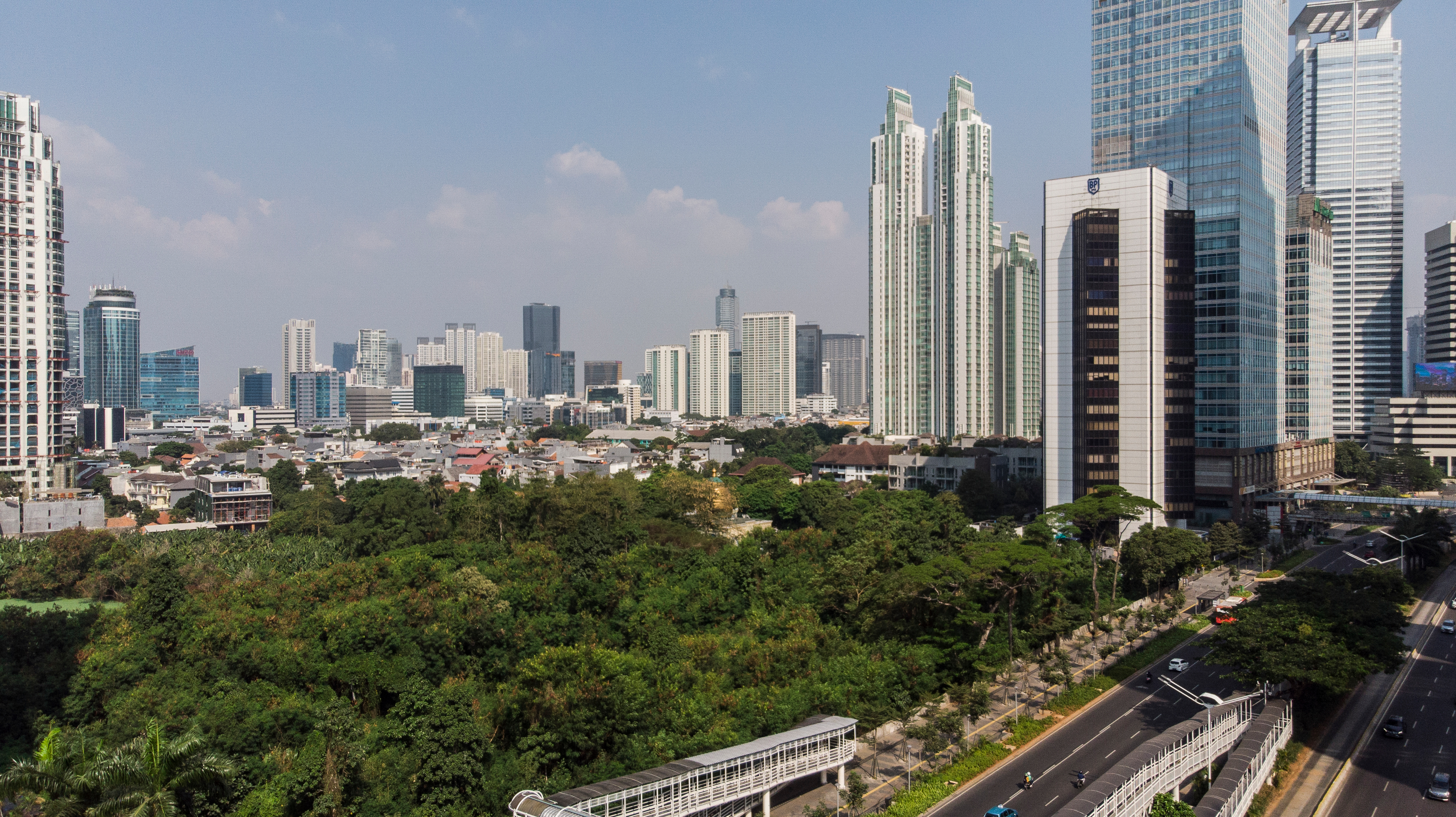
More than 20 people from NGOs gathered Monday to discuss the 2030 spatial planning draft while questioning the limited public participation in the process of the draft’s development.
The meeting also led to the formation of the People’s Coalition for Jakarta 2030 to raise public participation in planning the city for the next 20 years.
“We’re not criticizing the draft yet because we first need to know more about several unclear points,” said Suryono Herlambang, a lecturer at Tarumanagara University’s School of Spatial Planning and Real Estate.
He added the coalition wanted to push the city administration to be more active in talking to the public about what Jakarta should look like in the future.
“We want more details,” he said.
The meeting found, for instance, that the draft used the expression “climate change” but did not really explain which parts of Jakarta would be affected by it or how to help mitigate the impacts.
The NGOs, comprising those concerned with housing, transportation, water management, the environment, justice for the poor, waste management, and urban architecture, also questioned the assumption the city had used as the basis of the projection.
“The draft limits the population to 10 million, for instance, but we don’t really know about the distribution or how they got to the figure of 10 million,” Herlambang said.
The consequences of the points in the spatial plan were also of concern, Herlambang went on.
“That’s another point that emerged at the discussion. Reading the draft, it’s not immediately clear what will happen in the future.”
“River normalization,” he pointed out, could mean thousands of people being evicted in the future, but this was not clear.
“What we want now is for the city to allow greater public access so we can start mapping our future together,” Herlambang said.
To see the draft:
http://www.rtrwjakarta2030.com
http://koalisijakarta2030.wordpress.com
Mail your suggestion to:
rtrwdkijakarta@gmail.com
HIGHLIGHTS FROM DRAFT OF JAKARTA 2010 - 2030 SPATIAL PLAN
Jakarta’s position:
• Jakarta is part of a megalopolis comprising Jakarta, Bogor, Depok, Tangerang, Bekasi, Puncak, Cianjur (Jabodetabekpunjur), which geographically depend on each other.
• The spatial plan for Jakarta considers the connectivity with Bandung in West Java.
• Jakarta is part of a global city network and also the capital and administrative center of the Republic of Indonesia.
Vision:
Jakarta’s spatial plan aims to make Jakarta a service city that is comfortable, prosperous and sustainable.
Mission:
• Developing a community-based Jakarta.
• Prioritizing disaster mitigation.
• Building a service city based on good governance.
• Building a humane infrastructure.
• Developing housing that supports the city’s productivity.
• Creating a prosperous and dynamic urban life.
• Optimizing the city’s productivity.
• Developing urban culture within a pluralistic society.
• Preserving historical city elements and environment.
• Developing and balancing the urban life environment.
Demography:
• Limiting Jakarta’s population to 10 million by 2030.
• Absorbing a maximum of 8.2 million workers, including commuters.
Economy:
• Economic growth is assumed to be 7 to 8 percent a year until 2030.
• Economy is based on tourism, trade, creative industry, service and finance, and high-tech and non-polluting industry.
• The integrated trade of the northern coastal area (Pantura) is the new hub for trade, service and finance.
Transportation:
• Dukuh Atas, Manggarai, Harmoni, Senen, Blok M and Grogol will be made integrated interchange stations for several transit modes, with the concept of a transit-oriented development (TOD).
• The plan is to build both mass transit systems as well as more toll roads.
Water management:
• Reducing exploitation of groundwater.
• Promoting reusing of water to save resources.
• Water provision to suffice for daily needs and irrigation for agriculture become the main priority of water provision above all others.
• Development of irrigation infrastructure aims to intensify agricultural activity and yield.
Flood mitigation:
• Building more biopores.
• Building dams on the banks of the Ciliwung to reduce flow rate.
• Developing community-based polder system.
• Synchronizing the new reclaimed area with the water management system of North Jakarta.
Sanitation:
• Separating drains and sewers gradually while developing a waste treatment system.
• Expanding a closed sewer system through centralized system development in central zone and developing a communal waste treatment system while paying attention to the polder system zoning.
Solid waste:
• Increasing community participation in solid waste management.
• Building more landfills outside Jakarta.
Energy:
• Developing natural gas (CNG) piping for industry, offices, homes and trade and service sectors.
• Building more CNG stations.
River management:
• Management of the banks of the 13 rivers in Jakarta as part of reorientation through riverfront development and Clean River Program.
Northern coast reclamation:
• Water source for the new reclaimed area of the northern coast will be environmentally friendly and aimed at sustainable solution.
• Supply will depend on water from dams and water bodies on the islands as well as desalination plants.
• If there is potential for worsening floods in southern area of the reclaimed northern coast, mitigation measures should be taken.
• These include dredging the mouth of the rivers, widening and deepening canals or rivers and making the embankments higher.