WWF TO DEVELOP RENEWABLE ENERGY IN SUMATRA AND KALIMANTAN
By: Masayu Yulien Vinanda
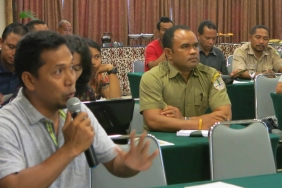
Bandung (29/07)-After visiting several pilot project in “Field Trip Renewable Energy” organized by Climate and Energy Program WWF-Indonesia, some project leaders, coordinators, and staff from WWF Kalimantan and Sumatra planned to enhance renewable energy utilization in their project sites. For instance in Putussibau, West Kalimantan and Bukit Barisan Selatan.
According to Markus Lasa, WWF West Kalimantan Field Forest Officer for Kapuas Hulu-Putussibau, on January this year, WWF already did the preparation stage by surveying the location and measuring water debit. The microhydro power plant (PLTMH) planned to be built in Dusung Sungai Luar by using cross flow turbine.
A simple waterwheel had previously been built to produce electricity. But now, after having been operating for 2 years, the wheel condition is seriously broken. Moreover, the amount of electricity produced is very small.
“The waterwheel can only illuminate 2 rooms in Rumah Betang (the community house of Dayak Iban). I expect if we finally installed microhydro power plant, all head of household in Rumah Betang would have access for electricity, “ Markus stated.
The sama concern also came from Afrizal, Sustainable Land-Use Coordinator for WWF Bukit Barisan Selatan. Different from Putussibau, local people in Bukit Barisan Selatan are familiar with microhydro technology. As a fact, in 2006, a comparison study in Ulu Belu had been organized by involving 7 society figures from 7 village adoption projects in BBS buffer zone. Now, 29 microhydro power plants have been built on a self-supporting basis. Its capacity starts from 5,000 to 15,000 watt.
Ironically, only 60 percents of the powerplants still actively function, 40 % are not in its proper condition. “The damage mainly caused by the improper maintenance. WWF will help this power plant repaired. Moreover, in the long term, we will design a monitoring scheme and operating management system to prevent the plant from damaging,” Afrizal added.
Electricity produced from microhydro is also potential for illuminating elephant patrol’s camps in Bukit Barisan Selatan. “Our electricity cost for elephant patrols camps is quite expensive.Every month we have to spend 900,000 rupiahs. By building self-efficiency regarding electricity, we could reduce the cost. Moreover, the elephants manure could also be used for biogass,” Afrizal stated.
Afrizal also mentioned that renewable energy can make coffee and conservation program in Bukit Barisan Selatan more effective. For instance, we can use microhydro electricity to generate coffee peeling machine which up till now it uses diesel fuel. Furthermore, in the drying process, solar dryer generated by solar cell can also be used.