INTERNATIONAL WORKSHOP HEART OF BORNEO ECOTOURISM
Ecotourism, A Harmony Between Economic and Conservation
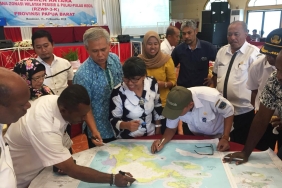
Malinau-Indonesia. An international workshop is being held in Malinau, East Kalimantan, from August 5th to 7th to discuss Ecotourism the Heart of Borneo. Ecotourism practitioners from around the island of Borneo including representatives from the central and local governments, the private sector, management authorities of the national parks and communities from the three countries of Brunei Darussalam, Indonesia and Malaysia are coming together to discuss the development and marketing of tourism in the HoB area.
© WWF-Indonesia / Annas NASRULLAH
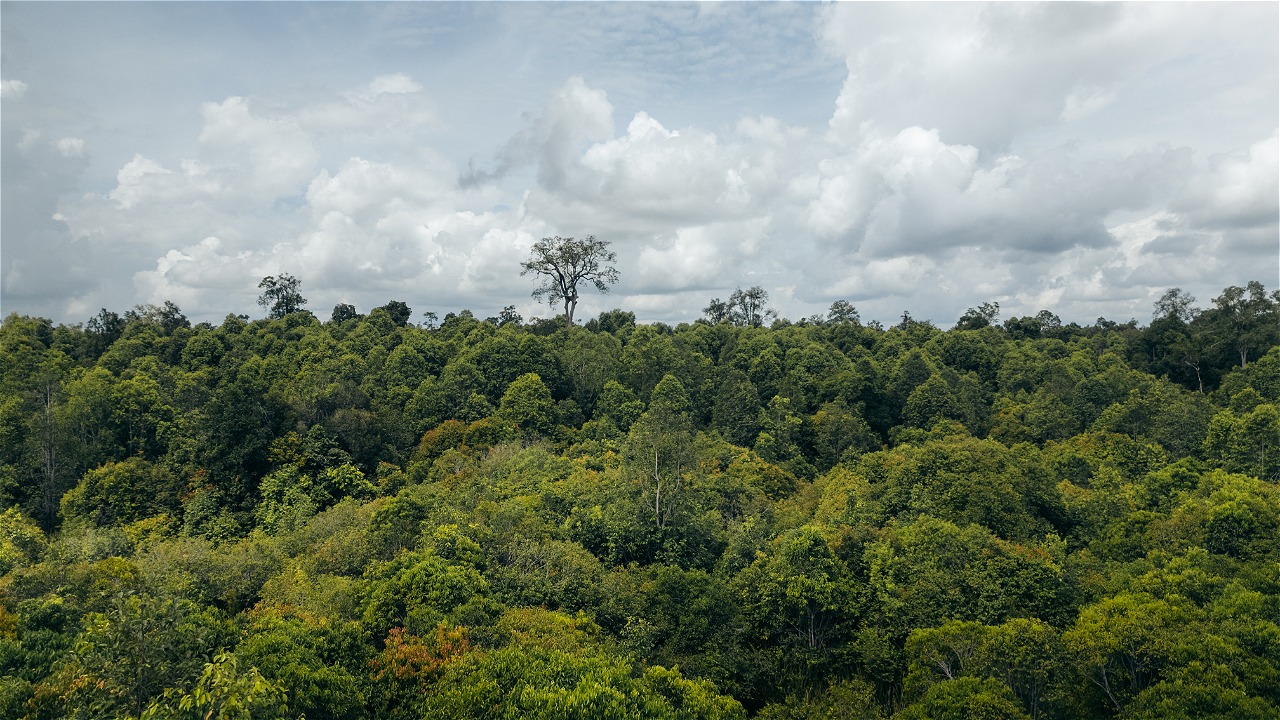
The region of the Heart of Borneo (HoB), the mountainous interior straddling the common border between Indonesia and Malaysia, is mainly inhabited by Dayak communities and largely covered with tropical forest and a mosaic of human-shaped agricultural landscape. The amazing beauty of the tropical forest, unique biodiversity, traditions and culture of the Dayak indigenous people that have helped protect and manage the forest and natural attractions have already established Borneo as a new frontier for tourism development, especially ecotourism.
The tourism industry is an industry destined to continue to grow, and the “greening” of this industry in the way of nature tourism and community-based ecotourism development will also increase exponentially. Ecotourism can create economic value for conservation areas. As long as local communities can take part in the development of ecotourism, it can become an important conservation-based enterprise and livelihood strategy. Ecotourism can also be socially and ecologically sustainable as far as fair partnerships are forged between communities, local government, and private sector.
© WWF-Indonesia / Annas NASRULLAH
The Malinau District, host of this important event, has declared the area a “Conservation District” committed to protect and maintain a large part of its immense tropical rainforest.. ”Beside the fact that the forest provides benefits for local communities as well as the global community,, the forest inherent fascination can be utilised for instance as tourism destination,” said Dr. Martin Billa, Head of Malinau District when asked about his opinion on the ecotourism potential in his administrative area.
Several pilot projects have been started in and around conservation areas in HoB, in the Kayan Mentarang national Park, Malinau and Nunukan (East Kalimantan) and in the Betung Kerihun National Park, Kapuas Hulu (West Kalimantan).These projects helped develop community-based ecotourism management. Several benefits can be directlye reaped by the communities when tourists come to the site: tour guides, homestays, traditional dances, transportation. In return, tourists can enjoy true Dayak hospitality and experience daily life in the villages.
The workshop is expected to bridge ecotourism projects being developed on the Indonesian side of the island of Borneo with the tourism
© WWF-Indonesia / Annas NASRULLAH
networks in the neighboring countries of Malaysia and Brunei Darussalam, to develop one, integrated ecotourism program in the Heart of Borneo. Dr. Samedi, member of the HoB National Working Group of the Forestry Department maintains, “Development of ecotourism is one of the HoB strategic programs agreed by Brunei Darussalam, Indonesia and Malaysia. The three countries can cooperate to facilitate trans-boundary ecotourism and make it possible to feed tourist coming from Malaysia or Brunei Darussalam to Indonesia and vice versa.”
Community life and richness of nature, historical traditions and river adventures in the Heart of Borneo can become a really competitive package and draw the interest of thousands of tourists to the area. ”Ecotourism can help build community awareness to protect their area. If the environment is well preserved, and tourists come, communities will be able to gain economic benefits from ecotourism,” said Mubariq Ahmad, Executive Director of WWF-Indonesia when interviewed during the workshop. (***)
For further information, please contact:
Yulius, Public Relation Officer, Malinau District, +62 813 478 61916
Nancy Ariaini, HoB Communication Officer, WWF Indonesia +62 811529538, nariaini@wwf.or.id
Arman Anang, Communication Officer, Kayan Mentarang Project, WWF-Indonesia +62 8125303883, aanang@wwf.or.id
Editor’s Note:
1. Heart of Borneo is an initiative established by three countries shared one island called Borneo: Brunei Darussalam, Indonesia and Malaysia as sustainable development and conservation aimed at maintain the best forest landscape in Borneo through a network of protected areas and sustainably-managed forests, and through international co-operation led by the Bornean governments, supported by a global effort.
2. The Heart of Borneo straddles the trans-boundary highlands of Indonesia and Malaysia, and extends through the foothills into adjacent lowlands and to parts of Brunei.
3. Conservation District is administrative unit that are based on sustainable development principles: life support system protection, biodiversity preservation, sustainable use to increase community welfare; set on specific criteria, such as include designated conservation areas, set limits to development activities, have a mission that is founded on conservation principles, demonstrate political commitment to implement sustainable management of natural resources and benefit from competent environmental management institutions.
4. Community Based Ecotourism, Ecotourism can create economic value for conservation areas. As long as local communities can take part in the development of ecotourism, it can become an important conservation-based enterprise and livelihood strategy. Ecotourism can also be socially and ecologically sustainable as far as fair partnerships are forged between communities, local government, and private sector. Community-based implies that local people should be in a position to benefit from revenues of ecotourism, control ecotourism development to minimize negative impacts towards their territory, culture, and society, and be involved in the management of ecotourism activities.
5. Heart of Borneo National Working Group, is a current management institution established for Heart of Borneo works in Indonesia, consists of relevant government institutions such as Coordinating Ministry on Economic Affairs, Forestry Department, Ministry of Environmental, Public Work Department, Foreign Affairs Department, Domestic Affairs Department, National Planning Agency, etc. local government, academic and community (including NGOs). This institution is managing coordination on development and domestic outreach, synergy on regulation and internal working mechanism in Indonesia for Heart of Borneo issues.
6. About WWF-Indonesia
WWF, the global conservation organization, is one of the world's largest and most respected independent conservation organizations. WWF has a global network active in over 100 countries with almost 5 million supporters and in Indonesia works in more than 24 field sites and in 16 provinces. WWF-Indonesia mission is to conserve biodiversity and reducing human impact through: Promoting strong conservation ethics, awareness and actions in Indonesia society; Facilitating multi-stakeholders efforts to preserve biodiversity & ecological processes on eco-regional scale; Advocating for policies, law and law enforcement that support conservation; Promoting conservation for the well-being of people, through sustainable use of natural resources.
Furthermore on WWF-Indonesia, please visit our main website organization at http://www.panda.org/; national website at http://www.wwf.or.id/ and WWF-Indonesia membership site at http://www.supporterwwf.org/.
WWF-Indonesia in East Kalimantan:
In partnership with Forest Department, WWF-Indonesia assist the capacity building of Kayan Mentarang National Park management in the frame work of cooperation between Indonesia and German government-GTZ. WWF-Indonesia is also supporting joint program of three countries which is called Heart of Borneo, where partly East Kalimantan Province is respected globally as lung of the world. In May 2008, WWF-Indonesia launched cooperation with Tarakan Municipality for mangrove rehabilitation, and with Malinau District for sustainable natural resources management. WWF-Indonesia is fostering cooperation with various partners, including government, community and private sector to implement sustainable principles in oilpalm plantation management .