
GLOBAL COMPETITION SEEKS TO NET SMARTEST HOOK, LINE AND SINKER
January 27, 2009 – A $US 57,500 prize fund is on offer for the best new fishing gear designed to reduce bycatch in the fourth International Smart Gear Competition, launched today by WWF. Over 4 million sharks, billfish, sea turtles, marine mammals and seabirds are caught each year on longlines in the Pacific Ocean alone as unwanted bycatch, with many being discarded dead or dying back into the sea. Globally, millions of tonnes of untargeted fish that are caught in nets or become hooked on longlines are also wasted each year.
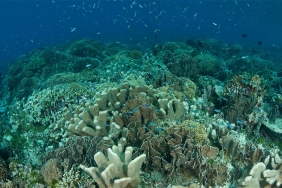
The region known as the Coral Triangle, bounded by Indonesia, Malaysia, the Philippines, Papua New Guinea, the Solomon Islands and Timor Leste, provides critical habitat for six of the world’s seven marine turtle species – all of them directly threatened by nets and longlines. “Bycatch is one of the greatest and most pervasive threats to marine life in the Coral Triangle,” said WWF’s Coral Triangle Bycatch Leader Keith Symington.
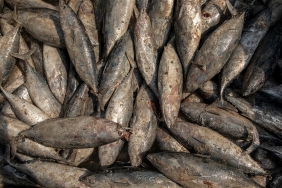
In the Pacific, the leatherback turtle population has dropped from 90,000 nesting females in the 1980s to approximately 2,000 today. Bycatch in the Coral Triangle also directly contributes to the wasteful over-fishing of sharks, and through the unmanaged taking of juvenile tuna renders these fisheries unsustainable and wasteful.
“Smart fishing is not just about conservation but improves the sustainability of fisheries, which is in the long-term economic interests of the industry,” said Mr Symington. “There is already proven technology available to fishing operators to reduce bycatch, such as circle hooks in longlines and bycatch excluder devices in trawls, and we would encourage operators and governments to take up this technology.”
The Smart Gear Competition seeks real-world fishing solutions that allow fishermen to fish 'smarter'— better targeting their intended catch while safeguarding birds, dolphins, sea turtles and other marine life from being unintentionally caught. Last year’s grand prize winners were a team of U.S. inventors from Rhode Island, who designed fishing gear to capture haddock while reducing the accidental netting of other marine species, such as North Atlantic cod.
The device works by taking advantage of the haddock’s tendency to swim upward when encountering the net, while other fish, which have a tendency to swim downwards, are directed through an escape hatch. The design is now being used in commercial fisheries off the north-eastern coast of the United States and is being tested for use in the United Kingdom and other European fisheries.
“The Smart Gear Competition has proven effective in galvanizing creative thinkers from around the world to come up with innovative devices to enable fishermen to fish more sustainably and we would welcome entrants from any of the countries in the Coral Triangle,” Mr Symington said.
The competition is open to eligible entrants from any profession, including fishermen, professional gear manufacturers, teachers, students, engineers, scientists and backyard inventors. The winner of the Smart Gear Competition will be decided by a diverse set of judges, including fishermen, researchers, engineers and fisheries managers from all over the world.
As well as the $30,000 grand prize there will also be two $10,000 runner-up prizes and a special $7,500 East-African Marine Eco-Regional Prize for entries specifically addressing serious bycatch issues in coastal East Africa.
This is the second year WWF has offered a special regional prize to encourage inventions that address issues in areas of critical concern. Entries will be judged on innovation, practicality, cost-effectiveness, their ability to reduce bycatch of any species and the overall contribution the invention makes to conservation.
“Like any entrepreneur in the 21st century, progressive fishermen around the world also want to be more efficient, more innovative and more sustainable,” said Miguel Jorge, Director of the WWF International Marine Programme. “Smart Gear is one of our most powerful tools to help fishermen achieve these aspirations.”
The Curtis and Edith Munson Foundation, the SeaWorld Busch Gardens Foundation and the Lemelson Foundation supported this year’s competition.
The competition begins January 27, 2009 and ends on 30 June 2009. Employees, agents, current contractors, and relatives of employees of WWF are ineligible. Judges and relatives of judges are also ineligible. The competition is void where prohibited. Odds depend on number of entries received. No purchase is necessary.
For further information:
Charlie Stevens, Media Manager, WWF Coral Triangle Programme, +61 2 8202 1274, +61 424 649 689
Keith Symington, Bycatch Leader, WWF Coral Triangle Programme, + 84 914435348
For more information, official competition rules and instructions on how to enter, visit www.smartgear.org
Bycatch images and b-roll are available for media by request.
ENDS
-----------------
Editors note:
- The Coral Triangle is the most diverse marine region on the planet, matched in its importance to life on Earth only by the Amazon rainforest and the Congo basin. Defined by marine areas containing more than 500 species of reef-building coral, it covers 5.4 million square kilometres of ocean across six countries in the Indo-Pacific – Indonesia, Malaysia, Papua New Guinea, Philippines, Solomon Islands, and Timor-Leste.
- The Coral Triangle also directly sustains the lives of nearly 130 million people and contains key spawning and nursery grounds for tuna, while healthy reef and coastal systems underpin a growing tourism sector. WWF is working with other NGOs, multilateral agencies and governments around the world to support conservation efforts in the Coral Triangle for the benefit of all.
- For information on the Coral Triangle go to: www.panda.org/coraltriangle