
WWF DELEGATION PAYS COURTESY CALL ON PRESIDENT SBY
Jakarta - A WWF delegation led by WWF Indonesia Executive Board Kemal Stamboel, accompanied by WWF International Director General Jim Leape today (13/9) paid a courtesy call on Indonesian President Susilo Bambang Yudhoyono, at the State Palace, Jakarta. The visit was also attended by WWF CEOs from several countries namely Indonesia, Singapore, Malaysia, Fillipina, India, Pakistan, Mexico and Russia, and the Director of WWF Asia Pacific.
In the meeting SBY was accompanied by Minister of Foreign Affairs, Minister of Forestry, Minister of Environment, Minister of State Secretary, and Chairman of UKP4.
In addition to being an honorary visit to celebrate 50 years of WWF's mission in Indonesia, the meeting was also held in order to provide input to strengthen President SBY's role in chairing the High Level Panel of Eminent Persons for Post 2015 Development Agenda meeting held by the United Nations this September in New York.
UN Secretary General Ban Ki-Moon has appointed SBY to be the co-chair of the High Level Panel of Eminent Person for Post 2015 Development Agenda, which is a high-level meeting to follow up and provide input on the post-2015 global development agenda, which is the target of the Millennium Development Goal. President SBY is the co-chair of the High Level Panel of Eminent Person for Post 2015 Development Agenda.
From all over the world there are only three heads of state who became co-chairs of the UN meeting, namely British Prime Minister David Cameron, Liberian President Johnson-Sirleaf, and President SBY.
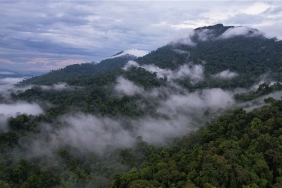
""WWF recognizes Indonesia's role as a key country in driving the post-Rio+20 sustainable development agenda. With Indonesia's increasing role in international forums, the WWF Network around the world is ready to help fulfill that role, including supporting transnational conservation initiatives such as the Heart of Borneo and the Coral Triangle launched by SBY," said WWF International Director General Jim Leape today. "
""Both initiatives translate the concept of Green Economy (and blue economy) for community welfare and social equality, while at the same time strengthening food security in the region,"" Leape added. During the meeting, Jim Leape emphasized that the development of oil palm plantations should be directed at abandoned lands, and asked the Government to facilitate the process so that abandoned lands that are 'clean' of social conflicts and ready for use can be made available.
""WWF will continue to support the Indonesian government's efforts to implement the concept of green economy or blue economy, so that efforts to encourage economic growth can be balanced with the principles of sustainability and equality,"" said Dr. Efransjah CEO of WWF Indonesia. According to him, the Sustainable Development Goal (Sustainable Development Goal), which will be formulated under SBY's coordination, is expected to integrate the three dimensions of development, namely economic, social, and environmental, as well as being universally applicable, relevant, inclusive, and its development in line with the Millennium Development Goals (MDGs) agenda.
As a conservation organization, WWF aims to ensure sustainability and equity in the management of the planet's rich natural resources. During the 45-minute visit, the CEO of WWF Indonesia also explained the role of WWF staff working in important conservation areas throughout Indonesia, both on land and sea, in efforts to preserve nature and sustainable development in the country. "The President congratulated WWF on its 50 years of mission in Indonesia and conveyed a message to continue the spirit of conservation," Efransjah explained.
The role of the emerging economies of the South - commonly referred to as BRIIC+ (Brazil, Russia, India, Indonesia and South Africa) - is a topic of great interest to WWF, not only because of their significant potential for prosperity and equality, but also because of the risks they pose for the destruction of natural resources. As economic growth increases, the impact of natural capital and biocapacity (or the ability of the planet to recover naturally) becomes increasingly important.
Regarding the role of the global south, on September 13-14, 2012, in conjunction with WWF's 50th anniversary in Indonesia, a South to South discussion was held where WWF CEOs from Indonesia, Singapore, Malaysia, Philippines, India, Pakistan, Asia Pacific, Mexico and Russia gathered to discuss the role of southern countries in the global economic and sustainable development arena.
-------selesai----------