WORLD EXPERTS, GOVERNMENTS CONVENE BIODIVERSITY, SUSTAINABLE DEVELOPMENT CONFERENCE IN PAPUA
For immediate release on 12 November 2009
Jayapura (12/11) - A three-day conference titled ""International Biodiversity Conference on Sustainable Development in Tanah Papua"" started today in Jayapura, Papua. The conference brings together hundreds of national and international scientists, conservationists, government officials from Papua and West Papua Provinces, , business leaders, NGO's, and community leaders to share best practices in an effort to integrate Tanah Papua's development plans with the conservation of biodiversity, social and cultural values and natural resources.
""Tanah Papua"" or The Land of Papua, the most eastern- part of Indonesia, now consists of two provinces, Papua and Papua Barat (West Papua). Tanah Papua covers the western half of the island of New Guinea, an area of 421,981 square kilometers and home to about 2 million people in 2004.
""Pressures and threats to biodiversity in Tanah Papua are increasing as Tanah Papua has become a target of many investors for large scale agro-forestry industries. Meanwhile, demand for construction of infrastructure has also increased,"" said Abraham. O. Atururi the Governor of West Papua. ""Development and conservation have to be managed wisely so that both can support one another. The failures of forestry and biodiversity management that have already taken place in Kalimantan and Sumatera should not be repeated in Tanah Papua,"" Atururi said. He calls for support and partnership in the effort to integrate conservation with socio-economic development in Tanah Papua.
Barnabas Suebu, Governor of Papua stated that by undertaking this conference, the Government of Papua proudly declares that it is very possible to have high quality of development in a sustainable manner by protecting, conserving, and utilizing our biodiversity wisely. ""There are five key strategies to achieve a sustainable development in Papua province. One, at least 50% of conversion forests preserved for sustainable forest management; Two, no primary forests with high conservation value allocated for palm oil development and other land uses; and Three, increasing the efficiency and productivity of current land use including existing oil palm,"" Suebu said. Other strategies include promoting and developing renewable energy based industry under the zero fossil-fuel based energy policy and promoting local agricultural, forestry and marine, small and medium-scale enterprises (SMEs) as engine of rural development.
With the province's 42 million hectares of forests, Suebu also pointed out Papua's significant position in global climate change mitigation and its willingness to present a clear, low-carbon development plan for Papua at the UN Climate Conference at Kopenhagen on December 2009.
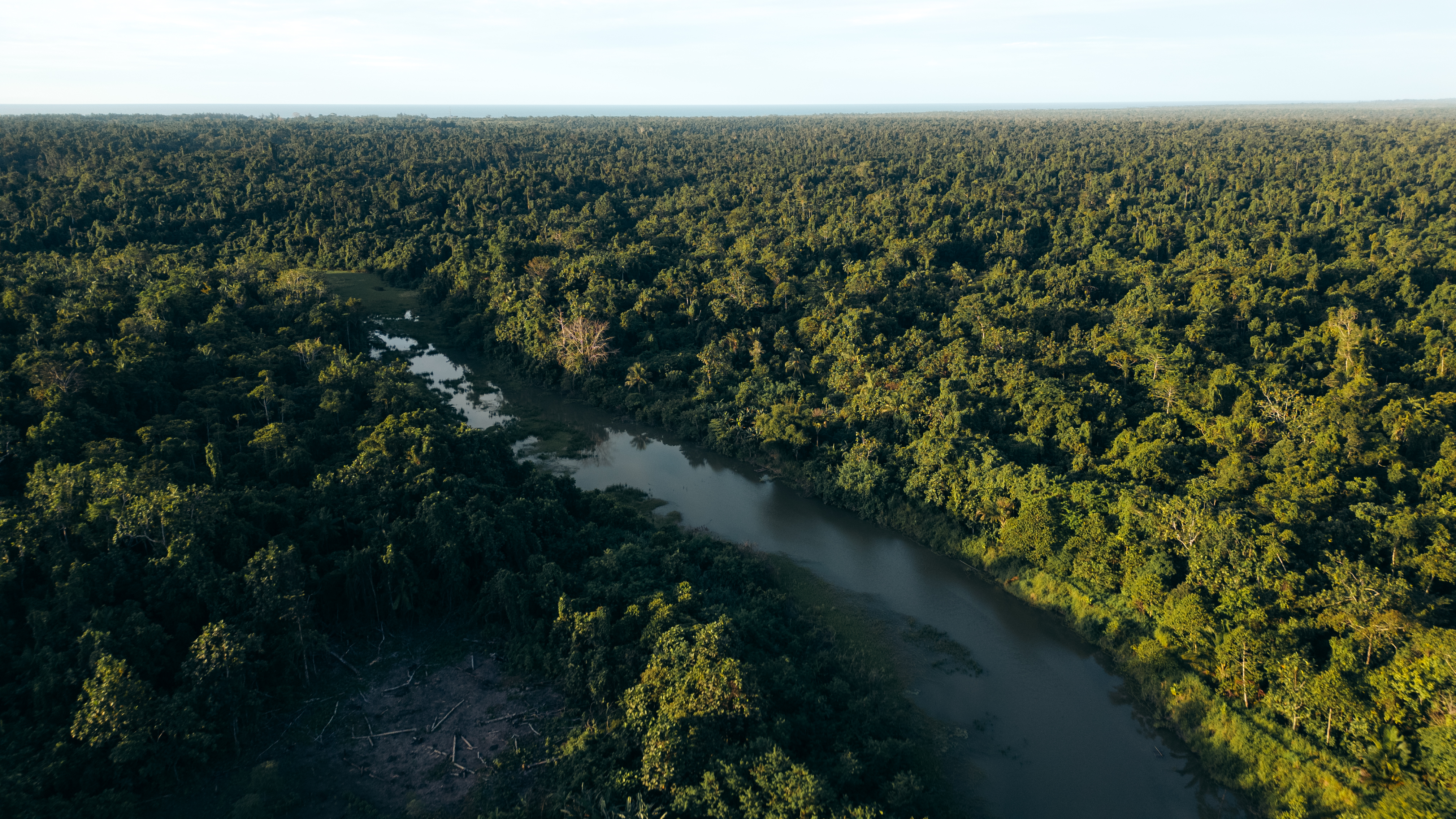
Prof. Emil Salim Presidential Advisory Council said in his address that more than 50 percent of Indonesia's biodiversity is found in Papua, with a high rate of endemic species - species found nowhere else. The island also encompasses a complete ecosystem range, from coral reefs and mangroves to savannah, lowland forests, montane and alpine ecosystems. During the period of 2000-2008, scientists from CI discovered high numbers of species of flora and fauna, including both new terrestrial species and varieties of coral.
""As a high conservation value region, it is important that ecological, social and cultural values of Papua are reflected in a sustainable land-use plan, which is then implemented accordingly,"" said Benja Mambai, Director of WWF-Indonesia's Sahul Program. ""WWF applauds the leadership of Papua and Papua Barat governments in hosting this conference as a foundation to formulate a sustainable development vision of Tanah Papua, one that takes into account the uniqueness of biodiversity and socio-cultural features and global climate change threats.""
""We hope through this conference, knowledge and scientific information will be gained, as well as initiatives and concrete commitments from various stakeholders and partners. All of us should understand that through ages of human development, that conservation without human development is futile, but development without conservation of natural resources have proven fatal to mankind,"" said Peter Kamarea of Conservation International.
The conference will collect input from various sources on conservation, the utilization of biodiversity in social-economic development, and cultural values of indigenous people in Tanah Papua in order to develop strategies for utilization of ecosystem services, non-timber products and community-based sustainable forestry management in utilization of forests resources.
As the outcome of the conference, it is expected that within a one-year period a sustainable development vision for Tanah Papua will be developed and endorsed by the government, civil society and other stake holders and later on will be legalized by the Parliaments of Tanah Papua.
For more information please contact:
- August Rumansara, Papua Governor Advisor +62 81248874004, a_rumansara@yahoo.com
- Ir. Noak Kapisa, MSc Head of Committee of International Biodiversity Conference +62 81344038508 noakkapisa@yahoo.com
- Ian Kosasih, WWF-Indonesia's Forest Program Director, +62 811110697 ikosasih@wwf.or.id
- Benja Mambai WWF-Indonesia's Papua Program Director +62 8124809407 bmambai@wwf.or.id
- Peter Kamarea, Conservation International ph +62 8114803601 p.kamarea@conservation.org
Note to Editor:
- "Speech of Governor Papua (in English) can be downloaded at:http://www.mediafire.com/file/jw41mdz2mdy/Speech Governor Papua at the IBC11Nov09.pdf
- "Speech of Governor of West Papua (in Bahasa) can be downloaded at:http://www.mediafire.com/file/nzzkyljtjny/Speech Papua Barat Governor 11Nov09.pdf
- "Speech of Minister of Forestry (in Bahasa) can be downloaded at http://www.mediafire.com/file/mztm3jymnjm/Speech Menteri Kehutanan di Papua 12Nov09.pdf
- "" Up to now there is no definitive figure on the approximate rate of deforestation in Tanah Papua, although field observations indicate a sharp increase in the rate of forest loss. Based on the data from the Ministry of Forestry's Planning Board (2002) the average rate of deforestation over the period 1985-1997 reached 117, 523 ha/year
- "" Conservation activities for species and habitats have been carried out in Tanah Papua since the early 1980s through the establishment of conservation sites. Approximately 8 million hectares, or 20% of land in Papua, has been declared as conservation sites and 10 million hectares, or 22% of total land, has been declared protected forest (Dinas Kehutanan Provinsi Papua, 2001), amounting to more than the average for natural reserves in Indonesia. In Papua New Guinea, only 3% of the total land has been allocated as wildlife management area. The establishment of protected areas in Papua is also considered to be one of the best-designed systems (Diamond 1988).For more information see website: www.ibcpapua.blogspot.com