UNVEILING THE WONDERS OF KEY BIOTA IN INDONESIA'S HIDDEN ARCHIPELAGOS
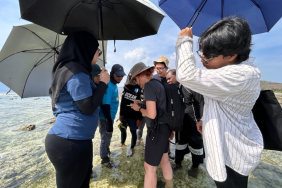
JAKARTA, (5/2) - The Ministry of Maritime Affairs and Fisheries (KKP), in collaboration with WWF-Indonesia, presented key findings from the 2025 Conservation Area Expedition in the Romang and Damer Islands, Southwest Maluku. The scientific expedition was conducted over the course of one month.
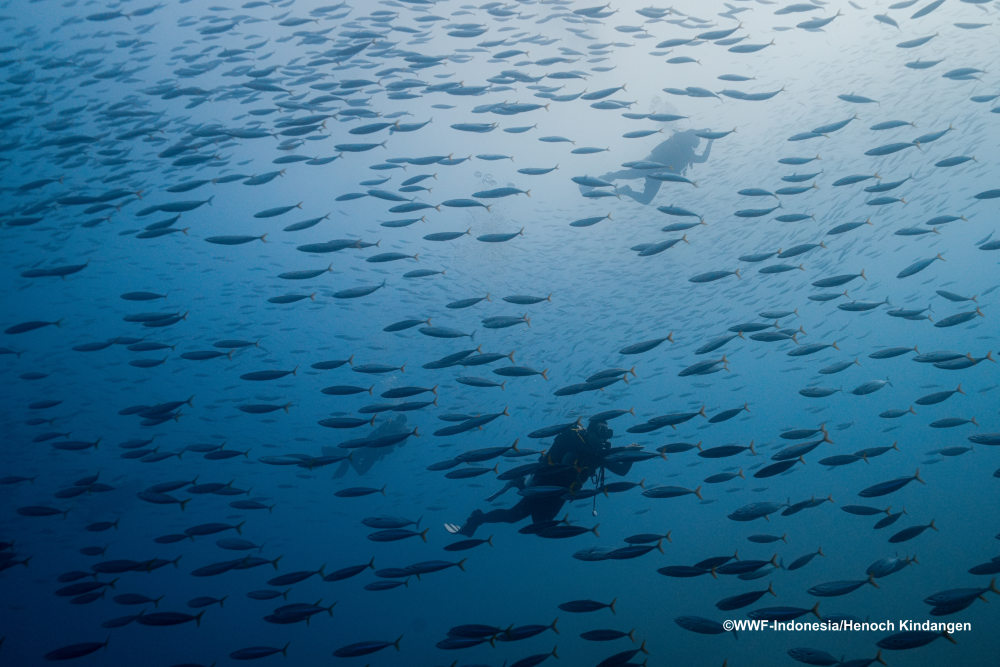
The expedition’s findings confirm that the waters of Southwest Maluku (MBD) constitute one of the world’s most resilient marine ecosystems, sustained by nutrient flows from both the Banda Sea and the Indian Ocean. The research further demonstrates that these waters serve as a critical last stronghold for global marine biodiversity amid escalating threats from climate change.
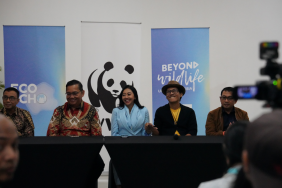
"The Ministry of Maritime Affairs and Fisheries continues to encourage the management of marine protected areas based on scientific data, involving the community as the main actor, and providing tangible benefits for the sustainability of resources and the local economy, in line with the implementation of the blue economy. In this context, the results of the Romang-Damer 2025 Expedition are an important contribution in supporting decision-making, both at the central and regional levels," said Director General of Marine Management, Koswara, at the Bincang Bahari talk show discussing the findings at the KKP office, Central Jakarta, Thursday (5/2).
Largest dugong habitat in Indonesia
Southwest Maluku waters are a major migration corridor for 24 threatened and protected marine species, including blue whales, orcas, hammerhead sharks, several types of sea turtles, and dugongs. The scientific expedition, held from October 3 to November 3, 2025, revealed the largest dugong habitat in Indonesia. In one area, the research party encountered as many as 32 dugongs. Based on the researcher's records, a large population of dugongs is a rare finding, even for the size of the world.
Of course, the important discovery that uncovered the archipelago's key biota also confirmed that the quality of the waters of Southwest Maluku is still relatively maintained. This marine area is able to supply nutrients for key species to become a comfortable home for several biota.
Researchers have noted that the seagrass ecosystem, which is home to dugongs, is in very good condition with cover above 50%. The expedition team managed to find 2/3 of the seagrass species recorded in Indonesia (9 species out of a total of 14 seagrass species).
Other expedition data showed that the coral reef ecosystem in the waters of Romang and Damer Islands was in moderate-good condition. This is reflected in the highest average coral reef cover of 51.4%. This is above the regional average (34%). In an advanced analysis, researchers found that some coral colonies in these waters were around 100-200 years old.
These facts show that the region's shallow water ecosystems have survived for a long time. These old ecosystems are able to provide high ecological benefits, such as coastal protection and spawning areas for important and economically valuable marine animals. Indeed, these healthy shallow waters are crucial to Indonesia's future.
Indigenous peoples' role amidst great challenges
The expedition also highlighted the vital role of the indigenous people of Southwest Maluku, who still uphold the principles of sustainability through local wisdom. On Romang and Damer Islands, the practice of Sasi and customary prohibitions (pemali) against hunting certain species has been the main pillar that has maintained the balance of the ecosystem since the time of the ancestors.
Temporary Acting Director of Marine and Fisheries Program, WWF Indonesia Foundation, Candhika Yusuf added, the results of the expedition were able to show that Southwest Maluku has small islands surrounded by waters that have been maintained since ancestral times. She witnessed how the coral reefs there remained healthy and resilient when many other areas experienced bleaching.
"We found the largest dugong habitat. However, this miracle is being jeopardized by the real threat of destructive fishing practices by outsiders, as well as the issue of plastic waste and ghost nets. We must collaborate to strengthen community-based monitoring through Pokmaswas so that this wealth is not lost," he said.
The sustainability of natural wealth in MBD is now facing major challenges that require immediate collective action. Real threats from explosive and toxic fishing practices, turtle poaching, and plastic waste pollution that has begun to encroach on remote coasts risk undermining the resilience of ecosystems that have been maintained for centuries.
Given Southwest Maluku's position as a rich supplier of nutrients from the ocean and deep sea, damage in the region will have far-reaching impacts on food security and regional ecological balance. That's why strengthening collaboration and synergy among government, communities, and development partners is key to saving this hidden archipelago from irreversible damage.
Based on strong scientific findings, government commitment, and the real role of indigenous communities, Maluku Barat Daya now stands as a symbol of hope for the future of Indonesia's ocean. As a strategic step to expand awareness among MBD coastal communities of the existence of conservation areas and key species within them, WWF-Indonesia will develop several socialization programs using the local Kalwedo approach.
Kalwedo is taken from the local language, which is a cultural expression of the people of Southwest Maluku, which means brotherhood, togetherness, and commitment to live with mutual respect and help each other as one unit. The integration of this local wisdom is expected to be an effective communication tool in delivering conservation messages to the community, especially the younger generation in MBD, in order to instill a sense of pride and ownership of this hidden archipelago wonder from an early age.
Kalwedo is taken from the local language, which is a cultural expression of the people of Southwest Maluku.
Expedition Documentation https://drive.google.com/drive/folders/1UCwWj30Lb_SiU2W9CjXjq3hlN33o5Gat.
Further information contact:
Karina Lestiarsi, Media Relations Officer
klestiarsi@wwf.id / 0852-1816-1683