
SMALL STEPS ON A PLATE FOR BIG IMPACT ON THE EARTH
There is something happening at our dinner table that we are not much aware of. Every mouthful of rice we eat, every instant noodle we cook in the middle of the night, every bottle of fizzy drink we open - they all leave traces. Traces on our bodies and traces on the earth we share.
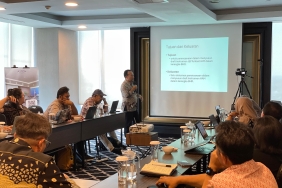
On May 13, 2026, WWF-Indonesia invited journalists, government representatives, academics, and content creators to sit together at Abeto, Menteng to discuss food, health, and sustainability. The media talk show titled Collective Action for Healthy & Sustainable Diets in Indonesia is a space where diverse voices meet: practitioners, development bureaucrats, senior journalists, and content creators who talk about the same thing: what we eat and what it means for the earth.
Food Systems Under Threat
Brent Loken, WWF's Global Food Lead Scientist, opened the conversation with data that cannot be ignored. Around 40 percent of the world's land and 70 percent of global freshwater resources are currently used to produce food. Meanwhile, a third of the food produced is wasted along the distribution chain, in household kitchens, or on restaurant trash heaps. And that wasted food releases greenhouse gas emissions that exacerbate the climate crisis.
"Sustainable diet doesn't mean everyone has to be vegetarian. It's about how we manage a healthy diet while keeping the earth able to feed the next generation." said Brent Loken, Global Food Lead Scientist, WWF.
Brent's message feels important precisely because he resists simplification. Sustainable diets are a broader way of thinking about food: where it comes from, how it's produced, and what the consequences of our choices are.
Sago, Cassava and Forgotten Identities
Samuel Pablo Pareira from WWF-Indonesia reminded us of something we often forget: Indonesian people once lived with rich food diversity. Sago in Papua, cassava in Java, yam in Maluku - these are not just food reserves. They are identities, knowledge systems and ways communities negotiate with the nature around them.
But in recent decades, rice has taken over almost everything. And not just rice - also instant noodles, ultra-processed foods, sugar-sweetened beverages. Pablo calls this phenomenon a loss of immediacy: urbanites are increasingly removed from the process of how their food is produced, who grows it, and what it contains.
The implications are not minor. Dependence on a single source of carbohydrates creates food insecurity. Forced expansion of rice fields threatens peat and forest ecosystems. And the biggest paradox: Indonesia, one of the world's richest biodiversity hotspots, is narrowing its own food choices.
Action and Challenges on the Ground
Semi Kurniasih, a representative from Bappenas, brought an important and honest perspective. Consumption data shows that Indonesians are still far from a diverse diet: high rice dominance, low vegetable and fruit consumption. Bappenas is involved in research with universities and research centers to encourage local food diversification - a step in the right direction, despite the complex challenges.
The government cannot work alone. The Ministry of Health's 'Fill My Plate' campaign does provide guidance on good nutrition, but guidance alone is not enough if access to nutritious food is still limited, if local food prices are not competitive, and if the distribution system still does not favor smallholder farmers. People's diets are a mirror of policy not merely a reflection of individual choice.
Media Is Not Just a Loudspeaker
Ahmad Arif, a senior journalist at Kompas, puts the role of the media right: not just disseminating campaign messages, but building a deeper public understanding of the linkages between consumption choices, food systems and environmental crises.
And it's not an easy job. Sustainable food narratives compete with thousands of more visually and emotionally 'interesting' food content. Viral food photos on social media are almost always about instant gratification, not about the carbon footprint or social impact of the supply chain. Journalists and content creators must find ways of telling stories that bridge these two worlds.
Manik Nur Hidayati, a content creator on health and food, touches on something that is often absent from policy discussions: stigma. Local food - sago, cassava, yam - is often seen as 'village food', a sign of deprivation rather than pride. Until this stigma is reversed, food diversification will continue to face cultural walls that are tougher than any policy.
"Healthy food is still often considered a privilege. Access, knowledge and economic conditions determine what we can choose - and many people don't have the luxury to 'choose healthy', added Manik Nur Hidayati, Health & Food Content Creator.
Collaboration Becomes Key Factor
The most powerful thing from the discussion was the shared realization that no one party can solve this alone. Governments need supportive policies, industries need incentives to innovate, media need richer narratives and individuals need to know that their choices matter.
Indonesia has an asset that not all countries have: a vibrant local food diversity, communities that still remember how to grow and cook from local sources, and a rich culinary culture. That capital is being eroded. This talk show is a reminder and a call to action that we still have time to fix it.