REVISITING TIGER SHRIMP RESOURCES IN EAST ACEH: STRENGTHENING TIGER SHRIMP MANAGEMENT
Since the 80s and 90s, East Aceh Regency has been one of the top tiger shrimp (Penaeus monodon) producing regions in Indonesia. This commodity has long been a mainstay as well as contributing to exports, where Indonesia is one of the largest shrimp producers in the world, as recorded in FAO (2023) and KKP (2024) reports. Among the various shrimp species traded, tiger shrimp are known as a high-value commodity due to their relatively large body size and good meat quality.
The high demand and high value of tiger shrimp has led to the expansion of the tiger shrimp industry. In Aceh itself, tiger shrimp go beyond being a consumption commodity to become a source of wild broodstock for tiger shrimp farming in Indonesia. This double pressure as a consumption commodity and broodstock has the potential to affect the recruitment process and sustainability of tiger shrimp stocks in nature if not managed sustainably. This is all the more relevant given that since around 1997, tiger shrimp farming in Indonesia has declined due to disease attacks, which led to a shift to other species such as vanamei in 2001.
Several studies have shown that tiger shrimp stocks in East Aceh waters have been overfished (Hedianto et al., 2016 and Damora, 2022), meaning that catch rates have exceeded the natural ability of shrimp populations to recover. "The decline in tiger shrimp stocks is triggered by high fishing pressure and the use of less selective fishing gear, such as trawls that can catch shrimp of all sizes. Fishing also occurs in mangrove areas, which are important habitats for young shrimp. In the long term, this condition can trigger growth overfishing to recruitment overfishing, which ultimately reduces shrimp biomass in nature," explained Damora, a lecturer from Syiah Kuala University.
Despite the decline, demand for tiger shrimp has never really subsided, especially from the export market. The hatchery and aquaculture industry still requires quality broodstock from the wild. This situation creates a classic dilemma in fisheries management. On the one hand, resources are under pressure, but on the other hand, the economic needs of coastal communities and the fishing industry must still be met. Therefore, it is increasingly important to improve fisheries practices and restore tiger shrimp stocks through an approach that focuses not only on catching restrictions, but also on implementing more selective and responsible fishing methods.
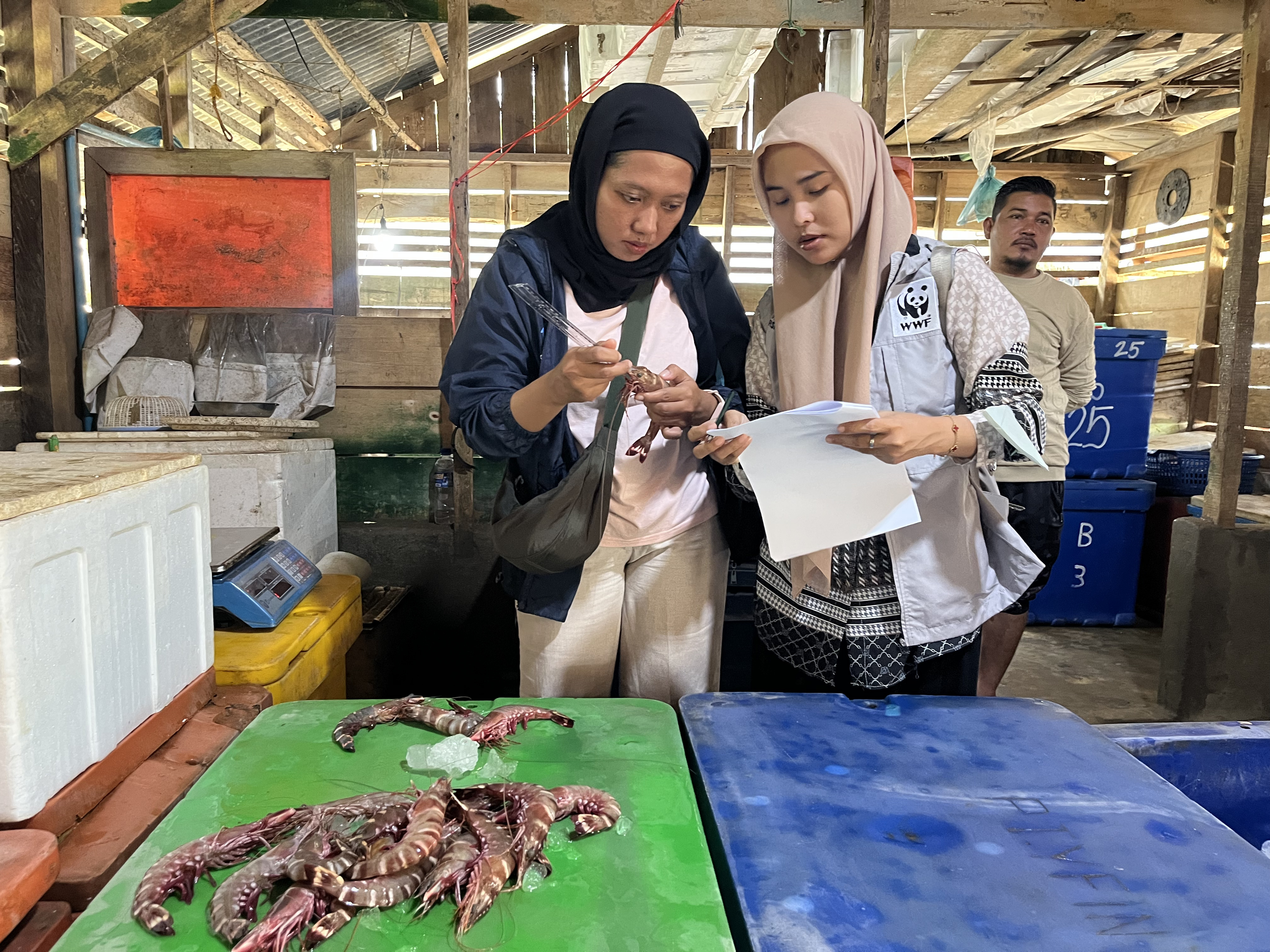
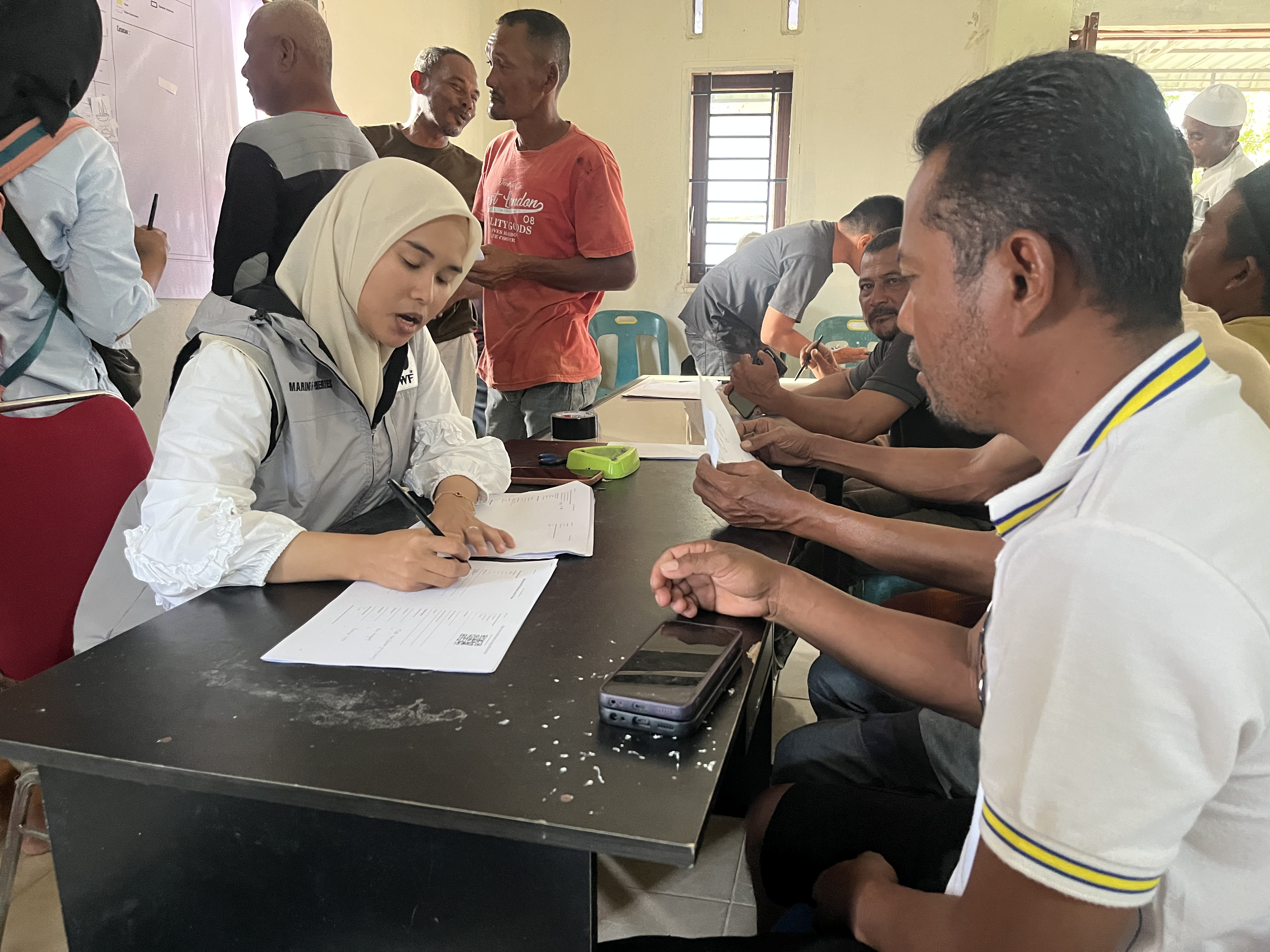
To encourage more systematic fisheries improvements in East Aceh, in February 2026 a WWF Indonesia team conducted a field assessment to understand the current state of the tiger shrimp fishery. This was conducted in Kuala Peudawa and Kuala Bugak through interviews with fishermen and fisheries stakeholders, as well as direct observation of catches, fishing gear, and fishing fleets. In addition, the identification of fishermen groups was also carried out as a basis for mentoring activities and improving fisheries practices in the future. This is WWF-Indonesia's effort to encourage more sustainable fisheries management over the past year. This effort is supported by the COAST Facility through the Climate and Ocean Adaptation and Sustainable Transition (COAST) Program.
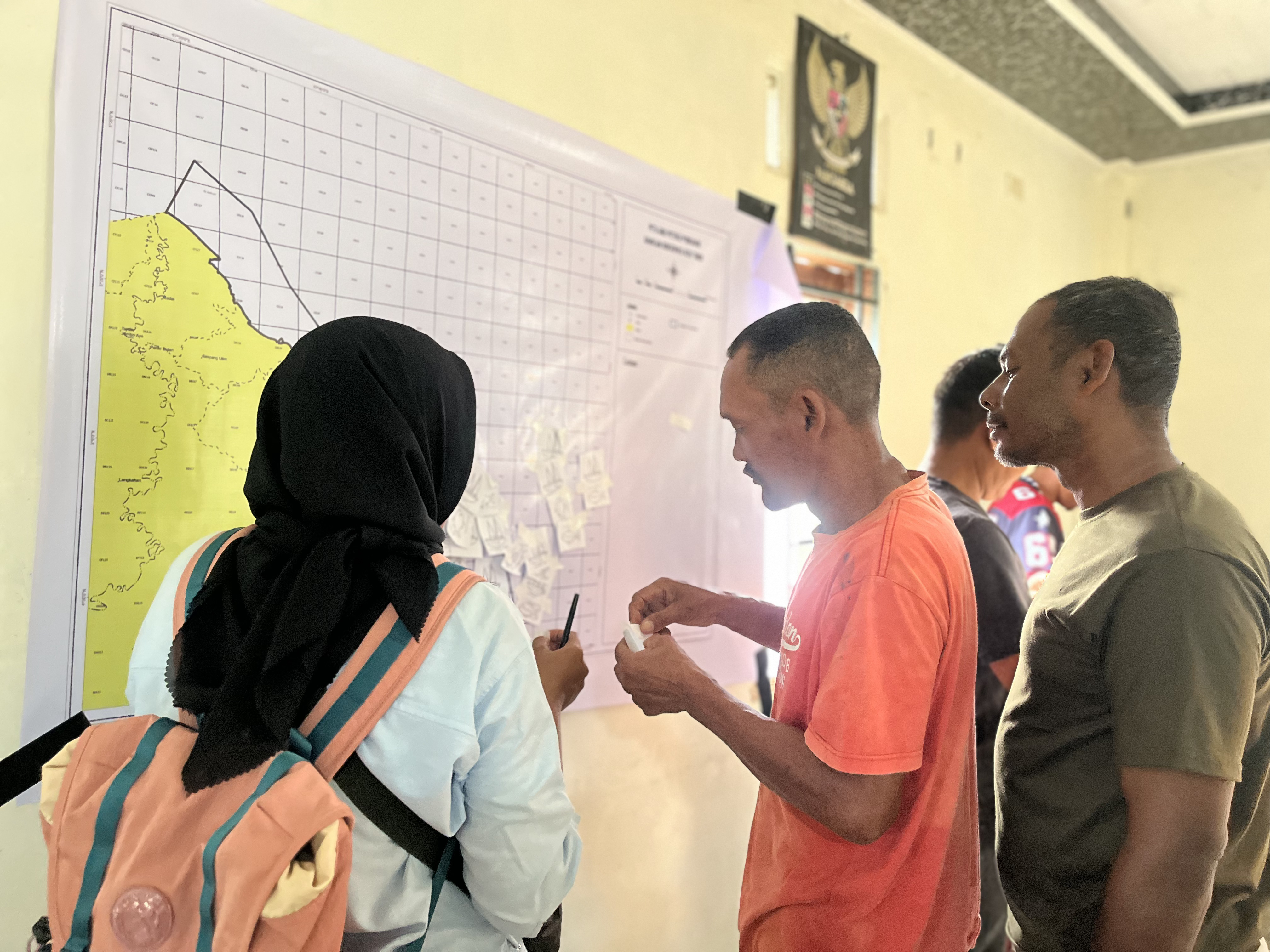
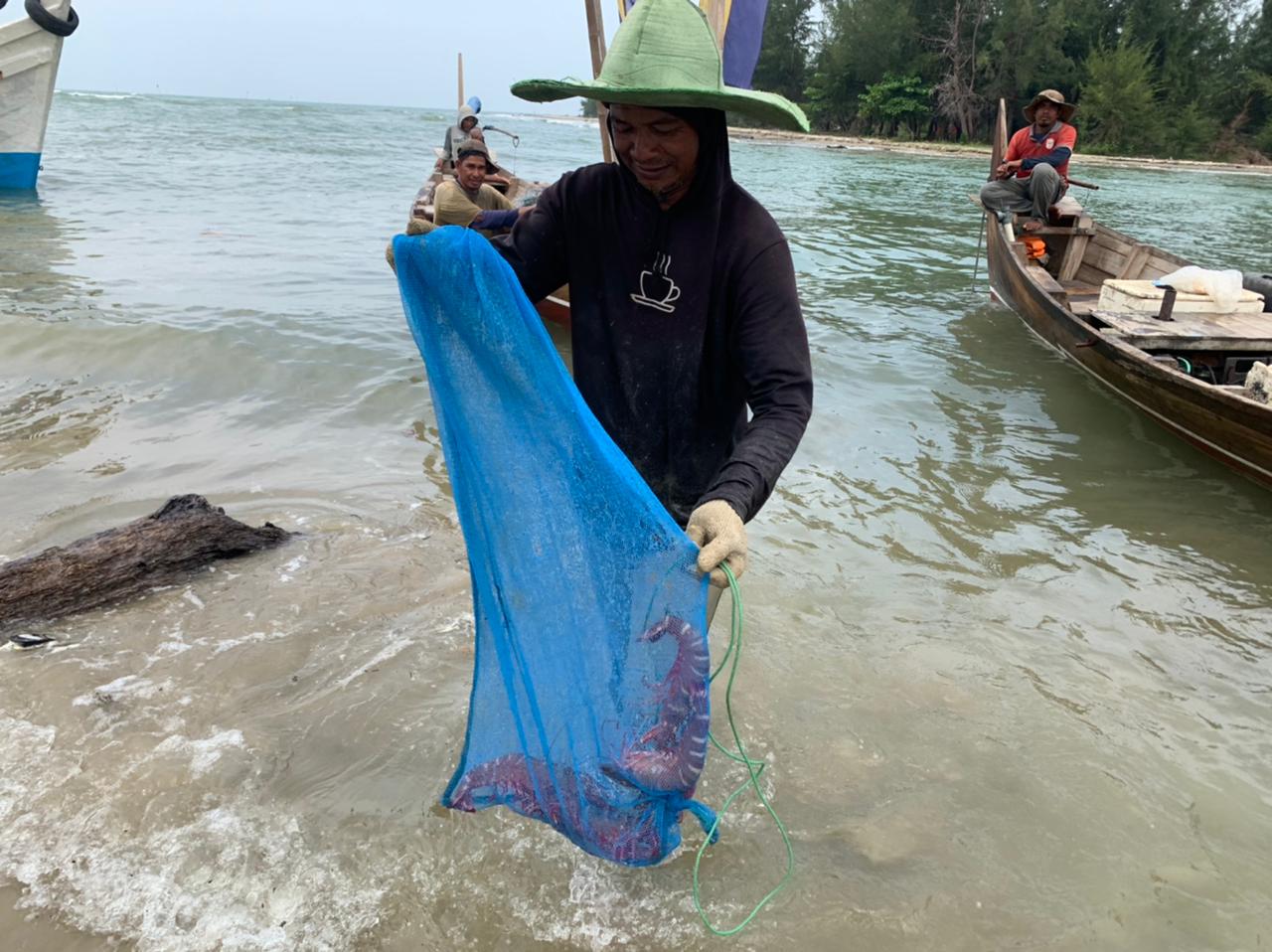
The results of the field assessment showed several important findings, including the composition of fishermen's catches. Tiger shrimp only accounted for about 30% of the total catch, while the rest were other shrimp species, demersal fish, and other marine biota. In addition, the survival rate of tiger shrimp at landing is still low. According to fishermen's reports, less than 30% of the 30% of captured shrimps survived to the landing site. This condition is influenced by limited storage facilities and suboptimal post-catch handling.
Selia Hermawati, Fisheries Science Specialist WWF-Indonesia, said that it is still possible to improve tiger shrimp fisheries in East Aceh. Starting from steps such as strengthening the capacity of fishermen through institutional optimization, the use of more selective fishing gear, protection of broodstock and their nursery grounds.
Local government commitment is also an important part of maintaining the sustainability of coastal resources. The Aceh government demonstrated this through Aceh Governor Decree No. 500.5.1/223/2024 on the Determination of Aceh Marine Protected Area Reserves, which includes waters in East Aceh. This policy is expected to protect important habitats such as mangrove ecosystems that serve as nursery grounds for a variety of marine life, including tiger shrimp.
In the long term, the integration of wild stock management and broodstock development can also help reduce dependence on wild capture of broodstock. Ultimately, the future of tiger shrimp in coastal East Aceh depends not only on how much can be caught today, but on how this resource is managed to be sustainable for the next generation.
References
Azam, K., Alam, S. M. N., & Naher, S. S. 2010. Quality assessment of farmed black tiger shrimp (Penaeus monodon) in supply chain: Organoleptic evaluation. Journal of Food Processing and Preservation, 34: 164-175.
Briggs, M., Funge-Smith, S., Subasinghe, R., & Phillips, M. 2005. Introductions and movements of Penaeus vannamei and Penaeus monodon in Asia and the Pacific. FAO Regional Office for Asia and the Pacific, Bangkok.
Damora, A. 2022.
FAO. 2023. The State of World Fisheries and Aquaculture 2023: Blue Transformation in Action. Rome: Food and Agriculture Organization of the United Nations.
Hedianto, D. A., Suryandari, A., & Tjahjo, D. W. H. 2016. Population dynamics and utilization status of tiger shrimp Penaeus monodon (Fabricius, 1789) in East Aceh waters, Aceh Province. Journal of Indonesian Fisheries Research, 22(2), 123-134.
Ministry of Marine Affairs and Fisheries (MMAF). 2024.
Sriket, P., Benjakul, S., Visessanguan, W., & Kijroongrojana, K. 2007. Comparative studies on chemical composition and thermal properties of black tiger shrimp (Penaeus monodon) and white shrimp (Penaeus vannamei) meats. Food Chemistry.
Tjahjo, D. W. H., Hedianto, D. A., Suryandari, A., Nurfiarini, A., Fahmi, Z., Indriatmoko, & Hariyadi, J. 2019. Conservation of tiger shrimp (Penaeus monodon) resources on the East Coast of Aceh, East Aceh District. Journal of Indonesian Fisheries Policy, 11(1), 1-12.