
IMPROVING CLIMATE CHANGE ADAPTATION CAPACITY THROUGH NATURE-BASED SOLUTIONS AND ECOSYSTEM-BASED ADAPTATION APPROACHES IN PAPUA LAND
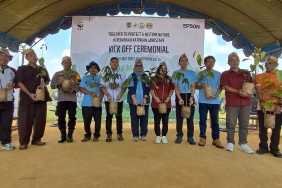
Jayapura, June 5, 2026 - A total of approximately 50 participants consisting of government representatives, civil society organizations (CSOs), community-based organizations (CBOs), academics, and WWF-Indonesia attended a four-day intensive training entitled Nature-based Solutions (NbS) for Climate Adaptation and Ecosystem-based Adaptation (EbA) which took place in Jayapura on June 1-4, 2026 at the Horison Sentani Hotel.
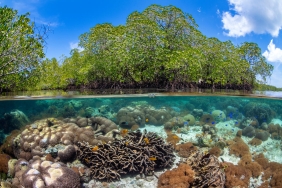
This activity was organized as a strategic step to strengthen the capacity of stakeholders in facing the increasingly real challenges of climate change. Tanah Papua, as a region with a landscape that has very high biodiversity, is also one of the areas vulnerable to the impacts of global climate change. In addition, it introduced the Nature-based Solutions and Ecosystem-based Adaptation approaches as effective strategies to enhance community resilience and ecosystem sustainability.
Wika Rumbiak as Head of Forest & Wildlife WWF-Indonesia Papua Program emphasized the importance of this collaboration and capacity building in dealing with the climate crisis at the site level. She said that the Ecosystem-based Adaptation (EbA) training is important to improve stakeholders' understanding of climate change, ecosystem-based adaptation approaches, and climate finance opportunities that can support the implementation of EbA at various levels. Furthermore, he added that strengthening science, community experience, and local wisdom is very relevant to continue to be promoted in the development of contextual, effective, and sustainable EbA models.
Shaun Martin from WWF-US stated that his presence from Washington D.C. was intended to help WWF-Indonesia and partners learn how to utilize nature to protect communities from the adverse effects of the climate crisis, such as increased storm intensity, sea level rise, drought, flooding, and landslides. Shaun said he was very optimistic to see the enthusiasm of the participants and believed that this training had made a big impact and fresh ideas that could be brought home to help their respective assisted communities in Papua. Similarly, Henna Tanskanen from WWF Finland highlighted the importance of joining forces with civil society organizations, government, and academia to respond to climate impacts such as coastal flooding that threaten people's livelihoods. Henna sees great potential in the local initiatives already underway in Papua and hopes that post-training collaboration can continue to design concrete projects and mobilize broader funding resources to protect communities and nature.
In addition to strengthening conceptual understanding, this training was specifically designed to build participants' practical capacity to access climate finance opportunities through the preparation of quality proposals. All participants were equipped with knowledge about climate change policy developments at the global, national and local levels, as well as getting direct assistance in designing EbA proposals that meet the standards of various climate funding schemes. The direct benefits of this technical material were felt by the participants, one of whom was Fikri Al Mubarok, a Forest Ecosystem Controller from BBKSDA Papua, who considered this training to be very extraordinary and opened many new insights because it presented the main source of information from the global. Fikri explained that the training succeeded in changing his perspective on environmental policies and the technical aspects of submitting donor proposals, but he hopes that after the training is over there will be a process of further assistance and review when participants start designing real projects that will be implemented in the field.
The importance of program sustainability and grassroots community involvement was also emphasized by Yohanes Yesnath from Pokdarwis Kampung Nanggouw who felt the great benefits of this new knowledge to be applied in better managing the village environment. Yohanes hopes that educational programs like this can continue to be expanded with greater support from the local government to involve more tourism groups and village communities in general, so that they are better prepared to face the challenges of natural changes in the future. Meanwhile, Sena Aji as Director of the MNUKWAR Papua Association underlined that the EbA concept is very relevant to be adopted in Papua because it offers regional management based on three main pillars, namely climate, people, and nature. According to Sena, this balanced approach can optimize the great potential of the region for the welfare of the community without sacrificing the sustainability of biodiversity, and he hopes that in the future this concept will be increasingly applied in regional development planning in the Land of Papua in order to give birth to a new generation that is environmentally conscious.
> In addition, this activity is targeted to be able to improve participants' technical skills in developing competitive climate funding proposals, strengthening synergies towards climate change policies from the regional to the global level, and building a solid multi-stakeholder collaboration network between agencies in the Land of Papua. WWF-Indonesia and all partners believe that capacity building coupled with cross-sector collaboration is the main key in building inclusive, equitable and sustainable climate resilience. On this occasion, Wika Rumbiak also expressed his highest appreciation to WWF-US and WWF Finland for their support and facilities, as well as to all participants who have shown the spirit of learning together as an important capital in strengthening ecosystem-based climate change adaptation actions in the Land of Papua.
.
Documentation: https://drive.google.com/drive/folders/1qxhddHxwXtksH9OzHd7DWkQBiMM4dLf7?usp=sharing
Further information, contact:
Karina Lestiarsi, Media Relations Officer
0852-1816-1683 / klestiarsi@wwf.id
About WWF Indonesia Foundation
The WWF Indonesia Foundation is an Indonesian incorporated civil society organization engaged in nature conservation and sustainable development, with the support of more than 100,000 supporters. WWF Indonesia Foundation's mission is to halt environmental degradation and build a future where people live in harmony with nature, through the conservation of the world's biodiversity, the sustainable use of renewable natural resources, and support for the reduction of pollution and overconsumption.
For the latest news, visit www.wwf.id and follow us on X (Twitter) @WWF_ID | Instagram @wwf_id | Facebook WWF-Indonesia | Youtube WWF-Indonesia .