
EXPLORING ENVIRONMENTAL DIPLOMACY: A VISIT BY THE INTERNATIONAL RELATIONS STUDENT ASSOCIATION OF PADJAJARAN UNIVERSITY TO WWF-INDONESIA
How can environmental issues become part of global diplomacy? This question led the International Relations Student Association (HIMA HI) at Padjadjaran University to visit the WWF-Indonesia office on June 12, 2026, as part of an External Visit themed “Soft Power Diplomacy: Building Influence without Force”. Held on the 5th floor of Panda House in Jakarta, this event served as a learning opportunity for students to witness firsthand how environmental sustainability issues play a role in building influence, fostering collaboration, and driving change at both the local and global levels.
The event opened with remarks from a representative of HIMA HI, University of Padjadjaran, followed by Arum Kinasih, Social Movement Specialist at WWF-Indonesia. In her remarks, Arum emphasized that environmental conservation is no longer an isolated issue but has become a crucial matter in both national and international relations. It requires diplomatic efforts and cross-sectoral collaboration with the government and various stakeholders—including the active role of the younger generation—to drive change toward a more sustainable future.
The first session invited students to learn more about WWF’s long journey in Indonesia through a presentation delivered by Dwi Widya Mutiara, a member of the Conservation and Education team. Students were guided to understand how WWF’s conservation efforts have evolved from species rescue to broader landscape management. One concept introduced was umbrella species—species that play a vital role in maintaining the balance of entire ecosystems within their habitats. She also introduced WWF Indonesia’s three main directorates: Forests and Wildlife, Marine and Fisheries, and Market Transformation and Climate. At the end of his presentation, he highlighted various educational initiatives and platforms for engaging the younger generation so that students can play a tangible role in preserving the Earth, such as the Earth Hour, Panda Mobile, and Members of Nature (MoNa) programs.
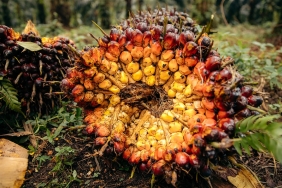
After gaining a general overview of WWF-Indonesia and its conservation approach, the presentation then moved on to more specific issues related to Sustainable Commodities, presented by Rizka Nurul Annisa, Senior Business Engagement Officer at WWF-Indonesia. This session provided students with an understanding of sustainable commodity governance and the challenges faced by various Indonesian commodities in meeting the demands of a global market that is increasingly focused on environmental and social aspects. Various key commodities—such as palm oil, coffee, cocoa, rubber, as well as timber and non-timber forest products—were introduced as commodities closely linked to various international standards and regulations that promote more responsible production practices.
Rizka explained that WWF promotes sustainable commodity governance through an approach that encompasses the entire supply chain, from farmers and producers to companies, retailers, and consumers. One of the approaches introduced is Deforestation and Conversion Free (DCF), which is a commitment to ensuring that commodity production does not cause deforestation or the conversion of natural ecosystems. To illustrate real-world success stories from upstream to downstream, students were shared several inspiring stories about WWF’s support that successfully helped local Small and Medium Enterprises (SMEs) meet global market standards. One such example is Kampoeng Batik Laweyan in Solo, which became the world’s first RSPO-certified batik SME through the use of sustainably sourced palm oil in its production process. Another example is the natural beauty industry business Spa Factory in Bali, which successfully obtained RSPO certification and expanded its market reach to the international level. At the end of the session, Rizka addressed the downstream aspect by emphasizing that sustainability efforts are not solely the responsibility of producers but heavily depend on the role of urban communities as consumers
The session was then concluded by Aidia Awwaaba, Market Transformation Officer at WWF-Indonesia, with the theme “Youth Are What You Eat.” Students in this session were encouraged to reflect on how their daily food choices impact the environment—from land use and greenhouse gas emissions to the issue of food waste (food waste). Aidia shared a startling fact regarding the food system, which currently accounts for 75% of global deforestation and 30% of greenhouse gas emissions. Even more distressing is the fact that Indonesia now ranks 8th in the world as the largest contributor to food waste, with an estimated 14.73 million metric tons per year.
Through the concept of the Planetary Health Diet and the Isi Piringku campaign from the Ministry of Health, WWF highlights the importance of healthier and more environmentally friendly consumption patterns. As a simple step that can be applied in daily life, students were introduced to the “Balancing the Plate” approach, which involves filling half the plate with vegetables and fruits and prioritizing more sustainable local foods. The message conveyed—simple yet relevant—is that big changes can start with the small decisions we make every day, including what we choose to eat.

The enthusiasm of the International Relations students at Padjadjaran University was increasingly evident during the lively discussion and Q&A session. Various critical questions were raised, highlighting the material presented and the real-world challenges of its implementation in the field. One student named Nakesya asked about the challenges faced by businesses—particularly SMEs—in meeting the various sustainability standards and certifications required to enter the global market. In response, WWF Indonesia explained that sustainability certification should be viewed as a long-term investment that can enhance product competitiveness while opening access to markets that are increasingly prioritizing environmental and social aspects.
The discussion then turned to the dynamics faced by WWF-Indonesia in carrying out its mission. Through a question posed by Azi, the students gained insight into the various challenges WWF has faced while implementing its programs in Indonesia. On this occasion, WWF reaffirmed its commitment to continuing to promote more responsible natural resource management practices.
There was also a question from Zaki that highlighted the application of sustainable eating patterns for individuals with varying nutritional needs. He raised a discussion regarding the compatibility of the “Isi Piringku” concept with high-protein diets, which are commonly adopted by those who are physically active. In response, WWF explained that the Flexible Diet approach allows dietary patterns to be tailored to each individual’s needs and activities without compromising the principles of health and sustainability, provided that nutritional balance and the selection of fresh, locally sourced foods remain a priority.
Closing the discussion session, a student from the Mentawai Islands raised a question about opportunities for developing WWF programs in his region, which is rich in natural resources and biodiversity. WWF responded to the question by explaining that the Mentawai Islands are already included in future conservation program development plans due to their unique endemic species and potential for sustainable commodities that can be developed to support community well-being.
The visit concluded with the presentation of a plaque from student representatives of the International Relations Department at Padjadjaran University to WWF-Indonesia as a token of appreciation, followed by an office tour and a group photo with the panda mascot, which serves as the symbol of WWF. This series of activities provided a valuable learning experience for the students, allowing them to see firsthand how environmental issues, conservation, and sustainable development are implemented by an international organization. For International Relations students, the visit to WWF-Indonesia offered a new perspective: that environmental conservation efforts involving cross-sectoral collaboration are a tangible manifestation of soft power diplomacy. The various programs and approaches introduced during the event demonstrated that building global influence and cooperation does not always have to be done through formal political channels, but can also be achieved through inclusive sustainability values.