
CARING FOR THE LANDSCAPES OF PAPUA: BRINGING NATURE-BASED SOLUTIONS TO LIFE AT THE LOCAL LEVEL
That morning, the meeting room at the Horison Sentani Hotel in Jayapura was alive. Around 60 pairs of eyes from various backgrounds-from government officials, civil society organization (CSO) activists, local community mobilizers (CBOs), academics, to the WWF-Indonesia team-gathered with the same concerns and hopes. For four full days, from June 1 to 4, 2026, they dived into intensive discussion spaces in a training entitled Nature-based Solutions (NbS) for Climate Adaptation and Ecosystem-based Adaptation (EbA). Behind the walls of the room, a strategic step is being taken to strengthen the readiness of the Land of Papua in the face of the increasingly real and challenging ripples of climate change.
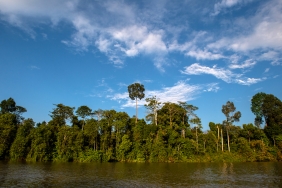
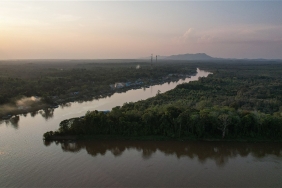
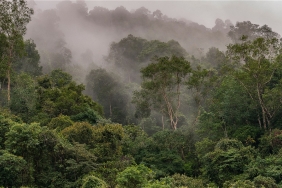
The land of Papua is not just a green expanse on the eastern tip of Indonesia; it is home to the world's extraordinarily rich megabiodiversity, yet it is also one of the regions most vulnerable to global climate change. Recognizing this vulnerable position, this training is not just to dissect weather theory, mitigation, or adaptation. More than that, this shared learning space seeks to ground the approach of Nature-based Solutions and Ecosystem-based Adaptation as a living shield to maintain community resilience and ecosystem sustainability in the future.
Wika Rumbiak, Head of Forest & Wildlife WWF Indonesia Papua Program, emphasized that in the midst of the current climate crisis, capacity building at the site level must be driven through close collaboration. According to him, an understanding of ecosystem-based adaptation and mastery of climate finance opportunities must go hand in hand at all levels. Contextualized, effective and sustainable EbA models will only be created if we consistently promote the combination of modern science, real experiences of communities on the ground, and long-rooted local wisdom.

Global nuances were felt in this training room with the presence of experts directly from WWF's international network. Shaun Martin and Ryan Bartlett, who traveled all the way from WWF-US in Washington D.C., brought an important mission of how humans can work with nature to adapt to storms, sea rise, drought, and landslides. Seeing the enthusiasm of the participants, Shaun said he was optimistic that the fresh ideas from this training would become valuable provisions that are ready to be brought back to their respective assisted communities in Papua. The same spirit was expressed by Henna Tanskanen from WWF Finland. For her, climate impacts such as coastal flooding have begun to threaten the livelihoods of Papuans. Through local initiatives that are already in motion, Henna hopes that this cross-sector collaboration does not stop here, but continues to develop concrete projects and raise broader funding resources to protect people and the nature they live in.
Picking up global climate finance opportunities is indeed one of the main menus specifically designed in this training. The participants were not only exposed to climate policies from local to global level, but also directly assisted to design competitive EbA proposals that meet international donor standards. This valuable experience was directly felt by Fikri Al Mubarok, a Forest Ecosystem Controller from BBKSDA Papua. For him, getting information directly from global resource persons has opened new insights and changed his perspective in looking at environmental issues and the technicalities of submitting donor proposals. However, Fikri reminded them that this was just the first step; the participants still needed further mentoring and periodic reviews so that the project designs they developed after the training could actually be implemented optimally in the field.
Hope for the sustainability of this action also echoed from the voices of grassroots communities. Yohanes Yesnath from Pokdarwis Kampung Nanggouw felt the benefits of this new understanding to better manage the environment of their hometown. He hopes that this kind of educational program can continue to be expanded with greater support from the local government, so that tourism groups and village communities in general are able to take adaptive steps in the face of natural changes in the future. From a regional planning perspective, Sena Aji as Director of the MNUKWAR Papua Association sees that the EbA approach offers a very relevant balance through its three main pillars: climate, people, and nature. For Sena, if this balanced concept is integrated into development planning in various regions in the Land of Papua, a new generation of environmentally conscious people will be born, who are able to maintain biodiversity while optimizing regional potential for the welfare of the community.
Through an intensive four-day investment of time and thought, the training ultimately sparked great expectations. The desired outcome is not just a comprehensive understanding of climate mitigation or technical proficiency in preparing funding proposals, but the establishment of a solid multi-stakeholder collaboration network between agencies in the Land of Papua. WWF-Indonesia and all partners believe that inclusive, equitable, and sustainable climate resilience can only stand if it is supported by consistent cross-sectoral cooperation. As Wika Rumbiak expressed his appreciation to WWF-US and WWF Finland for their support, the spirit of learning together in Jayapura today is the most valuable capital to maintain and care for a green future in the Land of Papua.